Showing 24 artworks out of 87 with Francis Bacon

-
Francis Bacon
Not available for this selection
- Expressionism
- Surrealist Expression Surrealism
- Surrealism
- Expressionist Abstraction
- Contemporary Realism
- Expressionism Expressionism
- Surrealist Surrealist
- Expressionist Painting
- Expressionist Distortion
- Surrealist Expression
- Surrealism Surrealism
- Surrealism And Expressionism
- Surrealist
- Surrealist Expressionism
- Surrealist Movement
- Surrealist Movement Surrealist Movement
- Abstract Expressionism
- Surrealist Painting Surrealism
- Cubist/Expressionist
- Expressionist Horror
- Expressionist Style
- Expressionistic Abstraction
- Expressionistic Distortion
- Expressionistic Figuration
- Expressionistic Horror
- See all
- Espresso
- Black
- Phthalo Green
- Putty
- Rosy Brown
- Khaki
- White
- Walnut
- Mahogany
- Bronze
- Quinacridone Magenta
- Gray
- Driftwood
- Midnight Blue
- Sap Green
- Cobalt Violet
- Clay
- Celadon
- Brown
- Blush
- Francis Bacon
- Expressionism
- Surrealism
- Distortion
- Painting
- Modern Art
- Portrait
- Anxiety
- Portraiture
- British Art
- Emotion
- Psychological Art
- Abstract
- Art
- Oil Painting
- Ireland
- Distorted Figures
- Isolation
- Irish Artist
- Figures
- Study
- Dublin Artist
- Bacon
- Unsettling
- Darkness
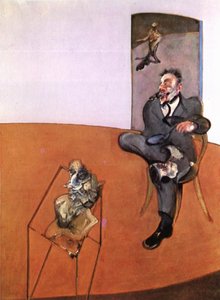
The painting depicts three figures in a room, with one seated on a chair and another standing nearby. The scene is marked by dramatic composition and conveys a sense of unease.
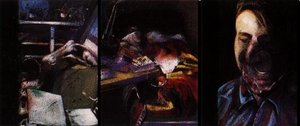
Explore Francis Bacon’s unsettling Triptych – a visceral depiction of human distress & decay in oil on canvas. Dark tones, distorted figures, & raw emotion define this iconic work.
Experience Francis Bacon's raw emotion in "Three Studies of Isabel Rawsthorne." This iconic 1967 painting captures intimacy & turmoil through distorted figures, a masterpiece of modern art.
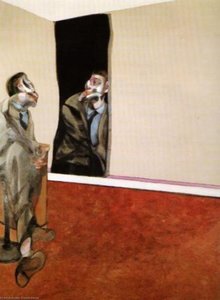
Francis Bacon's 'Portrait of George Dyer Staring into a Mirror' captures raw emotion & existential themes through distorted figures. Explore the intense friendship and artistic legacy within this iconic painting.
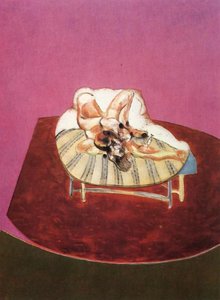
The painting depicts a naked figure lying on a bed with a syringe in their hand against a pink backdrop, accompanied by two other figures partially obscured by the main subject. Bacon's work explores themes of vulnerability and unease through visceral imagery.
Francis Bacon's 'Portrait of a Dwarf (1975)' is a hauntingly distorted depiction of human isolation and anxiety, showcasing his signature Expressionistic style and masterful use of color & form.
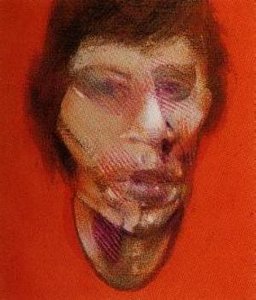
Explore Francis Bacon's haunting 'Three Studies for a Portrait of Mick Jagger,' a visceral depiction capturing Jagger’s distorted visage against a stark red backdrop – a masterpiece of Expressionism.
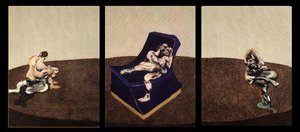
Explore Francis Bacon’s ‘Three Figures in a Room’ (1964), a haunting triptych of nude figures in a desolate landscape. Expressionistic, unsettling, and deeply evocative – a key work by the iconic artist.
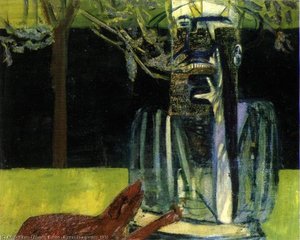
Francis Bacon's 'Figures in a Garden' (1936) captures unsettling human forms within a claustrophobic landscape, reflecting his exploration of isolation and psychological distress through Expressionist techniques.
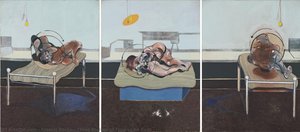
Experience the raw emotion of Francis Bacon's 'Three Studies of Figures on Beds.' This iconic 1972 painting captures unsettling beauty with oil and pastel on canvas – a visceral masterpiece.
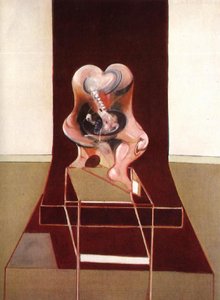
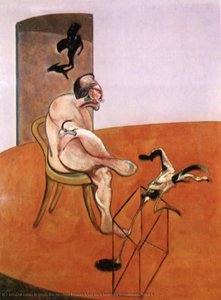
Triptych inspired by the Oresteia of Aeschylus (center panel), 1981 - This unsettling portrait captures Bacon's signature style—a naked figure slumped in a chair, rendered with grotesque distortions and muted colors—reflecting themes of trauma and psychological disintegration.
Three Figures in a Room 1 by Francis Bacon – A haunting depiction of three figures seated at a dining table, embodying the artist's signature exploration of psychological torment and visceral emotion within a starkly minimalist setting.
Francis Bacon's "Study of a Child" captures raw emotion & unsettling imagery. This Expressionist masterpiece explores vulnerability and the human condition through distorted forms and intense color. Explore its haunting beauty.
The painting depicts three men seated in a room, one holding a shotgun. The scene conveys a sense of unease and psychological tension characteristic of Bacon's style.
Explore Francis Bacon’s unsettling ‘Study for Portrait V.’ A surreal portrait blending geometric abstraction & intense emotion. Discover its symbolism & unique style.
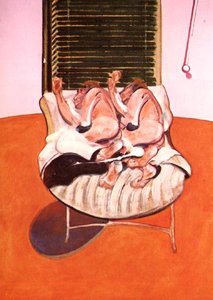
Francis Bacon's haunting 'Two Figures Lying on a Bed' (1968) explores trauma and vulnerability through distorted forms & unsettling imagery. A key work of the Expressionist master.
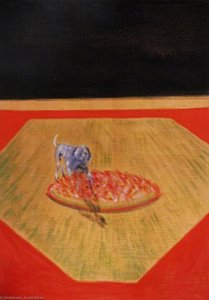
Explore Francis Bacon’s ‘Dog,’ a surreal oil painting blending Cubist & Surrealist styles. A gray elephant on a fractured stage – intense, unsettling, and powerfully modern.
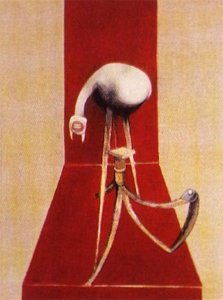
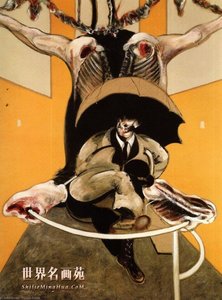
Explore Francis Bacon’s unsettling 'Second Version of Triptych,' a surreal 1988 oil painting. A powerful expressionist work featuring distorted figures & vibrant red, embodying anxiety and the human condition.
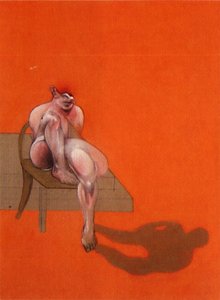
Triptych, left - Description: The image is a painting of a man sitting on a chair with his arms crossed. The man appears to be naked, and he has a strange expression on his face. The painting is set against an orange background that adds a vibrant touch to the scene. In addition to the main subject, there are two chairs in the image - one where the man is sitting and another chair located further
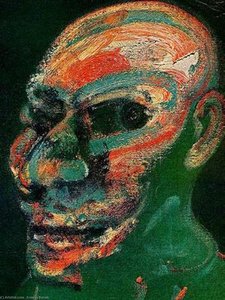
Explore Francis Bacon’s ‘Head (van Gogh)’ – a visceral portrait of raw emotion & distorted form. Thick impasto, unsettling colors, & Expressionist style. A powerful piece by a modern master.
Francis Bacon's 'Two Figures Lying on a Bed' (1968) delves into themes of trauma and vulnerability through grotesque distortions and disturbing visual elements—a cornerstone of Expressionist art.
Francis Bacon's 'Painting, 1946' (1971) is a haunting black & white masterpiece capturing raw emotion and existential themes. Explore the unsettling beauty of this iconic work by the renowned British artist.
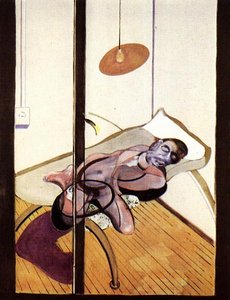
Sleeping Figure, 1974 - This haunting painting by Francis Bacon depicts a man lying on a bed with his head turned to the side, capturing a moment of profound stillness amidst unsettling imagery. The room’s details—chairs, lamps, and a clock—contribute to an atmosphere of quiet contemplation.