Showing 15 artworks with Francisco José De Goya Y Lucientes and with Emotional Expression
-
Francisco José De Goya Y Lucientes
-
Emotional Expression
Not available for this selection

- Phthalo Green
- White
- Putty
- Quinacridone Magenta
- Driftwood
- Rosy Brown
- Black
Not available for this selection
- Emotional Expression
- Francisco Goya
- Romantic Art
- Spanish Painter
- Human Suffering
- Dramatic Lighting
- Victorian Era Art
- Dark Palette
- Spanish Romanticism
- Spanish Art History
- Goya Masterpiece
- Dramatic Composition
- Goya Style
- Symbolic Imagery
- Spanish Art
- 18Th Century Art
- Romanticism
- Fine Art Print
- Goya Disasters War
- Woman Figure
- Oil Painting Reproduction
- Spanish Painting
- 19Th Century Art
- Satirical Art
- Etching
- Psychological Portrait
- Fine Art Reproduction
- Dark Romanticism
- Black And White Print
- Los Caprichos Etching
- Spanish Baroque
- Romanticism Painting
- Line Work Texture
- Goya Painting
- Black And White Drawing
- Human Conflict
- Artsdot Reproductions
- Printmaking
- Dramatic Artwork
- Nineteenth Century Art
- Goya Printmaking
- Spanish Tradition Art
- Art History Goya
- Social Critique
- Etching Printmaking
- Apple Symbolism
- Goya Technique
- Despair
- Gust Of Wind
- Deafness Artist
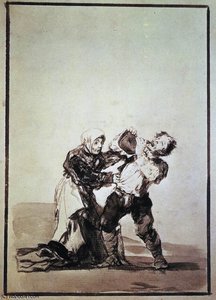
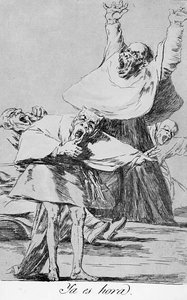
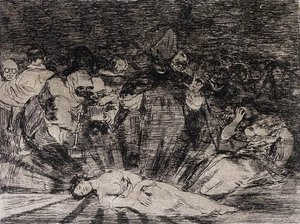
Explore Francisco Goya’s masterpiece ‘Capricho 23 Aquellos Polbos,’ a haunting depiction of Spanish society and the horrors of war, executed with masterful aquatint etching.
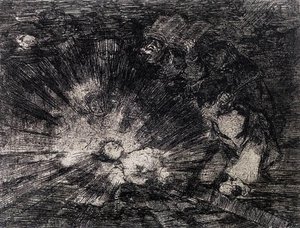
This poignant etching by Francisco Goya portrays a funeral scene dominated by sorrowful figures surrounding a deceased woman. Employing dense hatching, diagonal lines, and dramatic chiaroscuro, Goya’s masterpiece embodies Romanticism's emotive power and critiques the political landscape of Spain.
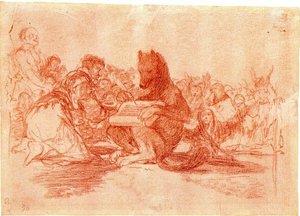
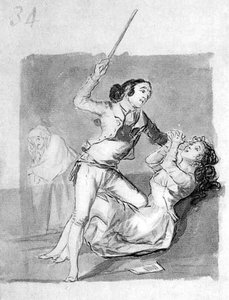
Francisco José de Goya y Lucientes (1746-1828), born in Fuendetodos, Spain, was a pivotal figure in art history. He transitioned from court painter to chronicler of human suffering and societal decay, mastering traditional techniques while forging a path toward modern artistic expression.
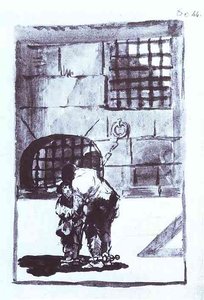
This drawing, part of Goya's exploration of human suffering during the Romantic era, showcases masterful hatching and cross-hatching to convey profound emotion. Inspired by 'Images of Spain,' it portrays three men imprisoned in chains, reflecting themes of oppression and introspection. Discover more about Goya’s artistic legacy at WikiArt.