Showing 10 artworks with George Grosz and with Berlin Dada

-
George Grosz
-
Berlin Dada
Not available for this selection
- Rosy Brown
- Celadon
- White
- Yellow Green
- Driftwood
- Putty
- George Grosz
- Berlin Dada
- Weimar Germany
- German Art
- Satirical Art
- New Objectivity
- Expressionism
- Social Commentary
- Black And White Art
- Black & White Art
- 1920S Art
- Oil Painting
- Political Cartoon
- Weimar Republic
- Expressionist Style
- Watercolor Painting
- Satire
- Geometric Shapes
- Loose Brushwork
- Verism
- Historical Painting
- Fine Art Reproduction
- Nude
- Vintage Poster
- Tempolelhofer Field
- Military Uniforms
- Dreamlike Art
- Portrait
- Monochromatic
- Pen And Ink Art
- Drawing
- Urban Alienation
- Female Figure
- Vintage Art
- Grosz Circe 1
- Self Portrait
- Fascism Artwork
- Bold Colors
- Nude Portrait
- 1927 Artwork
- Historical Print
- Violent Scene
- Soft Colors
- Melancholy Art
- Portrait Painting
- Oil On Canvas
- Art History
- Artist Muse
- Sketch Drawing
- Expressionism Art
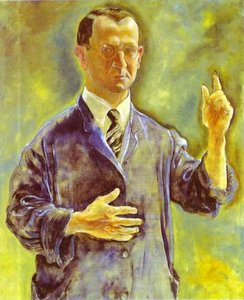
George Grosz's 'Self Portrait, Admonishing' (1927) is a powerful Verism oil painting critiquing society. See the artist's warning gaze & own a handmade reproduction.
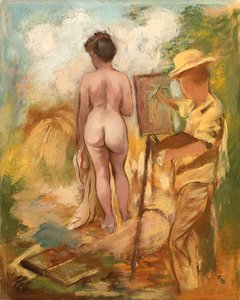
Explore George Grosz's 'Artist and Model' (1928), a captivating Verism painting depicting the relationship between an artist and muse, showcasing Berlin life.
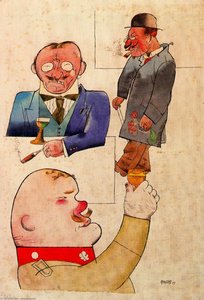
Explore George Grosz’s "German Wine & German Song." A powerful expressionist painting critiquing Weimar Germany. Discover its bold style & historical significance.
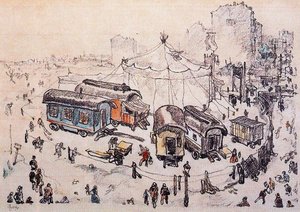
Experience George Grosz’s ‘On Tempolelhofer Field,’ a powerful indictment of Weimar Germany. Explore his New Objectivity style & satirical commentary on society & fascism.
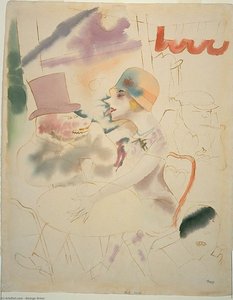
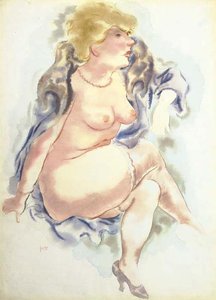
Explore George Grosz’s ‘Circe 1,’ a surreal watercolor depicting an intimate encounter in a theatrical setting. Expressionist brushwork & satirical themes – a unique piece by a Berlin Dada master.
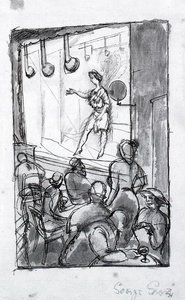
Explore George Grosz’s ‘Cabaret Scene 1,’ a striking black & white sketch capturing Weimar Berlin's nightlife. A powerful example of Dada & New Objectivity, showcasing his satirical style.
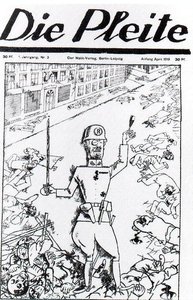
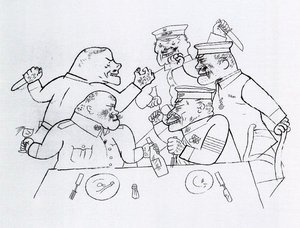
George Grosz’s ‘Cheers Noske’ – a stark black & white propaganda poster depicting Nazi violence. Explore its dynamic lines, geometric shapes & chilling antisemitic message.
George Grosz's 'Dr. Billig' is a stark, satirical sketch critiquing societal elites and the medical profession with expressionistic distortion and biting social commentary.
Explore George Grosz’s ‘The Model (Summer II)’ – a delicate watercolor portrait capturing beauty & introspection. A key work from Berlin Dada, showcasing his satirical style.
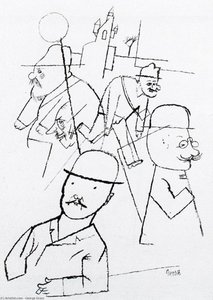
George Grosz’s ‘Baltikumer’ – a stark black & white political cartoon depicting brutal violence. Explore this New Objectivity masterpiece's satirical critique of Weimar Germany.