Showing 6 artworks with Georges Seurat and with 1890 and with Fine Art Reproduction
-
Georges Seurat
-
1890
-
Fine Art Reproduction
Not available for this selection
- Putty
- Quinacridone Magenta
- Gray
- White
- Georges Seurat
- Fine Art Reproduction
- Neo-Impressionism
- Modern Art
- Pointillism
- Pointillism Painting
- Color Theory
- 1890 Painting
- Luminous Precision
- Optical Art
- Post-Impressionist Art
- Light And Color
- Art History
- French Impressionism
- Impressionist Art
- Marine Art
- Coastal Landscape
- French Painting
- French Impressionist
- Impressionist Style
- Beach Landscape
- Oil On Canvas
- Modern Art Impressionist
- Petit Fort Philippe
- Chromatic Luminarism
- Symbolism Art Style
- Parisian Painting
- Impressionistic Style
- Art Deco Influence
- Divisionist Technique
- Impressionism
- Evening Harbor
- Harbor Scene
- Musical Instruments Painting
- Kröller-Müller Museum Otterlo
- Coastal Painting
- French Art
- Vibrant Colors Artwork
- Table Setting
- Woman Portrait
- Late 19Th Century Art
- Color Theory Seurat
- Decorative Art
- Art Decoration Seurat
- French Painting 1890
- Seascape Painting
- Landscape Painting
- Beach Scene
- Optical Illusion Painting
- Dance Performance Art
Georges Pierre Seurat (1859-1891), a pioneer of luminous precision, revolutionized painting with Pointillism—a technique rooted in scientific observation and optical illusion. His meticulous approach to color and composition profoundly impacted the trajectory of modern art.
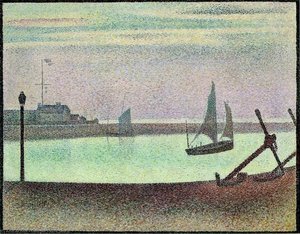
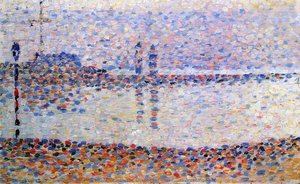
Explore Georges Seurat's masterpiece 'The Channel at Gravelines, Evening,' a luminous Pointillist depiction of a tranquil harbor scene. Discover its artistic significance and order your exquisite hand-painted reproduction today!
Featured in the National Gallery collection, "The Channel at Gravelines" represents a pivotal moment in art history.
'The Channel at Gravelines' resides in the National Gallery collection, marking a significant achievement in art history.
Considered one of Seurat's final works, it exemplifies his Neo-Impressionist approach and demonstrates remarkable control over color and composition. It was donated by Caroline Marmon Fesler to the Indianapolis Museum of Art.