Showing 24 artworks out of 30 with Georges Seurat and with Light And Color

-
Georges Seurat
-
Light And Color
Not available for this selection
- Espresso
- Putty
- Celadon
- Gray
- Driftwood
- Phthalo Green
- Quinacridone Magenta
- Rosy Brown
- Bronze
- White
- Light And Color
- Georges Seurat
- Pointillism
- Fine Art Reproduction
- Modern Art
- French Art
- Impressionism
- Landscape Painting
- Optical Art
- Neo-Impressionism
- Decorative Art
- Color Theory
- Impressionist Influence
- Pointillism Painting
- Impressionist Art
- French Impressionism
- 1883 Artwork
- Art History
- French Painting
- Parisian Art
- Art Deco Style
- Painting Technique
- Fine Art Print
- Chromatic Precision
- 1890 Painting
- Chromatic Luminarism
- 1884 Artwork
- Botanical Painting
- Geometric Precision
- Parisian Painting
- Parisian Landscape
- Portrait Painting
- Color Dots Technique
- Parisian Art Scene
- Color Dots
- Modern Art History
- Parisian Scene
- Parisian Painter
- Boat Painting
- Normandy Coastline
- Artistic Precision
- Seurat Painting
- Outdoor Scene
- Boats
- Painting
- Seine River
- Optical Illusion
- 19Th Century Painting
- Honfleur Harbor
- Calm Composition
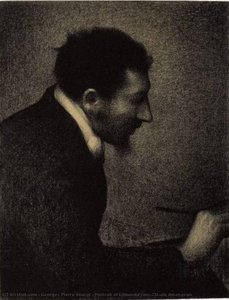
Born in Paris in 1859, Georges Seurat revolutionized painting with Pointillism—a method prioritizing optical truth. His early life fostered artistic exploration, culminating in collaborations with fellow artists like Aman-Jean.
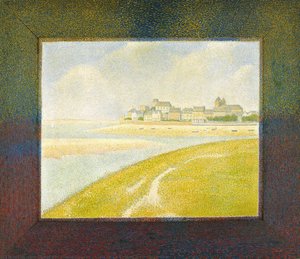
Experience the serene beauty of Georges Seurat’s ‘View of Le Crotoy.’ This luminous Impressionist landscape captures a picturesque riverside town scene with boats, buildings, and figures—a testament to Seurat's pioneering Pointillist technique.
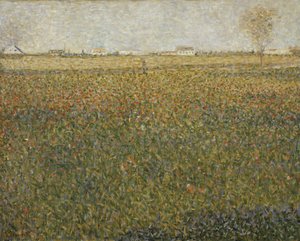
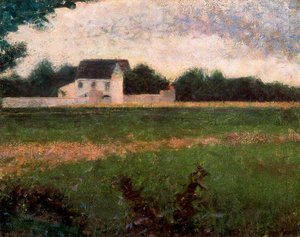
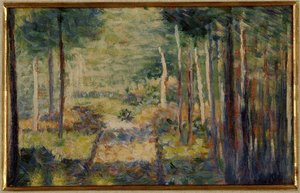
Landscape of the Ile-de-France - This captivating painting by Georges Seurat exemplifies Pointillism, utilizing tiny dots of color to create luminous and detailed impressions of rural France. Admire the serene beauty captured in shades of green, brown, and white.
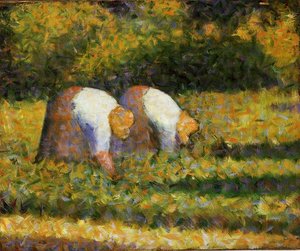
Admire Georges Seurat’s ‘Farm Women at Work,’ a luminous Pointillist masterpiece capturing rural labor with vibrant color and meticulous detail. Explore a stunning reproduction from WikiArt!
A Pioneer of Luminous Precision: The Life and Art of Georges Seurat Georges Pierre Seurat (1859-1891) revolutionized painting with his pioneering use of Pointillism, influenced by scientific theories on color perception. His artistic vision sought to capture the fleeting effects of light and atmosphere—a legacy that continues to inspire artists today.
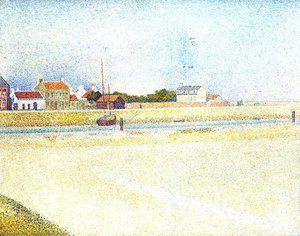
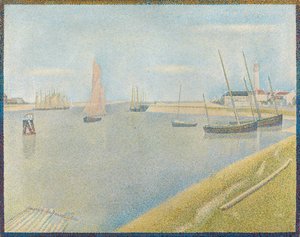
Featured in the National Gallery collection, "The Channel at Gravelines" represents a pivotal moment in art history.
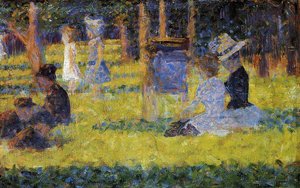
Georges Seurat's 'Couple Dancing' exemplifies Pointillism, utilizing tiny dots of color to recreate an impressionistic scene with remarkable precision and luminosity—a cornerstone of modern art.
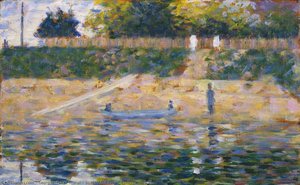
Considered a pioneer of luminous precision, Georges Seurat revolutionized painting with his innovative Pointillist approach. His dedication to scientific observation and artistic experimentation resulted in groundbreaking works like "Bathers at Asnières" and "Boat by the Bank, Asnieres", which continue to inspire admiration.
Experience the serene beauty of Georges Seurat's 'The Canal at Gravelines.' This Pointillist masterpiece captures a tranquil harbor scene bathed in diffused light, showcasing meticulous detail and harmonious color palettes.
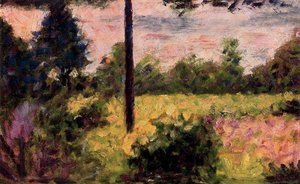
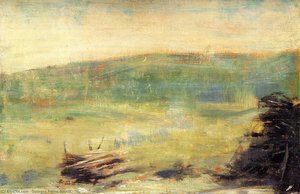
Experience the serene beauty of Georges Seurat's Landscape at Saint-Ouen – a masterpiece of Pointillism exploring light and color with meticulous precision. Discover our high-quality reproduction.
Inspired by scientific principles and influenced by Impressionist predecessors like Claude Monet, Seurat’s work represents a pivotal moment in artistic history. Its enduring appeal lies in its harmonious blend of observation, intellect, and aesthetic beauty.
Georges Pierre Seurat (1859-1891) revolutionized painting with his pioneering use of Pointillism, influenced by scientific theories on color perception. His artistic vision sought to capture the fleeting effects of light and atmosphere—a legacy that continues to inspire artists today.
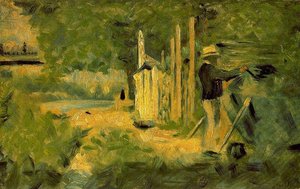
Georges Seurat's 'Man Painting His Boat,' painted in 1883, exemplifies Neo-Impressionism with its meticulous pointillist technique and luminous precision—a groundbreaking fusion of scientific observation and artistic vision.