Showing 21 artworks with Georges De La Tour and with artwork date before 1639 and with artwork date after 1629
-
Georges De La Tour
-
-1639
-
1629+
Not available for this selection
- Walnut
- Espresso
- Phthalo Green
- Black
- Clay
- Putty
Not available for this selection
- Georges De La Tour
- French Baroque
- Baroque Painting
- Religious Art
- Chiaroscuro
- 17Th Century Art
- Baroque Art
- Oil On Canvas
- Mary Magdalene
- Light And Shadow
- Medieval Art
- Skull Symbolism
- Louvre Museum
- Spiritual Contemplation
- Tenebrism
- Religious Painting
- Chiaroscuro Art
- Contemplation
- Dramatic Painting
- Dark And Light Art
- Religious Symbolism
- Tenebrism Painting
- Renaissance Painting
- Candlelight Painting
- Memento Mori
- Art Collector
- Darkness And Light
- Symbolic Painting
- Fine Art Print
- Renaissance Art
- Dramatic Lighting
- Classical Painting
- Candlelight Illumination
- Wall Hanging
- Chiaroscuro Technique
- Faith Symbolism
- French Painting
- Realism
- Luxury Detail
- Biblical Scene
- Flea
- Still Life
- Flickering Candlelight
- Darkness Light
- Detail
- Saint Jerome
- Warm Candle Glow
- Color Palette
- Meditative Artwork
- Portraiture
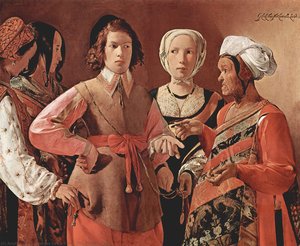
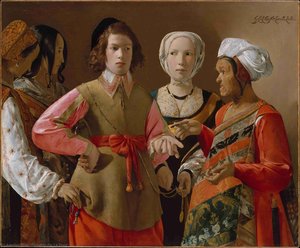
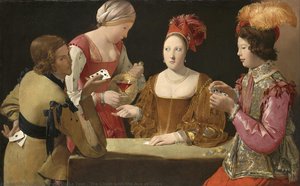
Discover Georges de La Tour’s ‘The Fortune-Teller’ (1635). A Baroque masterpiece of dramatic light & shadow, capturing intimate social scenes. Explore its symbolism & timeless beauty.
Explore Georges de la Tour's 'Fortune Teller' (1632). This Baroque masterpiece showcases dramatic chiaroscuro & intimate realism in a captivating family portrait. Own a hand-painted reproduction today!
The painting is housed in the Louvre Museum in Paris. It's considered one of De La Tour's most iconic works and a testament to his artistic prowess.
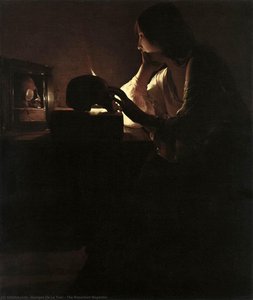
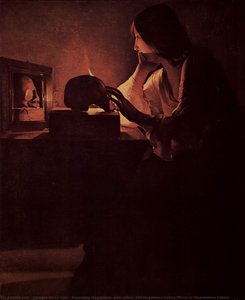
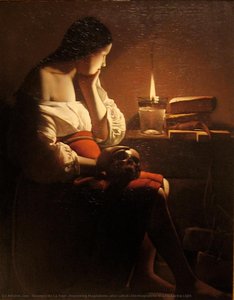
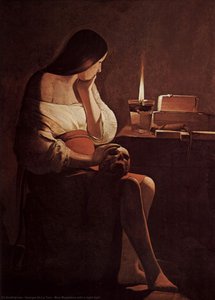
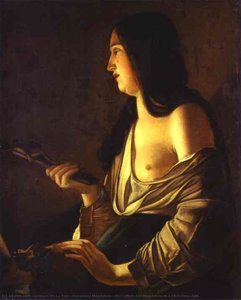
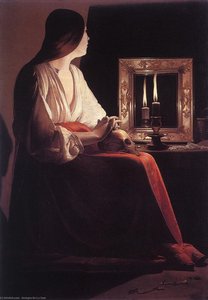
Delve into Georges de La Tour’s evocative depiction of Mary Magdalene, rendered in exquisite Baroque style. Explore its symbolism—death, faith, and repentance—expressed through masterful chiaroscuro lighting and serene composition.
Explore Georges de La Tour's haunting masterpiece, "Repenting Magdalene," illuminated by candlelight and reflecting on mortality. Discover the symbolism of light, skull, and mirror in this iconic Baroque painting.
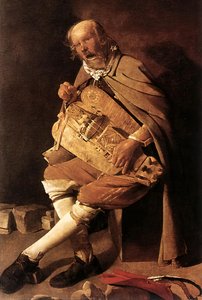
Delve into the mesmerizing world of Georges de La Tour’s ‘The Hurdy-gurdy Player,’ a Baroque masterpiece illuminated by dramatic chiaroscuro and imbued with spiritual contemplation. Explore its symbolism, technique & historical context.
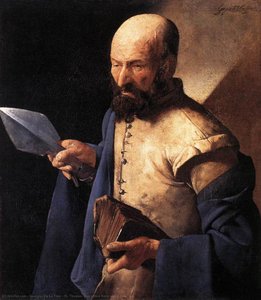
Georges de La Tour’s haunting ‘St. Thomas,’ bathed in dramatic chiaroscuro, captures the solemn contemplation of faith amidst profound darkness—a quintessential Baroque depiction by a master renowned for his evocative use of light and shadow. Explore this exquisite hand-painted reproduction.
Witness Georges de la Tour’s 'Repenting Magdalene': A Baroque masterpiece of dramatic chiaroscuro & profound emotion. Explore this iconic 1637 painting's symbolism & artistry.
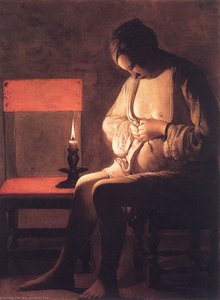
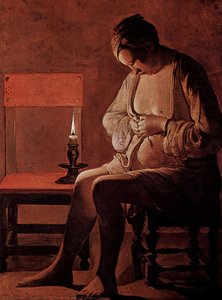
Georges de La Tour's 'Woman Catching Fleas' (1630) is a haunting Baroque portrait, masterfully capturing a moment of quiet unease and subtle drama with striking chiaroscuro lighting. Explore this enigmatic work.
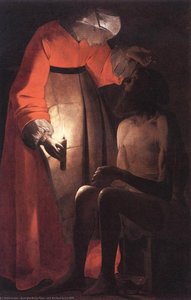
Experience the haunting beauty of Georges de La Tour’s ‘Job Mocked by His Wife,’ a masterful Baroque depiction capturing biblical drama with striking chiaroscuro and profound spiritual contemplation.
Georges de La Tour’s haunting depiction of Mary Magdalene embodies Baroque artistry—a masterful blend of chiaroscuro and symbolism—illuminating a solemn tableau featuring a skull and a contemplative Magdalene bathed in the ethereal glow of a night light. Explore this evocative masterpiece and bring its timeless beauty into your home.
Dramatic tenebrism and flickering candlelight define this intimate Baroque masterpiece by Georges de la Tour featuring a woman in quiet contemplation, inviting you to explore the profound beauty of his shadowed world.
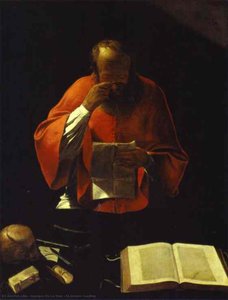
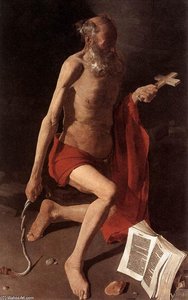
Dramatic tenebrism defines this 1629 masterpiece by Georges de La Tour as Saint Jerome finds spiritual clarity amidst candlelight shadows, inviting you to explore the profound depth of French Baroque artistry.
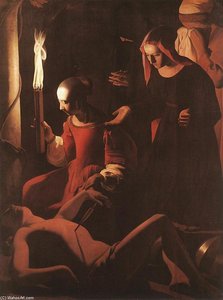
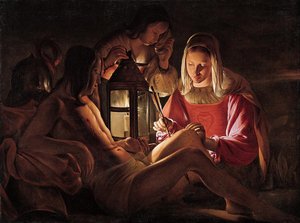
Bathed in dramatic chiaroscuro, Georges de la Tour’s St. Sebastian embodies the solemn spirituality of the Baroque era. This poignant depiction portrays a nun illuminating a tortured man with a lantern—a masterful blend of light and darkness that invites contemplation.