Showing 21 artworks with Gustav Klimt and with Vienna Kunstgewerbeschule
-
Gustav Klimt
-
Vienna Kunstgewerbeschule
Not available for this selection
- Rosy Brown
- Putty
- Walnut
- Phthalo Green
- Espresso
- Sea Green
- Khaki
- Vienna Kunstgewerbeschule
- Gustav Klimt
- Art Nouveau
- Decorative Art
- Vienna Secession
- Symbolism
- Fine Art Reproduction
- Austrian Painter
- Female Figure
- Symbolist Painting
- Gold Leaf Painting
- Portrait Painting
- Austrian Art
- Gold Leaf
- Fine Art Print
- Allegory
- Female Nude
- Portrait
- Floral Ornamentation
- Golden Phase
- Gold Leaf Art
- Nineteenth Century Art
- Erotic Art
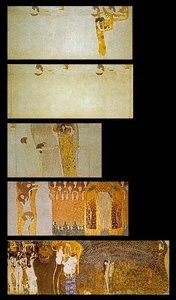
- Beethoven Frieze
- Symbolic Imagery
- Female Portraiture
- Sensual Art
- Symbolist Art
- Byzantine Influence
- Symbolism Art
- Portraiture
- Black And White Drawing
- Color Palette
- Gold Leaf Artwork
- Floral Patterns
- Woman Portrait
- Japanese Art Influence
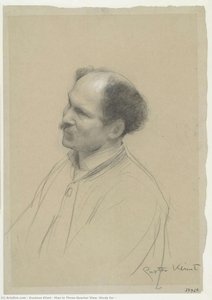
- Portrait Drawing
- Embrace
- 1910 Artwork
- Austrian Art Deco
- Prehistoric Art Style
- Legal Order Sculpture
- Gold Leaf Detail
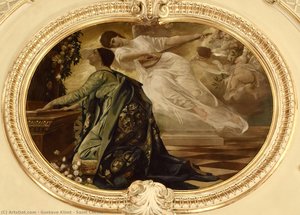
- Klimt Saint Cecilia
- Embrace Motif
- Decorative Art] }
- Academic Realism
- Tranquility
- Ornamental Design
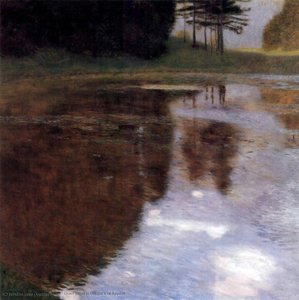
Experience Gustav Klimt's serene masterpiece – 'Quiet Pond in the Park of Appeal.' Explore Symbolism’s tranquil beauty, intricate patterns & Klimt’s influence on modern art at WikiArt.
Klimt was a pivotal figure in the Vienna Secession, a movement that challenged academic conventions and championed artistic innovation. The Secession aimed to establish an independent artistic space outside of the conservative influence of the Künstlerhaus.
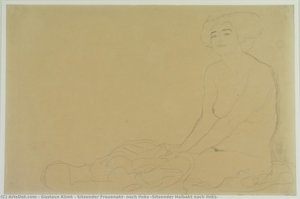
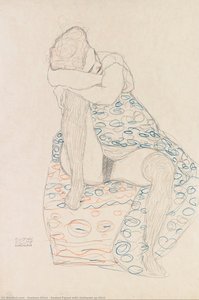
Admire Gustav Klimt's iconic 'Seated Figure with Gathered up Skirt,' a masterpiece of Art Nouveau symbolism and eroticism from 1910. Explore its intricate details and captivating beauty.
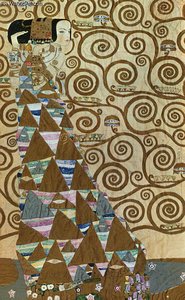
Gustav Klimt’s ‘Expectation,’ created between 1905 and 1909, is an allegorical watercolor painting housed in the Museum of Applied Arts in Vienna. This iconic piece embodies Art Nouveau's opulent style and decorative sensibilities through stylized figures adorned with gold leaf and swirling geometric motifs—a testament to Klimt’s masterful synthesis of fine art and applied arts.
Gustav Klimt’s “Mother and Child,” painted in 1905, portrays Emilie Flöge cradling her nephew Helene. Symbolized by the golden backdrop and geometric motifs, it embodies themes of femininity, tenderness, and timeless beauty—a cornerstone of Klimt's artistic legacy.
Admire Gustav Klimt's 'Das Märchen,' a mesmerizing lithograph capturing the sensual allure of two nude women entwined, symbolizing desire and beauty within the Art Nouveau movement.
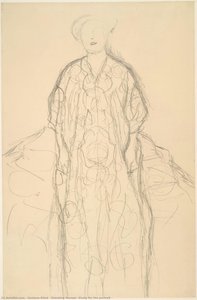
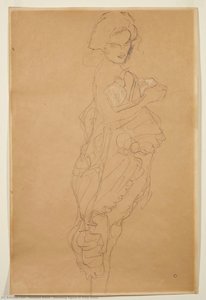
Admire Gustav Klimt's iconic 'Standing Figure in Frilly Dress,' a captivating sketch embodying Art Nouveau elegance and featuring intricate gold leaf detailing—a masterpiece from Vienna Secession.
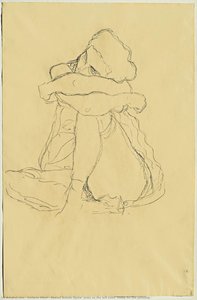
A captivating black and white drawing by Gustav Klimt depicting a woman seated with her arms around her knees, adorned with a hat—a timeless piece reflecting contemplation and artistic elegance.