Showing 21 artworks with Honoré Daumier and with Social Commentary

-
Honoré Daumier
-
Social Commentary
Not available for this selection
- Espresso
- Black
- Phthalo Green
- Quinacridone Magenta
- Putty
- Cobalt Violet
- Gray
- Driftwood
- Celadon
- White
- Social Commentary
- Honoré Daumier
- Realism
- Satire
- Daumier
- French Art
- Black And White
- Painting
- Lithograph
- Portrait
- Printmaking
- 19Th Century Art
- France
- French Realism
- 19Th Century
- Oil On Canvas
- Movement
- Paris
- Comedy
- Caricature
- Sculpture
- Daumier Style
- Satirical Art
- Art History
- Ratapoil
- Wall Art Decor
- French Impressionism
- Dramatic Chiaroscuro
- Nineteenth Century
- 19Th Century Satire
- Victorian Art
- Daumier Lithograph
- Xix Century Art
- Oil Painting
- Symbolism
- Art Reproduction
- Earth Tones
- Detail
- Watercolor Painting
- Laundry Woman Portrait
- Liberty
- Washerwoman
- Allegorical
- Women
- Expressionism Art
- French Sculpture
- Belgrade Museum
- Public Gathering
- Political Cartoon
- Lithograph Print
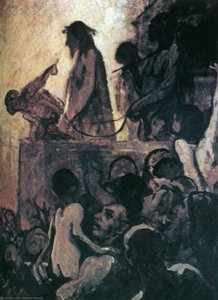
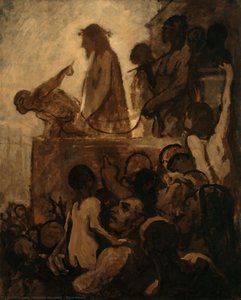
Honoré Daumier’s 'We Want Barabbas' – a powerful 1852 realist painting depicting social injustice & human suffering. Explore its symbolism, technique & historical context.
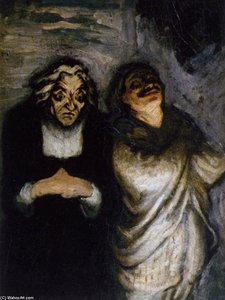
Experience Honoré Daumier's 'Scene from a Comedy,' a satirical masterpiece capturing social commentary with striking realism. Explore the painting’s nuanced figures and Daumier’s legacy at ArtsDot.com.
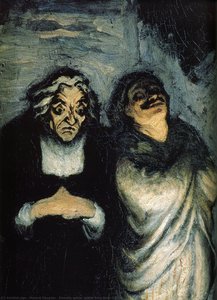
Honore Daumier's 'Comedy Scene (Scene from Moliere)' captures a lively Parisian encounter with masterful draftsmanship and social commentary. Explore the dynamic scene of two men in a black & white painting, reflecting 19th-century French life.
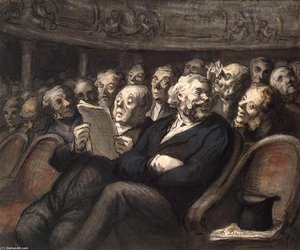
Daumier’s ‘Intermission at the Comédie Française’ – a captivating 1858 work showcasing social satire in a unique, expressive style. Explore this iconic piece!
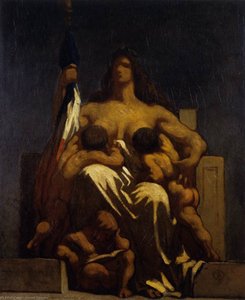
Honoré Daumier's "The Republic" (1848) is a powerful political satire depicting a woman embodying liberty and justice on a boat, reflecting the ideals of the French Revolution. A masterpiece of realism & social commentary.
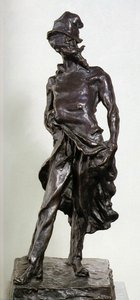
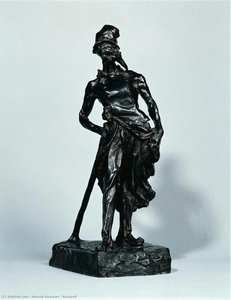
Honoré Daumier's 'Ratapoil' (front view) is a powerful bronze sculpture capturing a working-class figure, reflecting social commentary and the artist’s unique realism. Explore its dynamic pose & historical context.
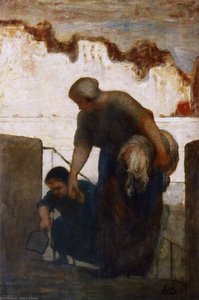
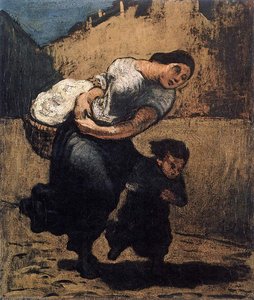
Honoré Daumier's "The Washerwoman" (1863) captures a poignant scene of labor and family amidst Parisian urban life. A powerful realist painting reflecting social realities, showcasing resilience and hardship.
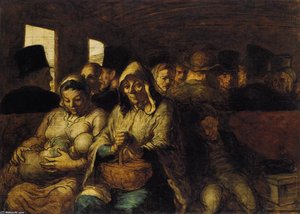
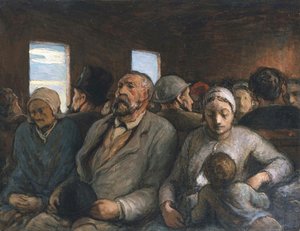
Experience 'The Third-class Carriage' by Honoré Daumier – a poignant realism capturing the daily struggles of ordinary people on a 19th-century journey. Own a museum-quality reproduction of this iconic work.
Daumier’s poignant lithograph captures Parisian washerwoman labor under pressure during the Second Empire, showcasing masterful tonal gradation and chiaroscuro to convey quiet dignity amidst hardship—a timeless portrait by Honoré Daumier inviting you to explore this iconic artwork.
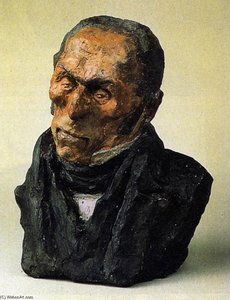
Honoré Daumier's "Guizot or the Bore" (1832) is a biting satirical lithograph lampooning French politician François Guizot. Witness Daumier’s masterful critique of 19th-century society through this iconic artwork.
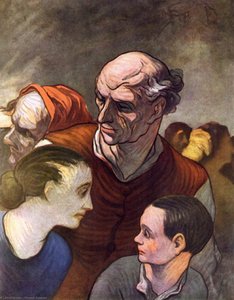
This striking black and white lithograph portrays a family huddled together on barricades during the turbulent year of 1848. Daumier’s masterful realism conveys a powerful message about human connection and resistance against oppression, reflecting his unwavering commitment to social justice.
The Third-Class Carriage by Honoré Daumier is an unfinished oil painting portraying passengers in a cramped third class train car. It exemplifies Daumier's commitment to depicting everyday life with unflinching honesty and capturing the essence of human experience.
Explore Honoré Daumier's poignant Ecce Homo fresco – an unfinished masterpiece reflecting social critique and religious devotion, now famous for Cecilia Giménez’s unintentional restoration attempt.
Discover Honoré Daumier's iconic 'Ratapoil' sculpture! This powerful black & white photograph captures the satirical spirit of 1850s France. Explore Daumier’s life and legacy – a master of caricature and social commentary.
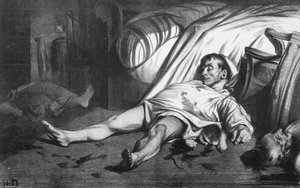
Honoré Daumier's 'Rue Transnonain' powerfully depicts the brutal aftermath of a Parisian uprising, capturing chaos and loss with stark realism & social commentary.
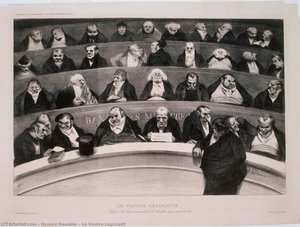
A powerful black and white scene of political gathering captures the satirical essence of Honoré Daumier's 1834 masterpiece Le Ventre Legislatif, inviting you to explore this profound piece of French realism.
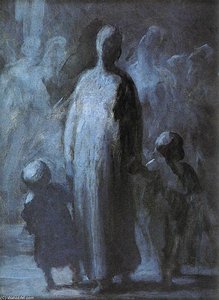
Explore Honoré Daumier's poignant depiction of familial urgency – 'Mother,' painted in 1855, captures a dramatic scene with expressive brushstrokes and dark hues at Belgrade’s National Museum.
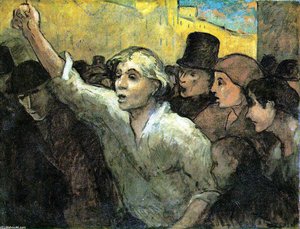
Honoré Daumier’s “The Uprising” portrays a gathering of people expressing defiance against authority, skillfully blending realism with expressive draftsmanship. This 1860 masterpiece exemplifies Daumier’s commitment to social commentary and artistic innovation.
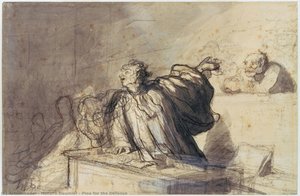
A poignant black and white scene of a man in repose captures the satirical realism of Honoré Daumier from 1860, inviting you to explore this powerful masterpiece of 19th-century French social commentary.
Honoré Daumier (1808-1879) was a French printmaker, caricaturist, painter, and sculptor. Born in Marseille, France, he is renowned for his satirical lithographs that critiqued the social and political landscape of 19th-century France. Daumier’s work