Showing 6 artworks with James Ensor and with Psychological Portrait
-
James Ensor
-
Psychological Portrait
Not available for this selection
- Espresso
- Sap Green
- Driftwood
- Mahogany
- Rosy Brown
Not available for this selection
- James Ensor
- Psychological Portrait
- Expressionism
- Avant-Garde Art
- Symbolic Art
- Fine Art Print
- Belgian Art
- Dark Palette
- Portrait Painting
- Oil Painting
- Masks And Disguise
- Art Deco Style
- Symbolic Imagery
- Belgian Painter
- Modern Art
- Carnival Atmosphere
- Avant-Garde Painting
- Mauritius Boogaerts
- Carnival Mask
- Portrait Daugusta Boogaerts
- Bold Colors
- Domestic Scene
- Oil Painting Reproduction
- Distorted Forms
- Art Deco Influence
- Belgian Artist
- Impressionism
- Ostend Museum
- Interior Scene
- Art Decoration
- Yellow Walls
- La Dame En Bleu
- Dark Humor
- Early Career
- Emotional Brushstrokes
- Belgian Painting
- Blue Woman
- Carnival Masks
- Black And White Art
- Oil Reproduction
- Art Deco
- Guitar Player
- Surrealism Inspiration
- Mirror Reflection
- Art Reproduction
- Satirical Artwork
- Fine Arts Museum Bilbao
- Symbolism
- Early 20Th Century Painting
- Children Washing
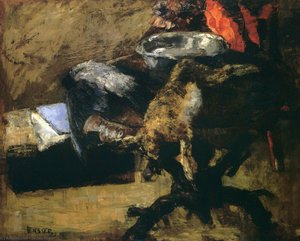
James Ensor’s ‘Lievre et corbeau,’ depicting a woman and cat in a chair, embodies Expressionism’s unsettling aesthetic. This black-and-white print captures the intimacy of companionship and critiques societal hypocrisy with masterful symbolism. Order a high-quality giclée reproduction today at ArtsDot.com!
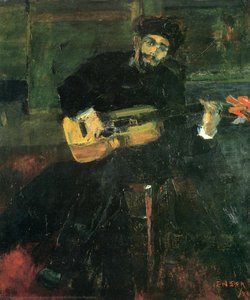
James Ensor’s ‘Portrait of Dario de Regoyos,’ painted in 1884, showcases a man playing the guitar amidst two figures, embodying Ensor's characteristic use of symbolism and unsettling realism. This piece exemplifies his contribution to Impressionism and Surrealism.
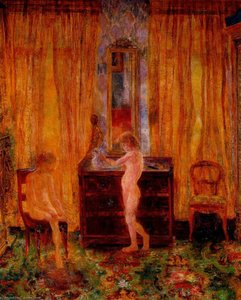
Admire James Ensor's 'Children Washing,' an Expressionist masterpiece depicting two nude children bathed in yellow light within a domestic setting. Explore its symbolism and artistic influence on Impressionism.
Ensor’s fascination with masks—a direct reflection of his childhood experiences—is central to understanding his artistic vision. He deliberately employed grotesque imagery and unsettling compositions to challenge conventional notions of beauty and truth, establishing himself as a pioneer of avant-garde art.