Showing 5 artworks with Lorenzo Ghiberti and with 1425 and with Religious Iconography
-
Lorenzo Ghiberti
-
1425
-
Religious Iconography
Not available for this selection
- Espresso
- Rosy Brown
- Driftwood
- Lorenzo Ghiberti
- Religious Iconography
- Gates Of Paradise
- Biblical Art
- Renaissance Sculpture
- Renaissance Painting
- Florentine Art
- Medieval Art
- Biblical Narrative
- Renaissance Art
- Bronze Casting
- Decorative Arts
- Bronze Sculpture
- Fresco Painting
- Flood Storytelling
- Florentine Sculpture
- Baptistery Florence
- Symbolism
- Bronze Artwork
- Detail Painting
- Fresco Art
- Gothic Revival
- Metalworking Mastery
- Michelangelo Buonarroti
- Medieval Art Influence
- Quattrocento Style
- Gothic Influence
- Michelangelo Inspiration
- Creation Of Adam
- Florentine Art History
- Florence Baptistery
- Renaissance Florence
- Florence Baptistery Gates
- Bronze Relief
- Artistic Legacy
- Humanist Ideals
- Noah Ark Painting
- Symbolism Art
- Michelangelo
- Fresco
- Eve
- Fresco Technique
- Renaissance Italy
- Joseph Story
- Florentine Painting
- Dante Alighieri
- Divine Artistry
- Adam And Eve Creation
- Biblical Painting
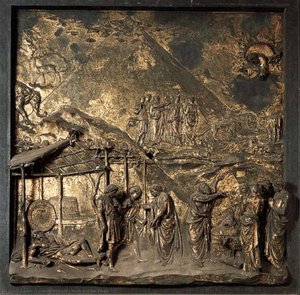
Explore "Scene of peace offerings," a stunning 1448 fresco by Paolo Uccello. Renaissance masterpiece featuring perspective & figures. A unique art investment.
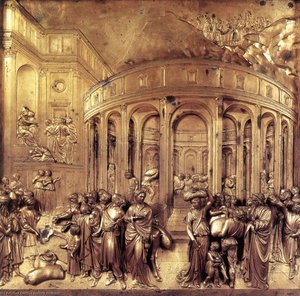
Lorenzo Ghiberti’s ‘The Story of Joseph,’ created in 1452, showcases a dramatic depiction of biblical events featuring numerous figures against an ornate building backdrop. Inspired by the biblical narrative and illuminated with meticulous craftsmanship, this panel exemplifies the artistic achievements of the Florentine Renaissance.
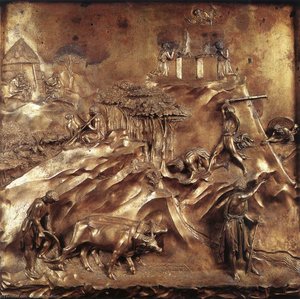
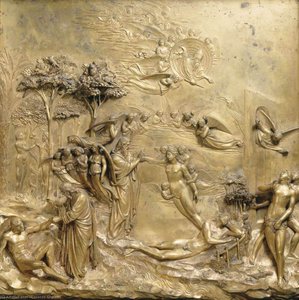
Panel No. 1: Creation of Adam and Eve by GHIBERTI, Lorenzo The Gates of Paradise, Baptistery, Florence Date 1425-52 Object type Sculpture Medium Plaster cast, late 18th century Dimensions 915 mm x 915 mm x 110 mm Collection Royal Academy of Arts Object number 03/1959 Acquisition Given by
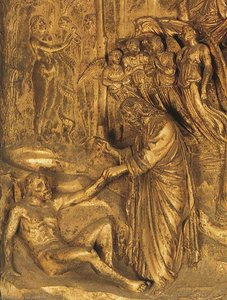
This monumental bronze sculpture depicts the biblical creation narrative, featuring God gifting Adam with life. Crafted by Lorenzo Ghiberti in 1425, it exemplifies Renaissance artistic excellence and innovative techniques.