Showing 24 artworks out of 30 with Max Ernst and with artwork date before 1940 and with artwork date after 1930

-
Max Ernst
-
-1940
-
1930+
Not available for this selection
- Espresso
- Putty
- Driftwood
- Rosy Brown
- Celadon
- Sap Green
- Gray
- Phthalo Green
- Prussian Blue
- Sea Green
- Steel Blue
- Walnut
- Quinacridone Magenta
- Bronze
- Surrealism
- Max Ernst
- German Art
- Painting
- Symbolism
- Surrealist Painting
- Vintage Art Print
- Max Ernst Surrealism
- Symbolic Imagery
- German Artist
- Avant-Garde Art
- Surrealist Art
- Dreamlike Imagery
- Collage
- Dreamscape
- Organic Forms
- Abstract
- Collector’S Item
- Modern Art Decor
- Illustration
- Frottage Technique
- Dreamlike
- Fantasy Art
- Fine Art Print
- Symbolic Painting
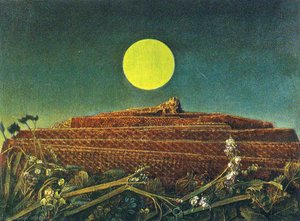
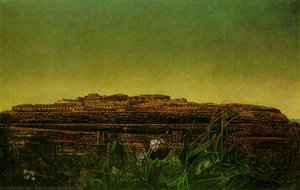
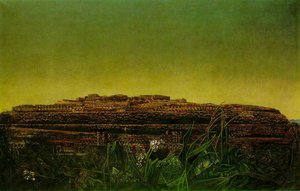
Explore Max Ernst’s ‘The Entire City,’ a surreal 1936 masterpiece blending ancient pyramids & dreamlike landscapes. A captivating blend of realism & fantasy, perfect for art lovers & collectors.
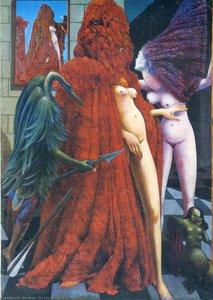
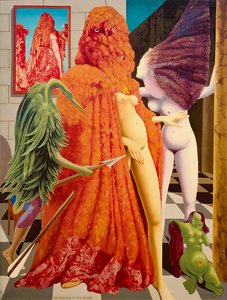
Explore Max Ernst’s ‘The Robing of the Bride’ – a surrealist masterpiece! Discover symbolism, vibrant colors & a captivating dreamlike scene. Perfect for art collectors & interior design.
Explore Max Ernst’s ‘The Robing of the Bride’! A surreal 1940 oil painting blending symbolism & dreamlike imagery. Perfect for art lovers & interior design.
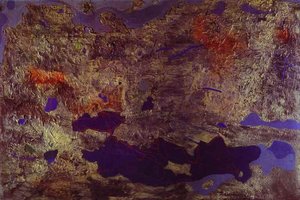
Discover Max Ernst’s ‘The Entire City,’ a surreal 1936 oil painting of an arid landscape. Explore its dreamlike style, bold colors & historical feel – a captivating masterpiece.
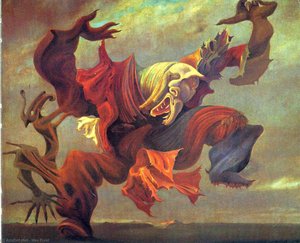
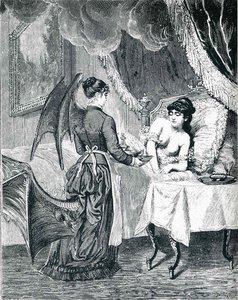
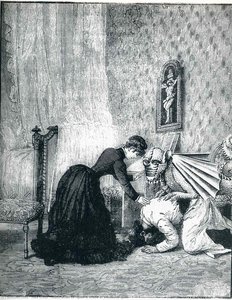
'The Angel of Hearth and Home,' retitled 'The Triumph of Surrealism' in 1938, embodies Freud's concept of humor – finding hidden similarities between dissimilar elements. Ernst’s depiction of an angel as a monstrous figure challenges conventional religious imagery.
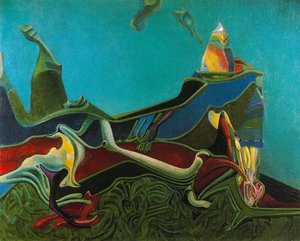
Landscape with Wheatgerm by Max Ernst – A surrealist painting depicting a mountainous landscape populated by birds and figures, reflecting Ernst’s philosophical exploration of art and psychology.
Explore Max Ernst’s ‘The Entire City,’ a captivating surrealist painting from 1935. Discover its dreamlike cityscape & innovative style – a masterpiece by a modern art icon.
Max Ernst's intellectual background profoundly influenced his art, exploring themes of psychology and societal disillusionment.
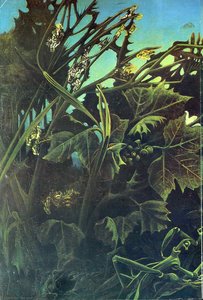
Max Ernst’s ‘Lust for Life’ captures a tranquil forest scene brimming with vibrant flora and delicate birds amidst a serene blue sky, showcasing the surrealist artist's evocative style from 1936 – discover this captivating artwork.
Max Ernst's 'Europe After the Rain I' (1933) is a surrealist collage masterpiece, reflecting post-war anxieties with dreamlike imagery and symbolic figures. Explore its Dada & German influences on ArtsDot.
Ernst’s meticulous technique—particularly his use of frottage and collage—contributes to the painting's textural richness and unsettling mood.
Explore Ernst's intellectual journey shaped by philosophy and psychology. Discover his innovative frottage technique and captivating surreal landscapes.
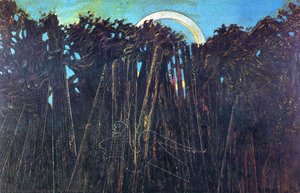
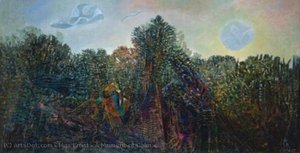
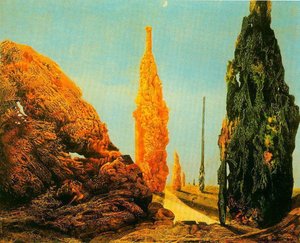
Explore Max Ernst's surrealist masterpiece 'A Moment of Calm,' depicting an evocative forest scene with abstracted tree forms and enigmatic bird figures—a testament to Ernst’s philosophical exploration of art and psyche.
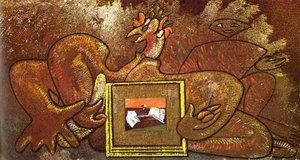
Max Ernst's 'Loplop Introduces Loplop' (1930) is a surreal collage masterpiece featuring two dragons and a vintage photograph, embodying Dadaism’s playful challenge to reality. Explore its layered symbolism & artistic innovation.
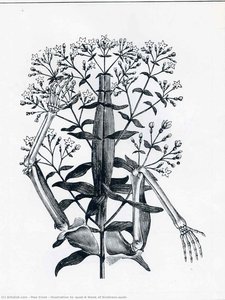
Explore Max Ernst's surreal 'Illustration to A Week of Kindness.' A skeletal figure entwined with a plant holds a fork, embodying mortality and unexpected humor in this iconic 1934 drawing.
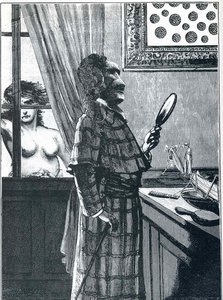
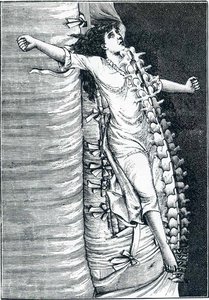
Explore Max Ernst’s 1934 monochrome engraving 'A Week of Kindness.' A haunting surreal illustration in the style of Dada & Romanticism, perfect for art collectors.
This artwork exemplifies Ernst’s fascination with psychology and dreamlike imagery, showcasing his mastery of hatching and cross-hatching to convey texture and emotion.
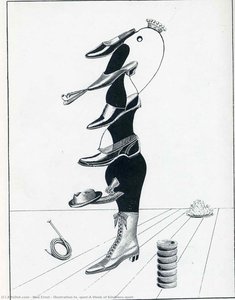
Explore Max Ernst’s surreal ‘A Week of Kindness’ illustration (1934). A whimsical assemblage of shoes & accessories in a dreamlike style. #Surrealism #MaxErnst
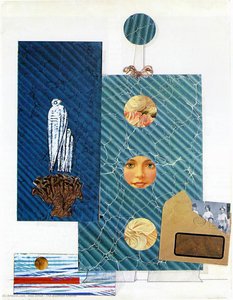
The Postman Cheval by Max Ernst (1932) is a Dadaist collage featuring a painting by Ernst alongside photographs and other decorative elements, reflecting the artist's exploration of surrealism and his critique of societal conventions.
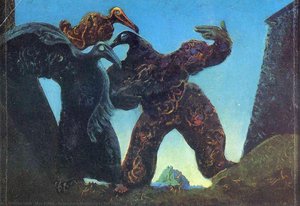
Max Ernst’s “Barbarians Marching to West” explodes with surrealist energy—textured cardboard depicts colossal birds battling amidst a desolate landscape, embodying primal conflict and humanity's precarious fate during WWII.
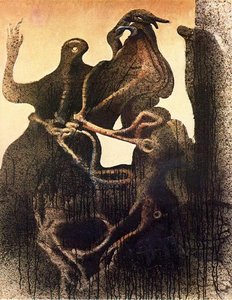
Surrealist Max Ernst’s ‘Birth of Zoomorph Couple,’ painted in 1933, depicts a captivating avian encounter amidst human figures—a masterful blend of symbolism and dreamlike imagery inviting viewers to explore this evocative artwork.
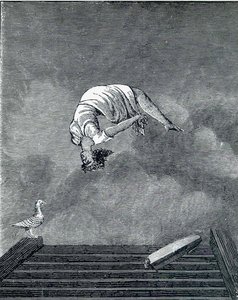
Discover Max Ernst's 1934 surreal illustration 'A Week of Kindness,' featuring intricate line work, symbolic themes, and a thought-provoking composition. Perfect for art collectors and enthusiasts of Dada and Surrealism.