Showing 12 artworks with Miné Okubo and with 1944 and with Wwii Art
-
Miné Okubo
-
1944
-
Wwii Art
Not available for this selection
- White
- Gray
- Espresso
- Rosy Brown
- Putty
Not available for this selection
- Wwii Art
- Resilience
- Japanese American Internment
- Tanforan Assembly Center
- Miné Okubo
- Black And White Illustration
- Japanese American Internment Camps
- Topaz Relocation Center
- Fine Art Reproduction
- Social Realism
- Resilience Artwork
- Black And White Drawing
- Citizen 13660
- Depression Era Art
- Ink On Paper
- Miné Okubo Drawing
- California History
- Family Portrait
- Miné Okubo Illustration
- Observation
- Japanese American Internment Camp
- Resilience Art
- Japanese Art Influence
- Sketchbook Drawings
- Horse Stall Cleaning
- Central Utah Relocation Project
- Mine Okubo Sketch
- Documentary Photography
- American Art Deco
- Drawing
- Domestic Life
- Cat Symbolism
- 1942 Artwork
- Child Observation
- Realistic Artwork
- Utah History
- 1942
- Graphic Novel
- Barracks Illustration
- Berkeley California
- Documentary
- Graphite Drawing
- Photography
- Illustration Style
- Citizen 13660 Memoir
- California 1942
- Social Observation
- Childhood Observation
- Prison Camp Life
- Historical Art
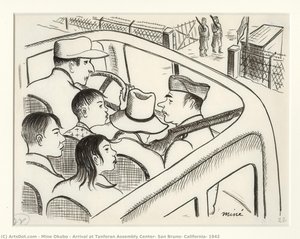
Explore Miné Okubo's poignant illustration depicting the arrival at Tanforan Assembly Center during WWII, capturing the anxieties and realities faced by Japanese Americans unjustly detained. Witness history through art.
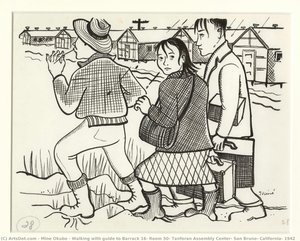
Explore Miné Okubo's poignant sketch of Tanforan Assembly Center during WWII—a powerful visual record of resilience and the challenges faced by Japanese Americans enduring internment amidst wartime anxieties.
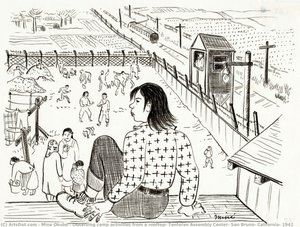
Witness the poignant scene of life within Tanforan Assembly Center during WWII through Miné Okubo's powerful black & white drawing, capturing resilience and confinement with striking detail.
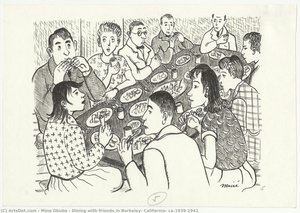
Dining with friends in Berkeley, California, ca.1939-1941 is a black and white drawing by Miné Okubo documenting her experiences at Tanforan and Topaz during World War II. Created in 1942-1944, it showcases a lively gathering of people around a dining table, reflecting the cultural context of the time.
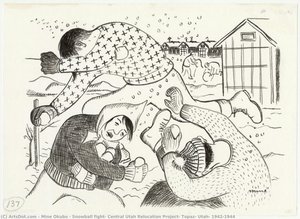
A poignant black-and-white illustration from 1944 depicting life at Topaz Relocation Center, Utah. Miné Okubo's powerful drawing captures the resilience and challenges faced by Japanese Americans during WWII.
Explore Miné Okubo's poignant Citizen 13660 – a groundbreaking graphic novel documenting the hardships and resilience of Japanese Americans during WWII. Discover her artistic legacy.
Experience the stark reality of WWII through Miné Okubo's evocative sketch depicting daily life at Tanforan Assembly Center – resilience, community, and quiet observation captured in meticulous detail.
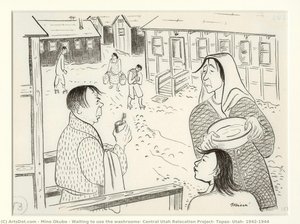
Explore Miné Okubo's poignant illustration 'Waiting to use the washrooms,' depicting life at Topaz War Relocation Center during WWII, capturing resilience and documenting the experiences of Japanese American internees.
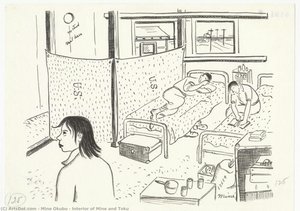
Interior of Mine and Toku is a powerful depiction of life within Japanese American internment camps during WWII by Miné Okubo. Created using ink on paper with bold lines and hatching techniques, the artwork captures the essence of confinement and resilience through its minimalist style.
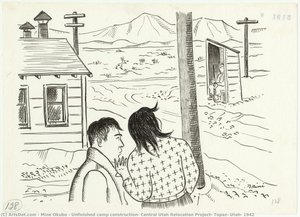
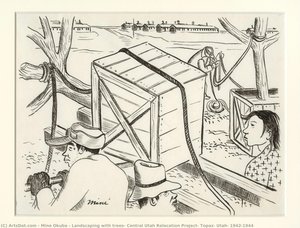
Explore Miné Okubo's poignant depiction of life within Topaz Relocation Camp during WWII – a black & white drawing capturing quiet observation amidst construction and resilience.
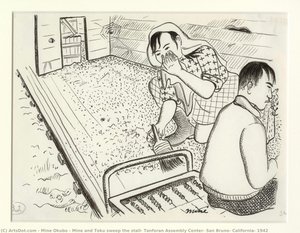
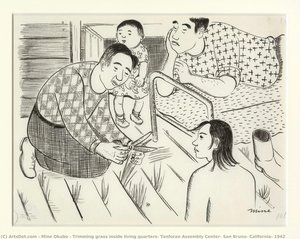
Explore Miné Okubo's poignant drawing 'Trimming grass inside living quarters,' capturing the resilience of Japanese Americans during WWII internment camps. Witness her artistic observation amidst hardship.
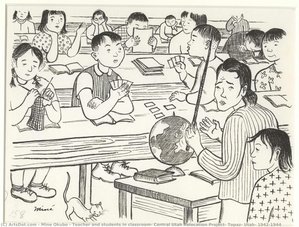
Explore Miné Okubo's poignant depiction of life within Topaz War Relocation Center during WWII—a testament to resilience and artistic observation amidst challenging circumstances.