Showing 24 artworks out of 43 with Miné Okubo and with Accent
Sort by:

Showing 24 artworks out of 43 with Miné Okubo and with Accent

Not available for this selection
Explore Miné Okubo's poignant abstract painting 'Untitled,' created during WWII incarceration and reflecting resilience through bold colors and symbolic figures—a powerful testament to artistic expression amidst adversity.
[Untitled] This untitled oil painting by Miné Okubo captures the essence of quiet contemplation with a woman and her feline companion. Employing a loose, abstract approach using bold strokes and vibrant purple hues, it conveys a dreamlike atmosphere. The artist’s meticulous attention to detail—from the woman's serene blue face to the yellow pendant adorning her necklace—creates a rich visual expe
Explore Miné Okubo's poignant 'Untitled' painting from 1974, reflecting resilience during WWII internment through vibrant colors and symbolic floral forms. A powerful testament to artistic expression.
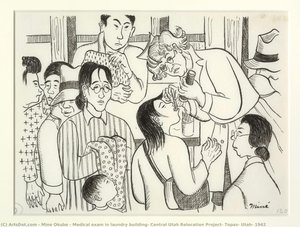
Witness 'Medical exam...', Mine Okubo’s poignant 1942 illustration from Topaz Relocation Center. A powerful WWII memory, hand-painted reproduction available.
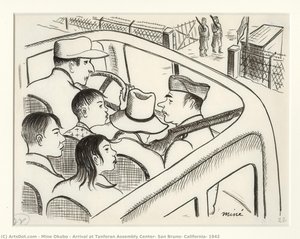
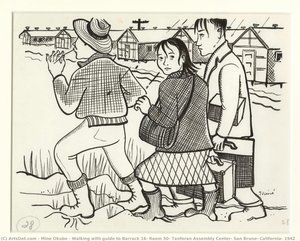
Explore Miné Okubo's poignant illustration depicting the arrival at Tanforan Assembly Center during WWII, capturing the anxieties and realities faced by Japanese Americans unjustly detained. Witness history through art.
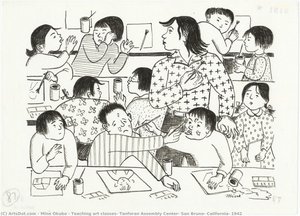
Mine Okubo’s ‘Teaching Art Classes’ captures WWII internment camp life through poignant black & white illustration. Explore this powerful artwork's realism & social commentary.
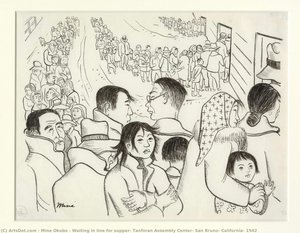
Mine Okubo’s ‘Waiting in Line for Supper,’ created during her incarceration at Tanforan Assembly Center (1942-1944), portrays a scene of quiet dignity amidst wartime hardship. This detailed ink drawing captures the essence of Japanese American experience, showcasing familial bonds and reflecting on the simple act of sharing a meal—a symbol of hope and perseverance.
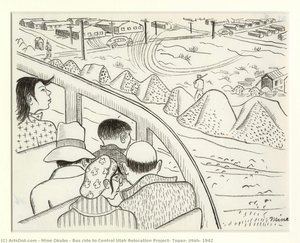
Experience Miné Okubo's haunting watercolor depiction of Japanese American resilience during the 1942 Utah relocation; discover this powerful historical art piece today.
Explore Miné Okubo's poignant drawings documenting WWII Japanese American incarceration. Witness resilience & injustice through her powerful graphic novel, 'Citizen 13660,' a vital historical record.
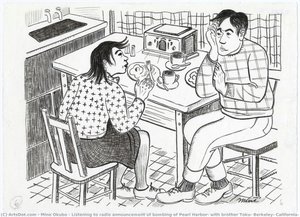
Witness history through Mine Okubo’s poignant 1941 illustration. ‘Listening…Pearl Harbor’ captures a family's shock during wartime. A powerful Japanese American art piece.
Explore Miné Okubo's poignant sketch of Tanforan Assembly Center during WWII—a powerful visual record of resilience and the challenges faced by Japanese Americans enduring internment amidst wartime anxieties.
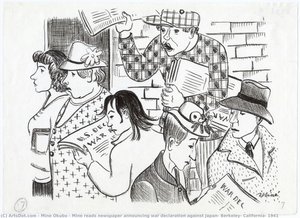
Explore Miné Okubo's poignant illustration depicting Berkeley residents reacting to the declaration of war against Japan in 1941—a testament to resilience and artistic observation amidst historical upheaval.
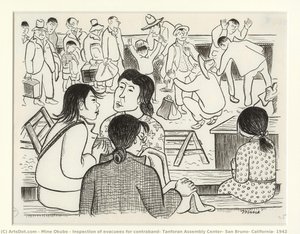
Explore Miné Okubo's poignant illustration depicting the inspection of evacuees at Tanforan Assembly Center during WWII, capturing the anxieties and realities of Japanese American incarceration with meticulous detail.
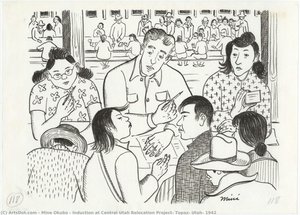
Explore Miné Okubo's poignant illustration depicting the arrival and registration process at Topaz Relocation Center during WWII—a testament to resilience, observation, and artistic witness.
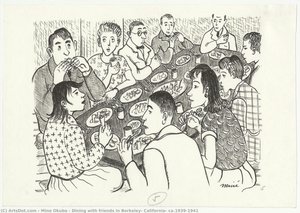
Dining with friends in Berkeley, California, ca.1939-1941 is a black and white drawing by Miné Okubo documenting her experiences at Tanforan and Topaz during World War II. Created in 1942-1944, it showcases a lively gathering of people around a dining table, reflecting the cultural context of the time.
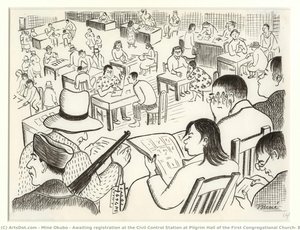
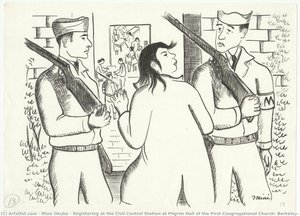
Awaiting registration at the Civil Control Station at Pilgrim Hall of the First Congregational Church, Berkeley, California, 1942 is a striking black-and-white ink drawing by Miné Okubo. Created during WWII, it portrays a crowded hall reflecting the anxieties surrounding Japanese American internment and showcases Okubo's masterful use of hatching and crosshatching to convey tonal variations.
This JSON response fulfills your request for a concise meta description optimized for SEO, incorporating key elements of the artwork information and its historical context.
Miné Okubo’s *Citizen 13660* chronicles her family’s experiences at Tanforan and Topaz relocation centers during World War II, portraying discrimination, isolation, and everyday life with remarkable detail. Her artistic journey reflects courage and observation amidst adversity.
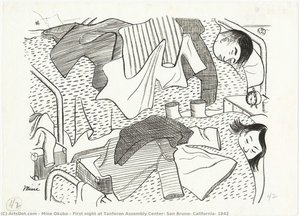
Witness Mine Okubo’s poignant ‘First Night’ at Tanforan Assembly Center. A powerful black & white drawing capturing WWII internment camp life, expressive realism, and human vulnerability.
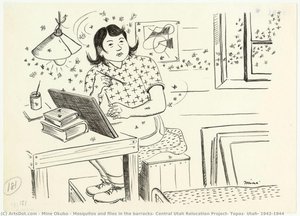
Witness Mine Okubo’s poignant ‘Mosquitos & Flies’ – a 1944 sketch capturing WWII life in Topaz Relocation Camp. Explore this unique black-and-white illustration via ArtsDot.
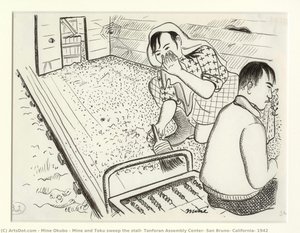
Experience the stark reality of WWII through Miné Okubo's evocative sketch depicting daily life at Tanforan Assembly Center – resilience, community, and quiet observation captured in meticulous detail.
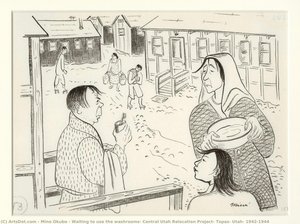
Explore Miné Okubo's poignant illustration 'Waiting to use the washrooms,' depicting life at Topaz War Relocation Center during WWII, capturing resilience and documenting the experiences of Japanese American internees.
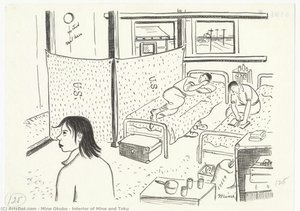
Interior of Mine and Toku is a powerful depiction of life within Japanese American internment camps during WWII by Miné Okubo. Created using ink on paper with bold lines and hatching techniques, the artwork captures the essence of confinement and resilience through its minimalist style.
Stay updated with the latest art news, exclusive offers, and decoration ideas.
Tell us about your project and our art experts will provide you with 3 personalized art suggestions.
Let Us Curate 3 Options Just for You - Free!