Showing 24 artworks out of 25 with Nicholas Roerich and with Cultural Preservation
-
Nicholas Roerich
-
Cultural Preservation
Not available for this selection
- Phthalo Green
- Gray
- White
- Midnight Blue
- Espresso
- Rosy Brown
- Bronze
- Steel Blue
- Quinacridone Magenta
- Driftwood
- Plum
- Khaki
- Coral
Not available for this selection
- Cultural Preservation
- Nicholas Roerich
- Himalayan Landscape
- Symbolism Art
- Landscape Painting
- Art Nouveau Style
- Symbolism Painting
- Russian Art
- Russian Artist
- Fine Art Reproduction
- Russian Painter
- Symbolism
- Geometric Shapes
- Art Nouveau
- Peaceful Artwork
- Religious Symbolism
- Russian Folk Art
- Mystical Art
- Early 20Th Century Art
- Buddhist Art
- Russian Art Nouveau
- Geometric Patterns
- Mystical Landscape
- Portrait Painting
- Color Palette
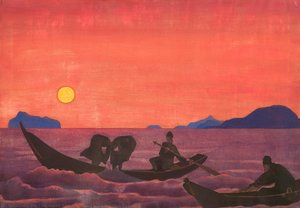
Experience the serene beauty of Nicholas Roerich's 'And We Continue Fishing,' a Symbolism masterpiece depicting fishermen at sunset amidst Himalayan landscapes – explore its symbolism and artistic legacy.
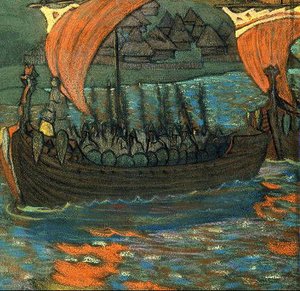
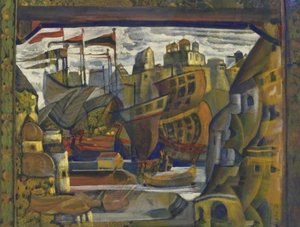
Delve into Nicholas Roerich's 'Varangian Way,' a Symbolist masterpiece capturing serene Himalayan landscapes and spiritual exploration. Discover its symbolism & inspiration at ArtsDot.
“Light Conquers Darkness,” created in 1933 by Nicholas Roerich, embodies Symbolism’s focus on emotion and allegory. The painting portrays a valiant rider confronting shadowy forces, reflecting themes of courage and spiritual victory through dynamic composition and vibrant color contrasts.
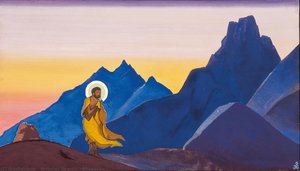
Explore the captivating art of Nicholas Roerich – a visionary painter whose Himalayan landscapes blend spiritual mysticism with cultural preservation. Discover his legacy & symbolism.
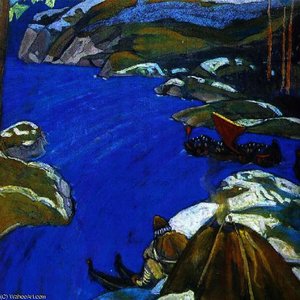
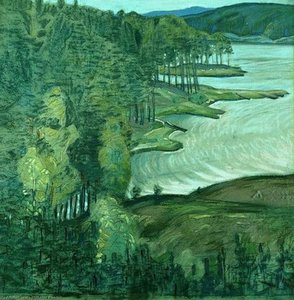
Admire Nicholas Roerich's serene Finnish landscape painting ('Finland. Punky Harju.', 1907) – a masterpiece of Art Nouveau blending organic forms and vibrant colors to capture the essence of nature.
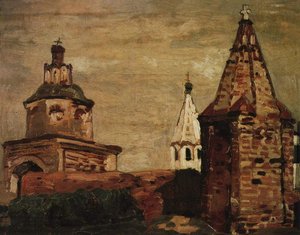
‘Suzdal. Alexander Nevsky Monastery.’ was created in 1903 by Nicholas Roerich in Art Nouveau (Modern) style. Find more prominent pieces of cityscape at Wikiart.org – best visual art database. The painting depicts two towers, one taller than the other, adorned with a cross atop the higher tower and lacking visible decorations on the lower tower. Set against an old city backdrop—likely Suzdal—the m
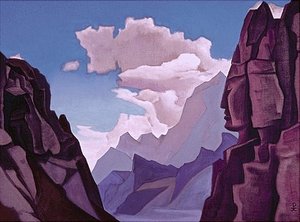
Experience the mystical beauty of Nicholas Roerich's "Lake of the Nagas" (1932). This Tempera painting blends symbolism & nature, showcasing his unique artistic vision.
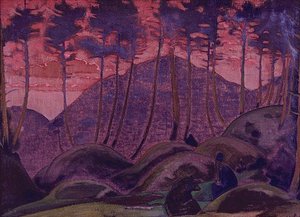
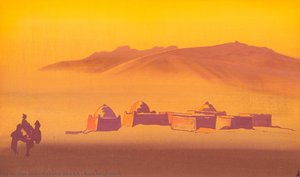
--- The painting “Polovtsian camp,” executed in 1914 by Nicholas Roerich, stands as a significant contribution to the Art Nouveau movement’s aesthetic principles. It's more than just a depiction; it embodies Roereich’s philosophical exploration of spirituality and landscape—a visual meditation on solitude and grandeur. The artwork centers around a Polovtsian camp – a nomadic dwelling typical of
Delve into the serene beauty of Nicholas Roerich’s ‘The Unspilling Vessel,’ a Symbolist masterpiece capturing Himalayan landscapes and spiritual contemplation. Explore its symbolism & discover more at WikiArt.
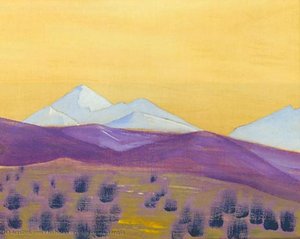
Nicholas Roerich's 'Pass Tangla,' painted circa 1927, exemplifies Symbolism with its impressionistic brushstrokes depicting serene purple hills transitioning into majestic snow-capped mountains under a warm yellow sky. Executed on canvas using tempera, this artwork embodies the movement’s focus on emotional experience and spiritual contemplation. Measuring 21 x 27 cm, it resides in a private colle
This artwork delves into Roerich's multifaceted career as a painter, stage designer, writer, philosopher, and archaeologist. His enduring fascination with Himalayan landscapes and spiritual exploration is evident in his prolific output, cementing his legacy as a visionary artist committed to cultural preservation.
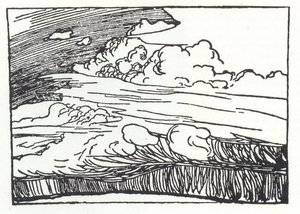
Explore Nicholas Roerich's serene landscape illustration 'Vignette for book ''N. K. Roerich'' (1918), showcasing Art Nouveau style and symbolic Himalayan imagery.
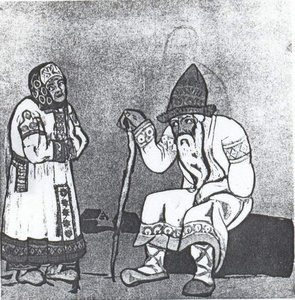
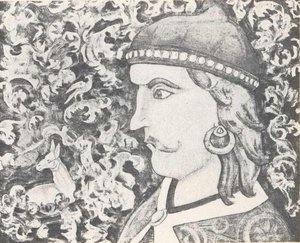
--- ## Detailed Analysis of Nicholas Roerich's 'Prince (Knyaz)' This artwork, created in 1916 by Nicholas Roerich, exemplifies Symbolism with influences from Russian folk art and early 20th-century modernism. It’s a meticulously crafted piece characterized by its austere aesthetic – primarily grayscale – prioritizing line work and geometric patterns within a stylized backdrop. The composition ce
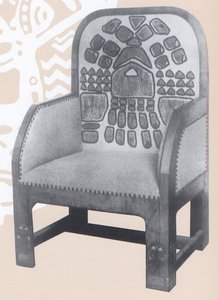
This photograph showcases an armchair created by Nicholas Roerich in 1904, embodying Art Nouveau aesthetics. Its stylized geometric designs—triangles, squares, rectangles—capture Roerich's artistic vision and convey a sense of tranquility. Admire the serene beauty of Nicholas Roerich's 'Armchair,' a masterful Art Nouveau design reflecting his fascination with Himalayan landscapes and spiritual sy
Nicholas Roerich (1874-1947) was a prolific artist, archaeologist, writer, and philosopher whose work explored themes of spirituality and cultural preservation. He gained renown for his Himalayan landscapes and Ballets Russes designs.