Showing 6 artworks with Pablo Picasso and with 1907 and with Early 20th Century Art
-
Pablo Picasso
-
1907
-
Early 20th Century Art
Not available for this selection
- Putty
- Phthalo Green
- Espresso
- Walnut
- Mahogany
Not available for this selection
- Pablo Picasso
- Early 20Th Century Art
- Avant-Garde Art
- Cubism
- Spanish Painter
- Geometric Shapes
- Les Demoiselles Davignon
- Angular Lines
- Modern Art History
- Picasso Artwork
- Modern Art Movement
- Primitivism
- Art Deco Style
- Avant-Garde Painting
- Art Deco Influence
- Revolutionary Artwork
- Portrait
- Naive Art Symbolism
- Nude Painting
- Multiple Perspectives
- Geometric Forms
- African Art Influence
- Picasso Dancer
- Naïve Art
- Skull Painting
- Fernande Olivier Model
- Symbolic Representation
- Art History
- Monochrome Art
- Study Painting
- Guernica
- Avignon Study
- Paul Cézanne
- Modern Art
- Mortality Artwork
- Spanish Artist
- Painting
- Limited Palette
- Fragmented Forms
- Composition With Skull
- Picasso Painting
- Red And White Colors
- Painting Reproduction
- Modern Art Picasso
- Black And White Drawing
- Les Demoiselles D’Avignon
- African Sculpture Influence
- Cubism Painting
- Still Life Painting
- Nude Sculpture
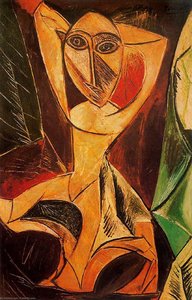
Pablo Picasso’s ‘Nude with Drapery,’ painted in 1907, exemplifies Naïve Art/Primitivism. Influenced by Cézanne's exploration of form and structure, it utilizes geometric abstraction and a restrained palette—a cornerstone of Cubism and a testament to Picasso’s revolutionary style.
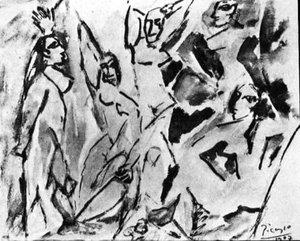
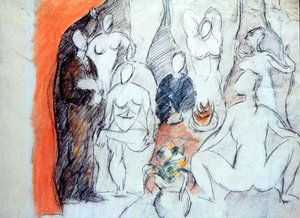
This black and white study delves into Picasso’s seminal ‘Les Demoiselles d’Avignon,’ showcasing his innovative approach to Cubism. Characterized by angular lines, geometric shapes, and a flattened perspective, it embodies the artist's revolutionary spirit.
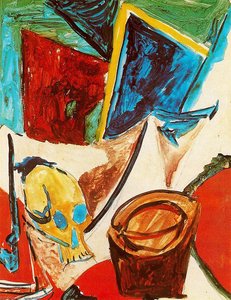
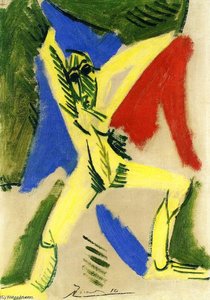
A precursor to ‘Les Demoiselles d’Avignon,’ this artwork exemplifies Picasso’s experimentation with form and space, establishing him as a cornerstone of modern art history. Explore its influence through related resources.
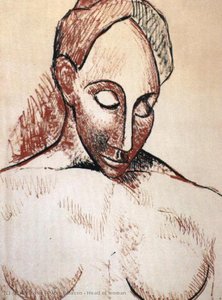
Explore Picasso's 'Head of Woman 4,' an iconic Cubist masterpiece from 1907. Witness the fragmentation & abstraction that defined his revolutionary style.