Showing 16 artworks with Paul Gustave Doré and with Medieval Literature
-
Paul Gustave Doré
-
Medieval Literature
Not available for this selection
- Espresso
- Celadon
- Gray
- Putty
- White
Not available for this selection
- Medieval Literature
- Gustave Doré
- Dante Inferno
- Dramatic Composition
- Dramatic Lighting
- Nineteenth Century Art
- Symbolic Imagery
- Medieval Art
- Victorian Art
- Romanticism
- Wood Engraving
- Romantic Art
- Biblical Illustration
- Black And White Print
- Romantic Illustration
- Symbolic Art
- Illustration
- Fine Line Detail
- Engraving Technique
- Monochrome Print
- Gustave Dore
- Gustave Doré Illustration
- Atmospheric Perspective
- Italian Renaissance Art
- Fine Line Drawing
- Religious Art
- Victorian Era Art
- Forest Scene
- Romantic Engraving
- Dramatic Illustration
- Fine Art Reproduction
- Etching Technique
- Engraving
- Hell Imagery
- Black And White Printmaking
- Dante'S Inferno
- Romantic Style
- Dante Inferno Engraving
- Black White Printmaking
- Hell Illustration
- Gustave Dore Engraving
- Fine Art Print
- Twilight Light
- Portraiture
- Fantasy Art
- Angelica Medoro
- Divine Power Struggle
- Purgatory Depiction
- Detailed Printmaking
- Monochromatic Print
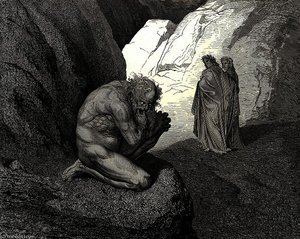
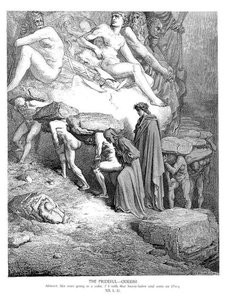
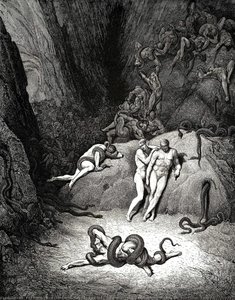
A masterpiece of dramatic illustration, Doré’s engraving remains a powerful visual representation of Dante's epic poem. Paul Gustave Doré The Inferno, Canto 25, lines 59-61. The other two Look’d on exclaiming. “Ah, how dost thou change, Agnello!” Strasbourg France 1832 1883 This engraving vividly portrays Dante's Inferno, showcasing a claustrophobic cave scene illuminated by dramatic lighti
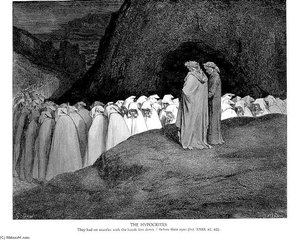
A dramatic black and white engraving by Gustave Doré depicting Dante's Inferno, capturing intense emotion and meticulous detail with masterful linework—a cornerstone of Romantic art.
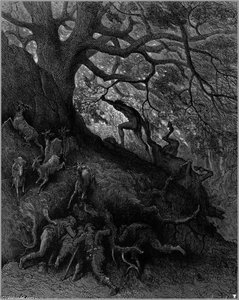
Admire Gustave Doré's masterful woodcut illustration of Orlando Furioso, depicting Angelica and Medoro's poignant inscription on ancient trees—a captivating piece from Victorian art history.
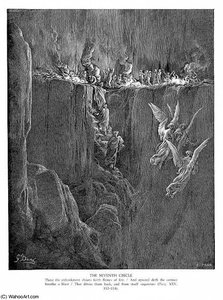
This engraving, ‘The Seventh Circle,’ exemplifies Gustave Doré’s Romantic style through meticulous detail and expressive linework. Created in the mid-19th century, it depicts a harrowing descent into hell as envisioned by Dante Alighieri's *Inferno*, featuring tormented souls engulfed in flames against a backdrop of jagged cliffs and swirling vortexes. Doré skillfully employs dense crosshatching t
Experience the chilling grandeur of Dante's Inferno through Doré’s masterful engraving! Witness dramatic figures battling divine power amidst a desolate landscape—a testament to Romantic art's emotive storytelling.
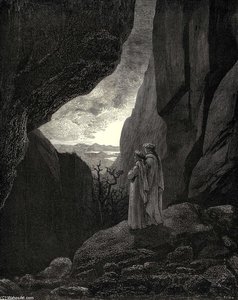
Gustave Dore Experience Gustave Doré's haunting depiction of Dante and Virgil contemplating the desolate landscape of Hell (Inferno Canto 34). Explore Romanticism’s dramatic style and masterful etching technique.
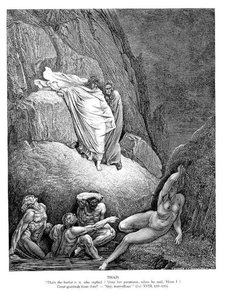
Paul Gustave Doré Thais Monochromatic gray scale Vertically oriented; central rocky outcrop anchors the composition with figures clustered around it. Layered figures and receding details contribute to spatial illusion. This monumental engraving depicts a scene from Dante’s Inferno, capturing the torment and allure of Thais, Virgil's guide. Doré employs masterful hatching and cross-hatching to
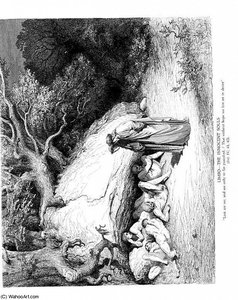
Delve into Gustave Doré’s masterful engraving 'The Innocent Souls,' inspired by Dante's Inferno. Experience Romantic realism through intricate linework and evocative symbolism – explore ArtsDot.
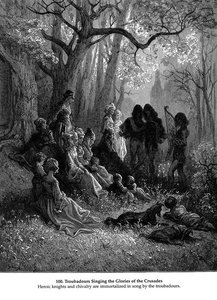
Delve into the medieval spirit with Doré's evocative engraving depicting troubadours singing praises of the Crusades amidst a mystical forest – a masterpiece of tonal etching and storytelling.
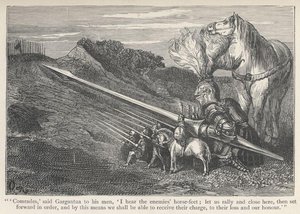
This engraving portrays a scene from François Rabelais’s Gargantua and Pantagruel, featuring Gargantua leading a procession of soldiers across a landscape. Doré's meticulous style utilizes hatching and cross-hatching to convey texture and depth, capturing the grandeur of the narrative with linear perspective and atmospheric haze. Executed in monochrome, this artwork exemplifies Romantic realism an
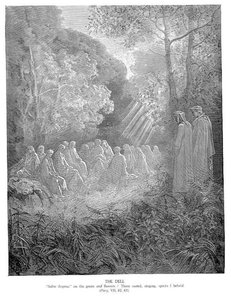
This evocative wood engraving depicts a contemplative gathering of figures in a secluded dell, bathed in ethereal light—likely referencing Dante’s *Inferno*. Doré's meticulous technique utilizes dense hatching and directional lines to convey texture and depth, creating a scene rich with symbolic resonance. Known for his dramatic Romantic style, Doré expertly blends realism and imagination through
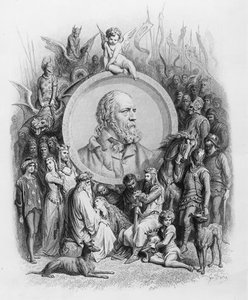
Delve into the grandeur of Tennyson's 'Idylls of the King' with this stunning black and white engraving by Gustave Doré, showcasing a portrait of Alfred Lord Tennyson amidst mythological figures and intricate detail.
This engraving showcases Doré’s masterful technique—detailed hatching and crosshatching—to convey the oppressive atmosphere of Dante’s Inferno. The composition emphasizes diagonal lines and strong contrasts, highlighting key figures and creating a palpable sense of suffering. Inspired by Dante's Divine Comedy, Doré’s work exemplifies Romanticism’s fascination with mythic narratives and psychologic
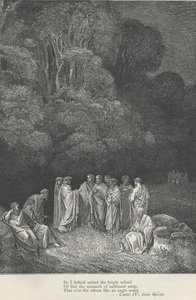
Inferno Canto 4 by Gustave Dore is a Romantic style illustration featuring Dante, Virgil, and a shadowy forest scene. Known for meticulous detail and tonal range achieved through engraving technique, Doré's work captures the dramatic essence of Dante’s epic poem. Experience Gustave Doré's haunting Inferno Canto 4 engraving – a masterful Romantic illustration depicting Dante and Virgil’s descent i