Showing 24 artworks out of 78 with Paul Gustave Doré and with Symbolic Imagery
-
Paul Gustave Doré
-
Symbolic Imagery
Not available for this selection
- Espresso
- Gray
- Celadon
- Rosy Brown
- Phthalo Green
- Putty
- White
- Black
Not available for this selection
- Symbolic Imagery
- Biblical Illustration
- Romanticism
- Medieval Art
- Gustave Doré
- Dramatic Lighting
- 19Th Century Art
- Dramatic Composition
- Gustave Doré Engraving
- Romantic Art
- Engraving
- Black And White Art
- Black And White Print
- Nineteenth Century Art
- Dante'S Inferno
- Monochromatic Print
- Fine Art Reproduction
- Gustave Dore
- Wood Engraving
- Doré Engraving
- Biblical Art
- Fine Line Engraving
- Fine Line Drawing
- Victorian Art
- Romantic Illustration
- Art History
- Religious Painting
- Romantic Engraving
- Detailed Artwork
- Hatching Technique
- Romantic Art Style
- Medieval Illustration
- Monochrome Print
- Chiaroscuro Technique
- Christian Iconography
- Victorian Era Art
- Medieval Art Style
- Religious Art
- Black And White Printmaking
- Engraving Technique
- Romantic Realism
- Illustration
- Linework Texture
- Fine Line Etching
- Dante Inferno
- Dramatic Art
- Victorian Illustration
- Medieval Literature
- Hell
- Biblical Engraving
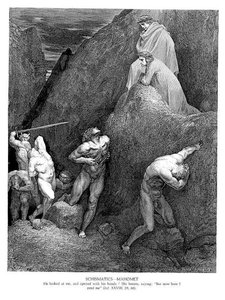
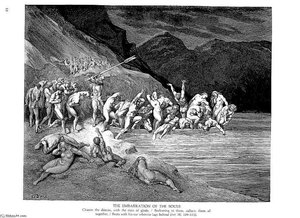
Gustave Doré Schismatics–Mahomet This monumental engraving depicts Dante and Virgil observing the suffering of Mahomet as he exposes a grievous wound on his chest amidst a chaotic landscape of jagged rocks. Dore's masterful technique conveys profound anguish and despair, embodying the essence of Hell's torment. Vincent van Gogh Romanticism Dante’s Inferno Copper plate engraving Romanticism
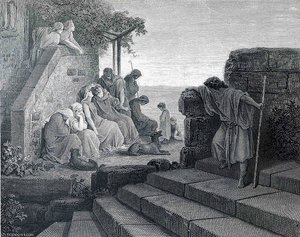
This engraving by Paul Gustave Doré exemplifies the Romantic art movement’s dedication to realism and narrative illustration. Executed in monochrome, primarily shades of gray, it utilizes fine lines and hatching techniques to convey depth and texture—characteristic of Doré's distinctive style. The artwork depicts a biblical scene featuring figures descending steps, capturing a solemn mood and high
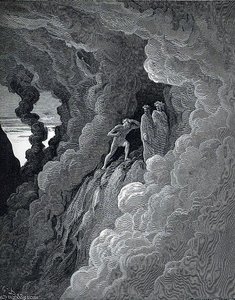
Paul Gustave Doré untitled (3874) Strasbourg France 1832 1883 The artwork presents a dramatic and atmospheric scene rendered in black and white engraving. It depicts three figures amidst swirling clouds and rocky terrain, evoking a sense of mystery, descent, or journey through a turbulent landscape. The composition is dynamic, with strong diagonal lines created by the cliffs and the movement
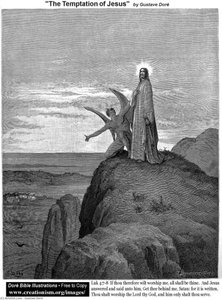
This monumental engraving by Gustave Doré depicts the pivotal moment when Jesus resists Satan’s temptations in the desert, capturing the essence of Christian faith and struggle with breathtaking detail. Doré's signature style—characterized by stark contrasts, expressive hatching, and atmospheric perspective—transforms biblical narrative into a visually arresting experience. The artwork exemplifies
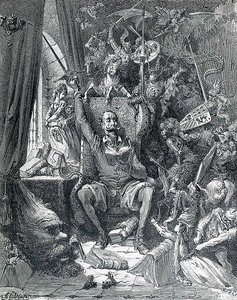
Gustave Doré Delve into Gustave Doré's masterful engraving depicting a chaotic throne scene rife with grotesque creatures—a poignant commentary on power and corruption, executed with meticulous detail.
Born in Strasbourg in 1832, Doré possessed an innate talent for drawing from childhood. He quickly established himself as a caricaturist and honed his skills through diverse artistic mediums – illustration, painting, and sculpture – demonstrating unparalleled versatility. His enduring legacy rests on his ability to convey profound emotions and dramatic narratives with breathtaking precision. This
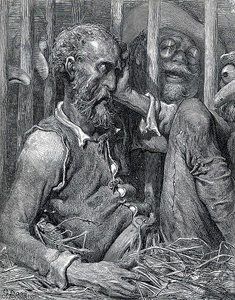
This evocative engraving depicts two figures engaged in clandestine communication within a prison-like setting. Doré’s meticulous detail captures the somber mood of confinement and secrecy, reflecting Romantic ideals. Delve into Gustave Doré's haunting engravings and paintings! Explore 'untitled (981)', inspired by Newgate Prison, showcasing Romantic realism & masterful line work – a timeless mas
Paul Gustave Doré untitled (2793) Strasbourg France 1832 Monochromatic gray scale emphasizing light and shadow. Balanced composition with the cat dominating the left side and the boy on the right, enhanced by diagonal lines and overlapping elements. 1883 This striking black and white illustration captures a fairytale scene featuring a cat dressed in human clothing celebrating victory with
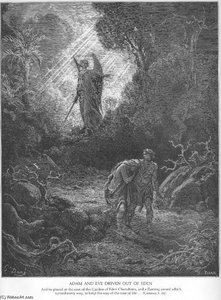
Explore Gustave Doré's dramatic engraving of Adam and Eve's expulsion from Eden—a masterpiece of Romantic realism capturing biblical narrative with meticulous detail and evocative lighting.
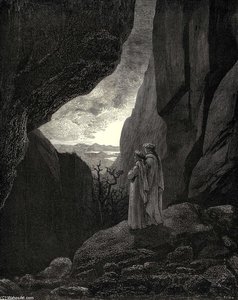
Gustave Dore Experience Gustave Doré's haunting depiction of Dante and Virgil contemplating the desolate landscape of Hell (Inferno Canto 34). Explore Romanticism’s dramatic style and masterful etching technique.
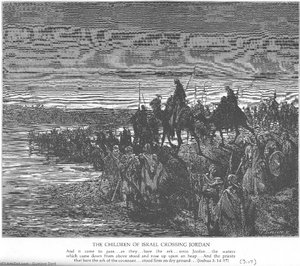
--- The Israelites Cross the Jordan River by Paul Gustave Doré is a captivating piece of Romantic art, renowned for its dramatic depiction of the Israelites' triumphant journey into Canaan. Executed in exquisite black and white engraving style, this artwork showcases Doré’s masterful technique—characterized by dense hatching and cross-hatching—to convey profound depth and texture. The compositio
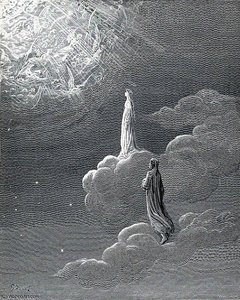
This untitled (7108) print by Gustave Doré exemplifies Romantic artistic sensibilities. Executed in monochrome, it portrays a figure ascending towards radiant light within turbulent clouds—a motif reminiscent of Dante's Inferno and biblical illustrations. Doré’s meticulous linework, characteristic of wood engraving, conveys texture and depth, reflecting his mastery as a designer and illustrator. E
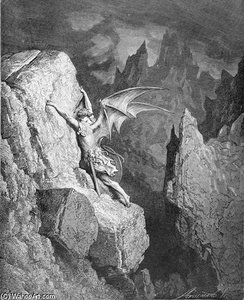
Paul Gustave Doré Satan's Flight Through Chaos Strasbourg France 1832 1883 The artwork presents a dramatic and chaotic scene depicting a winged figure, presumably Satan, in flight amidst a jagged, mountainous landscape. It's rendered in a highly detailed black-and-white style, characteristic of engravings or lithographs. The composition is dynamic, with the central figure positioned diagonal
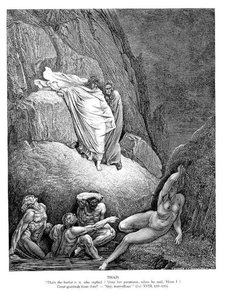
Paul Gustave Doré Thais Monochromatic gray scale Vertically oriented; central rocky outcrop anchors the composition with figures clustered around it. Layered figures and receding details contribute to spatial illusion. This monumental engraving depicts a scene from Dante’s Inferno, capturing the torment and allure of Thais, Virgil's guide. Doré employs masterful hatching and cross-hatching to
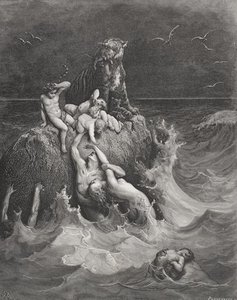
Paul Gustave Doré’s ‘The Deluge,’ executed as a lithograph, powerfully portrays Noah's Flood through intricate black-and-white linework emphasizing texture and depth. The composition centers on an elephant bearing humanity amidst turbulent waters, reflecting Romantic ideals of grandeur and emotion. Doré’s meticulous detail captures the devastation while conveying themes of resilience and faith. Th
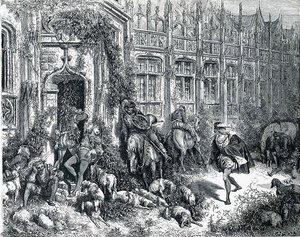
Gustave Doré Delve into Gustave Doré's masterful engraving 'untitled (2274)', showcasing intricate detail and dramatic lighting within a medieval scene—a testament to Romantic illustration’s legacy.
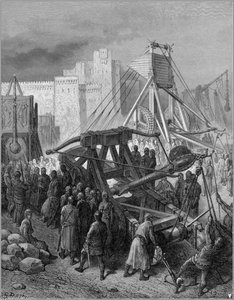
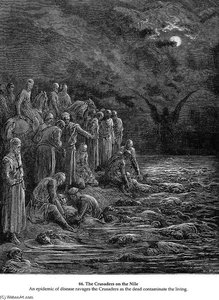
This engraving by Gustave Doré exemplifies Romantic art’s meticulous detail and dramatic storytelling, portraying the devastating impact of disease upon the Crusader army. Utilizing grayscale shading and precise hatching techniques, Doré conveys a palpable sense of despair and historical narrative. Inspired by Vincent van Gogh's 'Prisoners' Round,' this artwork delves into themes of suffering and
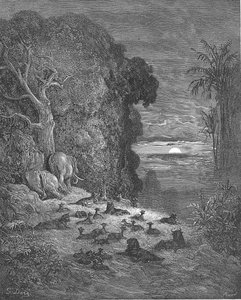
This stunning black and white engraving by Gustave Doré depicts a tranquil Edenic landscape at dusk, featuring animals gathered around a rock formation illuminated by moonlight. Executed in a highly detailed Romantic style using etching techniques—characterized by fine lines and textural rendering—the artwork embodies peace and divine light. Doré’s meticulous craftsmanship elevates this biblical i
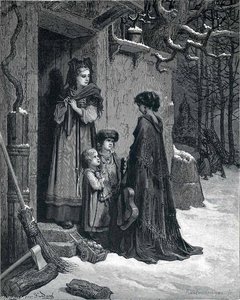
This engraving depicts a woman tending to her family amidst a wintry forest landscape. Executed in meticulous detail by Gustave Doré (1832-1883), it exemplifies Romantic Realism and utilizes hatching and crosshatching techniques to convey depth and texture. Inspired by Aesop’s fable, the artwork explores themes of prudence versus indulgence against a backdrop of bleak winter scenery. Explore more
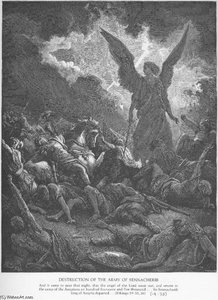
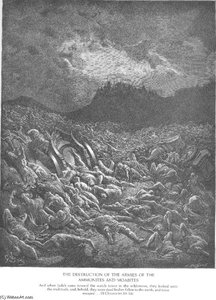
This artwork, titled "The Ammonite and Moabite Armies Are Destroyed," is a monumental wood engraving by Paul Gustave Doré depicting the calamitous defeat of armies during biblical times. Executed in meticulous detail with hatching and cross-hatching techniques—characteristic of 19th-century illustrative art—the piece captures the overwhelming horror of battle through a dynamic composition featurin