Showing 18 artworks with Paul Klee and with Renaissance
-
Paul Klee
-
Renaissance
Not available for this selection
- Phthalo Green
- Espresso
- Putty
- Black
- Sea Green
- Light Green
- Walnut
- Gray
- Driftwood
- Rosy Brown
- Mahogany
Not available for this selection
- Paul Klee
- Expressionism
- Abstract Art
- Modern Art
- Color Theory
- Swiss Artist
- Geometric Shapes
- Surrealism
- Cubism
- Symbolic Imagery
- Geometric Forms
- Art Deco Style
- Fine Art Reproduction
- Bauhaus Influence
- Color Palette
- Geometric Composition
- Art Deco Influence
- Layered Texture
- Renaissance Influence
- Watercolor Painting
- Symbolic Art
- Abstract Landscape
- Gouache Painting
- Floral Painting
- Art Reproduction
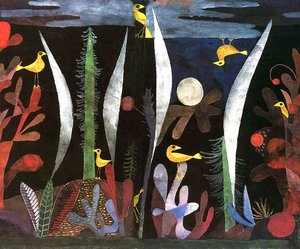
“Landscape with Yellow Birds” embodies Paul Klee’s Expressionist vision—a vibrant exploration of nature reimagined through color and symbolism. Discover its artistic context & legacy!
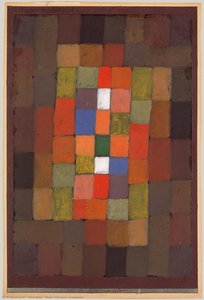
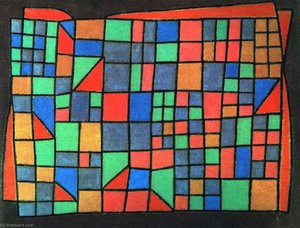
Paul Klee’s Static-Dynamic Gradation (1923) exemplifies Expressionism with a grid of rectangles exploring form, movement, and color theory. Employing hues like red and orange alongside blues and greens, it symbolizes stability and change through geometric shapes and light manipulation—a cornerstone of Bauhaus aesthetics.
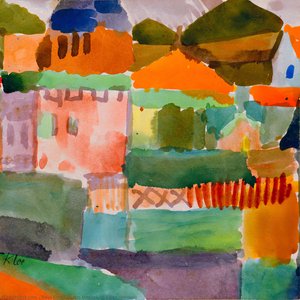
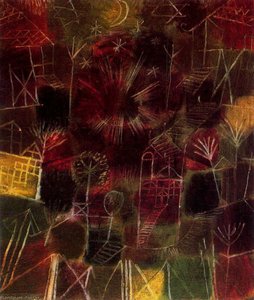
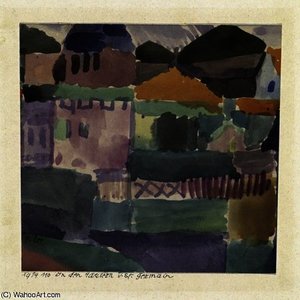
Immerse yourself in Paul Klee's 'In the Houses of Saint Germain,' an Expressionist masterpiece blending vibrant colors & geometric forms. Own a handmade reproduction!
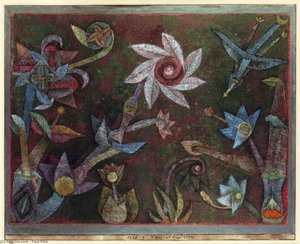
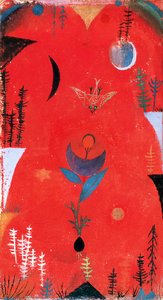
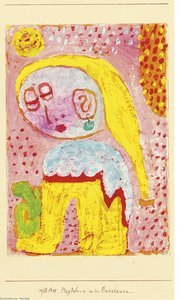
Explore Paul Klee’s ‘Flower Myth,’ a vibrant Expressionist masterpiece blending Cubism and Surrealism. Discover its symbolic floral imagery, layered textures & diffused lighting at WikiArt.
Explore Paul Klee's 'In the Houses of Saint Germain,' an abstract cityscape blending Cubist and Expressionist techniques with earthy hues—a captivating reproduction by ArtsDot.
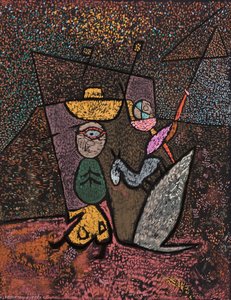
Paul Klee’s ‘The Travelling Circus,’ painted in 1938, exemplifies his distinctive Surrealist style. Combining Expressionism, Cubism, and a profound understanding of color theory, the artwork utilizes angular forms and muted hues to depict circus performers—a visual meditation on life's transient nature. Discover its symbolic depth and Klee’s innovative technique at WikiArt.
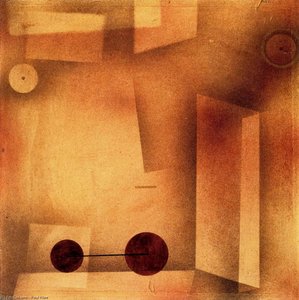
Paul Klee’s ‘The Invention,’ created in 1934, exemplifies abstract expressionism with a dynamic composition featuring interlocking geometric forms—rectangles, circles, and lines—and a restrained palette of reds, yellows, and blues. Analyzing its style, technique, symbolism, and connection to Leonardo da Vinci's influence reveals Klee’s profound contribution to modern art.
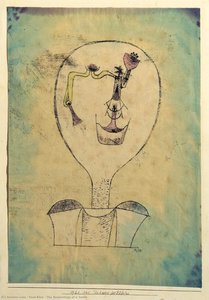
Paul Klee’s "The Beginnings of a Smile" (1921): A surreal, textured portrait exploring isolation & anxiety. Unique dry media style, geometric shapes, & melancholic beauty.