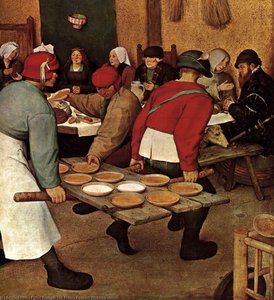
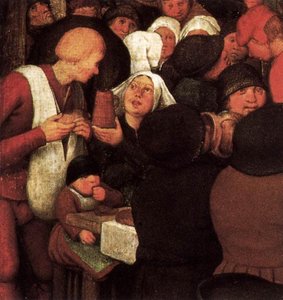
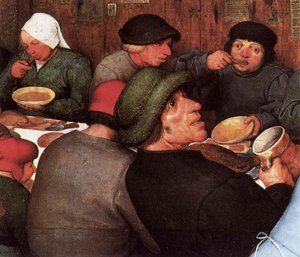
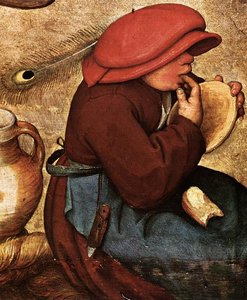
Experience the vibrant textures and lively 16th-century Flemish life captured in Pieter Bruegel the Elder's Peasant Wedding detail, a Northern Renaissance masterpiece inviting you to explore this timeless feast.
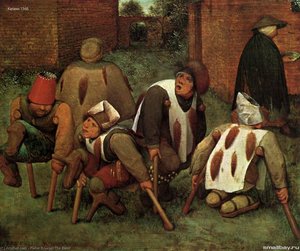
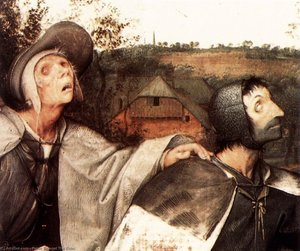
Pieter Bruegel's 'The Cripples' (1568) is a poignant oil on panel depicting disabled figures, challenging societal norms and offering a timeless commentary on empathy & inclusion within the Northern Renaissance.
Experience the vibrant textures and lively 16th-century Flemish life captured in this Northern Renaissance masterpiece by Pieter Bruegel the Elder and bring a piece of history into your home.
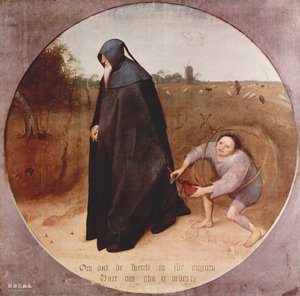
Explore Pieter Bruegel the Elder's 'The Misanthrope,' a captivating 1568 allegory of isolation and worldly deceit. Discover its hidden symbolism & historical context.
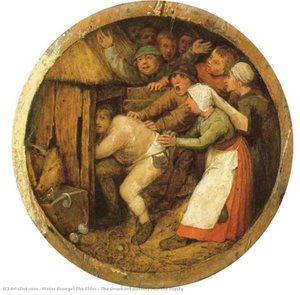
Explore Pieter Bruegel the Elder's 'The Drunkard Pushed into the Pigsty,' a chaotic 1568 masterpiece depicting societal scorn and human folly with vivid detail.
Pieter Bruegel’s haunting depiction captures the parable's essence—two figures with unsettling faces navigate a shadowed house, embodying Northern Renaissance disillusionment and prompting contemplation on leadership and perception.
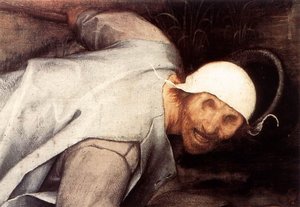
Pieter Bruegel’s ‘The Parable of the Blind Leading the Blind’ captures human frailty with a poignant detail of a bandaged man amidst societal folly, reflecting 16th-century anxieties. Explore this masterful Renaissance artwork and bring its timeless message home.


 Filters