Showing 8 artworks with Theo Van Doesburg and with Neoplasticism

-
Theo Van Doesburg
-
Neoplasticism
Not available for this selection
- Phthalo Green
- Espresso
- Putty
- Gray
- Rosy Brown
- Theo Van Doesburg
- Geometric Abstraction
- Modern Architecture
- Neoplasticism Style
- 1927 Artwork
- De Stijl Movement
- Architectural Model
- Fine Art Reproduction
- Black And White Art
- Decorative Arts
- Bauhaus Influence
- Melancholy Artwork
- Dutch Avant-Garde
- Architectural Art
- Strasbourg France
- “Minimalist Design”
- Vertical Composition
- Modern Art Decor
- Art Collector
- Early Modernism
- Dynamic Composition
- Color Scheme Gouache
- Asymmetric Squares
- Abstracted Lines Art
- Art Print Wall Decor
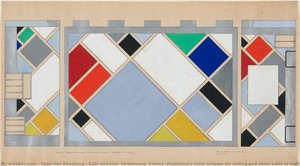
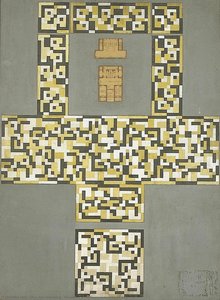
Theo van Doesburg's "Café Aubette" is a striking gouache on paper depicting the interior design of Café Aubette in Strasbourg. Painted in 1927, it embodies Neoplasticist principles—geometric abstraction and harmonious color palettes—influenced by Kandinsky’s pioneering explorations into spiritual art.
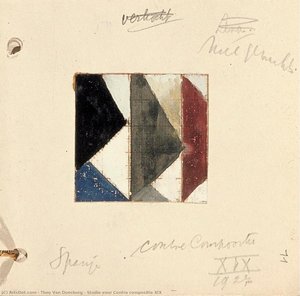
Explore Theo van Doesburg’s groundbreaking Neo-Plasticist study—a minimalist square divided into four vibrant colors—reflecting De Stijl's pursuit of pure form and color harmony. Witness the birth of abstraction and discover this iconic piece from 1927.
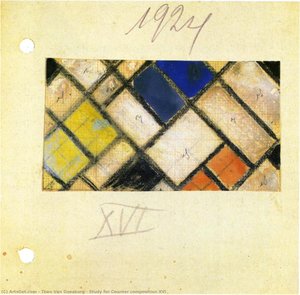
A vibrant geometric dance of primary colors defines this Neoplasticism masterpiece by Theo van Doesburg from 1924, offering a profound glimpse into the De Stijl movement that you can bring to your private collection.
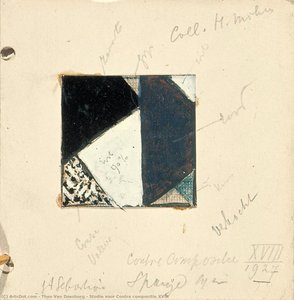
Theo van Doesburg’s ‘Studie voor Contra compositie XVIII’ showcases the pioneering geometric abstraction of De Stijl movement. This black and white sketch, created in 1927, embodies orthogonal lines and planes – discover this iconic artwork.
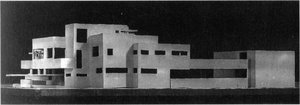
Explore Theo van Doesburg’s ‘Model of Mansion’ (1923) – a striking black & white architectural rendering embodying early modernist design. A study in form, precision & Bauhaus influence.
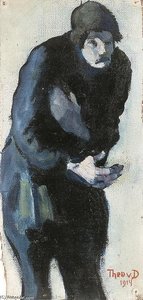
Theo van Doesburg’s ‘Beggar’ (1914) – a poignant Expressionist oil painting of isolation & vulnerability. Explore its dynamic lines, textured surface & symbolic depth.
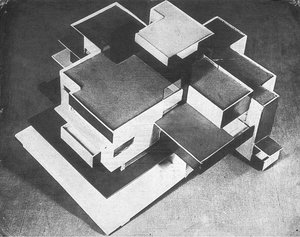
Theo van Doesburg’s ‘Model Private House’ (1923) – a striking black & white isometric architectural model. Explore De Stijl & Neoplasticism's geometric abstraction.