Showing 3 artworks with Theo Van Rysselberghe and with 1903 and with Accent
-
Theo Van Rysselberghe
-
1903
-
Accent
Not available for this selection
- Gray
- Rosy Brown
- Plum
- Pointillism
- Neo-Impressionism
- Theo Van Rysselberghe
- Warm Colors
- Domestic Scene
- Baroque Gardens
- Impressionist Influence
- Intellectual Discourse
- 1903
- Complementary Colors
- Mother
- Belgium
- Geneva
- Post-Impressionism
- Victorian Era
- Light Capture
- Artistic Experimentation
- Symbolism
- Van Rysselberghe
- Family
- Color Theory
- Sanssouci Palace
- Fine Art Reproduction
- Paul Signac
- Color Perception
- Belgian Art History
- Portrait
- Belgian Art
- Library Portrait
- Impressionism Reaction
- Oil Painting
- Light Painting
- Georges Seurat
- Musée Du Petit Palais
- Optical Science
- Children
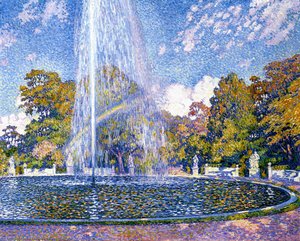
“Fountain at Sanssouci,” by Theo van Rysselberghe (1903), exemplifies Neo-Impressionism's quest to portray light’s tangible beauty through pointillist dots—a revolutionary technique mirroring scientific advancements and capturing the grandeur of Sanssouci Palace gardens.
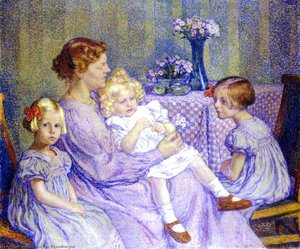
Theo van Rysselberghe's 'Madame Van de Velde and Her Children' (1903) captures familial warmth with vibrant pointillist brushstrokes. A stunning Post-Impressionist portrait at Musée du Petit Palais.
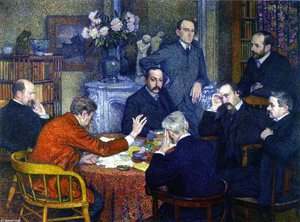
A Reading by Theo van Rysselberghe: This Neo-Impressionist masterpiece captures the intellectual fervor of Victorian Belgium through meticulous Pointillist technique and symbolic details—a luminous exploration of knowledge, beauty, and contemplation.