Showing 24 artworks out of 73 with Victor Vasarely

-
Victor Vasarely
Not available for this selection
- Phthalo Green
- Cobalt Violet
- Espresso
- Brown
- Rosy Brown
- Putty
- Gray
- Black
- Walnut
- Midnight Blue
- Steel Blue
- Sea Green
- Quinacridone Magenta
- Plum
- Clay
- Celadon
- Bronze
- Prussian Blue
- Teal
- Gold
- Khaki
- White
- Geometric Abstraction
- Op Art
- Victor Vasarely
- Optical Illusion
- Kinetic Art
- Modern Art
- Hungarian Artist
- Bauhaus Influence
- Visual Perception
- Abstract Painting
- Contemporary Art
- Abstract Art
- Art Deco Style
- Color Field Painting
- Geometric Design
- Color Palette
- Dynamic Composition
- Abstract Expressionism
- Geometric Shapes
- Geometric Patterns
- Bauhaus Movement
- Circular Pattern
- Hungarian Painter
- Abstract Design
- Avant-Garde Art
- 20Th Century Art
- Visual Depth
- Vibrant Colors
- Abstract Geometric Form
- Dynamic Design
- Circular Patterns
- Pattern Design
- Circles
- Kaleidoscope Pattern
- Visual Illusion
- Op Art Painting
- Colorful Circles
- Red Color Palette
- Kinetic Art Influence
- Geometric Art
- Abstract Composition
- Color Patterns
- Geometric Pattern
- Pattern
- Squares
- Honeycomb Pattern
- Circular Composition
- Visual Perception Artwork
- Dynamic Artwork
- Acrylic Painting
Victor Vasarely A Life Forged in Geometry: The World of Victor VasarelyBorn Károly Vaszary in 1906 in Pécs, a city then nestled within Austria-Hungary (now Croatia), Victor Vasarely’s journey to becoming a pioneer of Op Art and kinetic art was anything but predetermined. His early life hinted at a path far removed from the canvas; he initially pursued medical studies at Eötvös Loránd University i
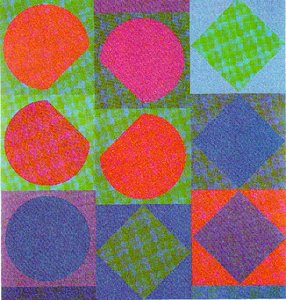
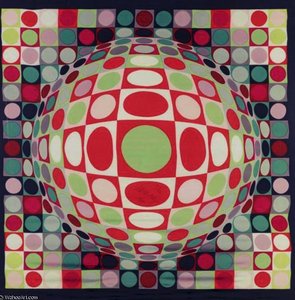
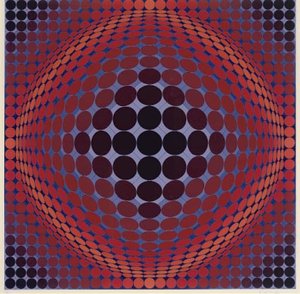
Victor Vasarely's 'Beryll,' created in 1963, exemplifies his groundbreaking approach to art. This striking piece utilizes a bold palette of reds and pinks within a dynamic arrangement of overlapping circles – a hallmark of Op Art and kinetic art principles. Influenced by Bauhaus design and Bortnyik’s workshop, Vasarely explored perception through geometric forms, establishing himself as a pivotal
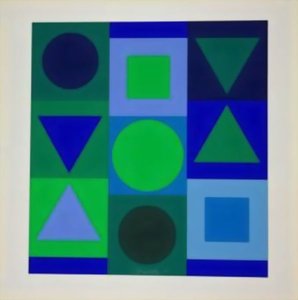
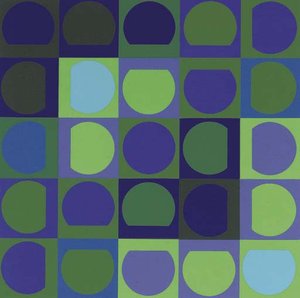
Victor Vasarely's "Blue and Green" is an iconic example of Op Art, characterized by its illusionistic qualities achieved through precise geometric patterns. The artwork consists of twelve circles arranged in various positions across the canvas, predominantly utilizing shades of blue and green. This composition exemplifies Vasarely’s commitment to exploring perception and form, reflecting influence
Victor Vasarely (1906-1997) was born Károly Vaszary in Pécs, Croatia. Initially pursuing medical studies at Eötvös Loránd University in Budapest, he abandoned medicine for painting in 1927 after enrolling at Sándor Bortnyik’s Műhely – a Bauhaus-influenced school. This formative experience instilled him with the principles of functional design and geometric abstraction, shaping his signature Op Art
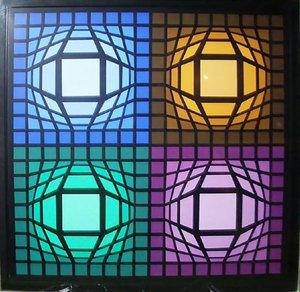
Explore Victor Vasarely's STRI-OND-BR – a mesmerizing Op Art masterpiece featuring vibrant geometric patterns and captivating color illusions. Discover its artistic significance & high-quality reproduction at ArtsDot. A stunning geometric pattern reminiscent of a kaleidoscope, bursting with blues, reds, yellows, greens, oranges, and purples. Displayed on a wall, it captures attention with its vi
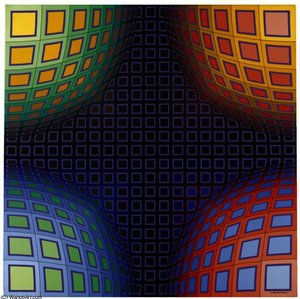
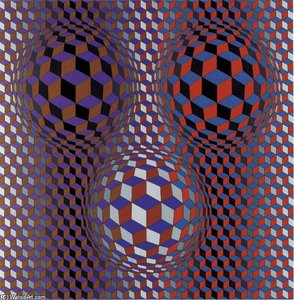
Hungarian Red, Blue, Orange Oil Painting Op Art Geometric Abstraction Abstract Composition Explore Victor Vasarely’s Vega-EG – a captivating Op Art masterpiece featuring interlocking red and blue spheres that create an illusion of movement and depth.
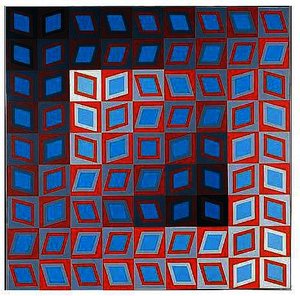
Hungarian Victor Vasarely Painting Op Art Geometric Abstraction Hand-painted Reproduction Admire Victor Vasarely’s mesmerizing ‘Fekete,’ a vibrant Op Art masterpiece featuring bold blue and red checkered patterns – a timeless exploration of geometric abstraction.
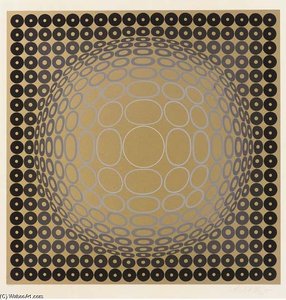
Victor Vasarely Explore Victor Vasarely’s mesmerizing Zaphir 2 – a vibrant geometric abstraction featuring overlapping circles that create an illusion of depth and movement. Discover the brilliance of Op Art through this iconic masterpiece.
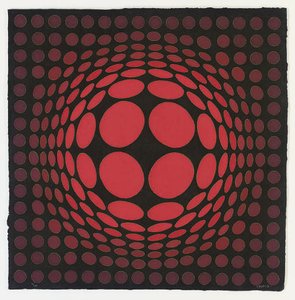
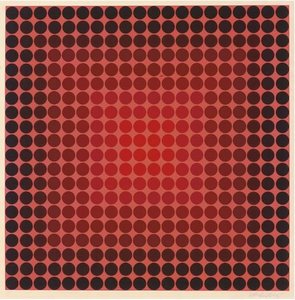
This painting, titled "Untitled 4" by Victor Vasarely, exemplifies the principles of Op Art – a movement focused on generating illusionary effects through geometric patterns. The artwork consists of a large red circle surrounded by smaller circles within it. This arrangement deliberately disrupts conventional visual experience, prompting viewers to question whether they are perceiving a single obj
Dive into Victor Vasarely’s mesmerizing ‘Pauk Feu’! This vibrant Op Art square showcases geometric patterns and optical illusions, embodying the artist's groundbreaking exploration of perception.
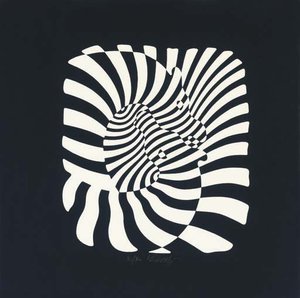
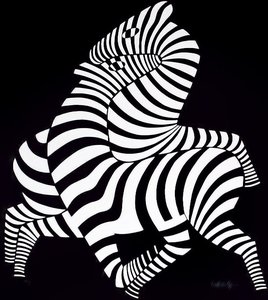
Victor Vasarely Explore Victor Vasarely’s mesmerizing Zebra painting – a striking example of Op Art's geometric abstraction and vibrant color contrasts. Admire the detailed depiction of two zebras against a bold black backdrop.
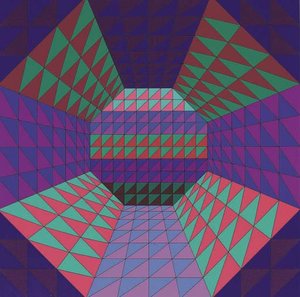
Victor Vasarely's 'Haynal' is a captivating Op Art piece characterized by its striking purple room interior adorned with intricate geometric designs. The artwork showcases a harmonious blend of green, pink, and yellow shapes against a textured wall surface, reflecting Vasarely’s dedication to exploring optical illusions and democratizing artistic experience. Inspired by Bauhaus principles and Sánd
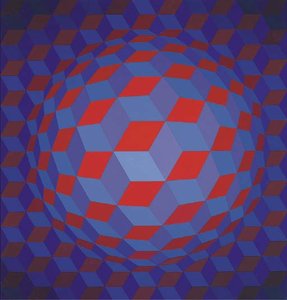
Experience the mesmerizing optical illusion of Victor Vasarely’s ‘Cheyt-Rond-Va’! This Op Art masterpiece blends geometric abstraction and vibrant colors to create a dynamic visual effect.
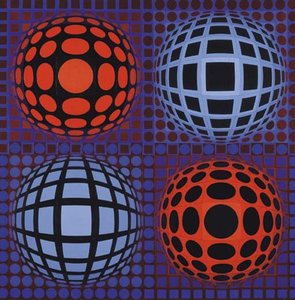
Victor Vasarely Delve into the mesmerizing world of Victor Vasarely’s ‘FOUR WORKS,’ an iconic Op Art masterpiece featuring vibrant geometric circles and captivating color combinations. Explore his groundbreaking artistic vision.
Explore Victor Vasarely's mesmerizing Op Art masterpiece – 'One Plate'! Discover geometric illusions and vibrant colors inspired by the Bauhaus movement, celebrating simplicity and visual harmony.
This painting exemplifies Victor Vasarely’s signature Op Art style, characterized by geometric abstraction and optical illusions. The artwork utilizes a bold red background punctuated by numerous overlapping circles of varying sizes and angles—a deliberate technique designed to stimulate the viewer's eye and evoke a sense of dynamism. Vasarely’s systematic approach to visual art sought to democrat
Wikipedia Victor Vasarely (French: [viktɔʁ vazaʁeli]; born Győző Vásárhelyi, Hungarian: [ˈvaːʃaːrhɛji ˈɟøːzøː]; 9 April 1906 – 15 March 1997) was a Hungarian-French artist, who is widely accepted as a "grandfather" and leader of the Op art movement. His work titled Zebra, created in 1937, is considered by some to be one of the earliest examples of Op art. == Life and work == Vasarely was born i
Victor Vasarely (Hungarian: Győző Vásárhelyi; April 9, 1906 – March 15, 1997) was a Hungarian-French artist who is widely regarded as the "grandfather" and leader of the Op art movement. His work titled Zebra, created in 1937, is considered by some to be one of the earliest examples of Op art. His artistic journey began with medical studies at Eötvös Loránd University in Budapest but swiftly tran