Showing 24 artworks out of 231 with Victor Vasarely

-
Victor Vasarely
Not available for this selection
- Phthalo Green
- Espresso
- Black
- Midnight Blue
- Steel Blue
- Prussian Blue
- Teal
- Sea Green
- Geometric Abstraction
- Victor Vasarely
- Op Art
- Optical Illusion
- Kinetic Art
- Hungarian Artist
- Modern Art
- Bauhaus Influence
- Contemporary Art
- Abstract Painting
- Visual Perception
- Color Field Painting
- Abstract Art
- Optical Illusion Art
- Geometric Shapes
- Geometric Design
- Vibrant Colors
- Abstract Design
- Dynamic Composition
- Geometric Art
- 20Th Century Art
- Color Palette
- Geometric Patterns
- Op Art Painting
- Abstract Composition
- Modern Abstract Art
- Art Deco Style
- Op Art Vasarely
- Vasarely Artwork
- Abstract Expressionism
- Pattern Design
- Geometric Shapes Art
- Geometric Pattern
- Circles
- Art Reproduction
- Modern Art Piece
- Circular Pattern
- Colorful Circles
- Victor Vasarely Artwork
- Circular Design
- Avant-Garde Art
- Bauhaus Movement
- Op Art Abstract
- Wall Decor
- Hungarian Painter
- Modern Art Design
- Black And White Art
- Visual Illusion
- French Art
- Vibrant Color Art
Wikipedia Victor Vasarely (French: [viktɔʁ vazaʁeli]; born Győző Vásárhelyi, Hungarian: [ˈvaːʃaːrhɛji ˈɟøːzøː]; 9 April 1906 – 15 March 1997) was a Hungarian-French artist, who is widely accepted as a "grandfather" and leader of the Op art movement. His work titled Zebra, created in 1937, is considered by some to be one of the earliest examples of Op art. == Life and work == Vasarely was born i
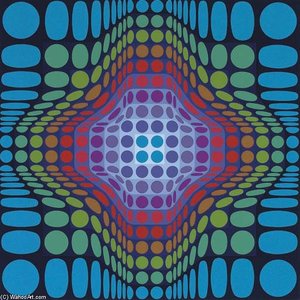
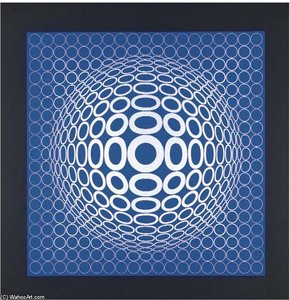
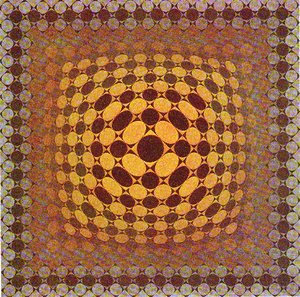
Explore Victor Vasarely’s ‘Vega-Sakk,’ a mesmerizing Op Art circular composition of geometric shapes & vibrant colors. Discover depth, precision & infinite space.
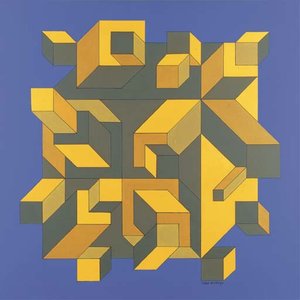
Victor Vasarely Explore Victor Vasarely’s mesmerizing geometric masterpiece, ‘Sarlant.’ This vibrant Op Art painting utilizes bold yellow and blue hues to create an intricate pattern of squares and angles – a testament to Bauhaus influence.
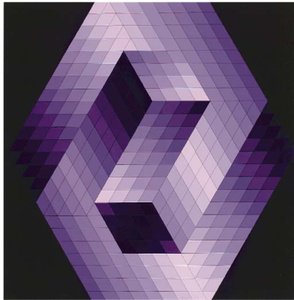
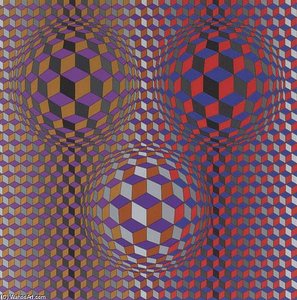
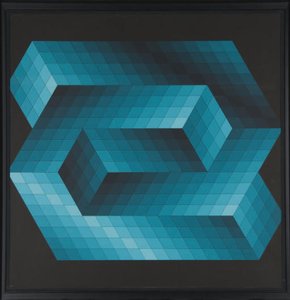
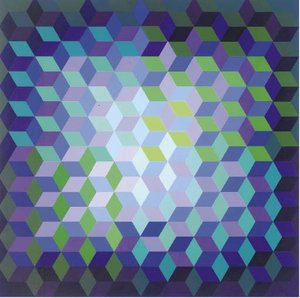
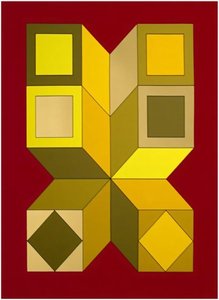
Explore Victor Vasarely’s Nebulus II – a mesmerizing optical illusion of interlocking cubes & vibrant colors. A unique digital art piece blending Op Art principles and geometric abstraction.
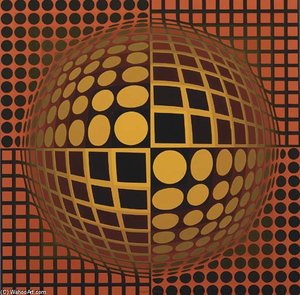
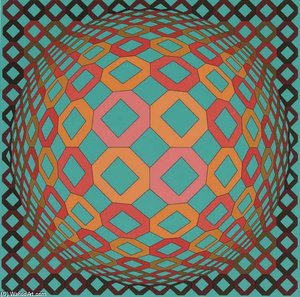
Experience Victor Vasarely’s ‘Vaga-Okta,’ a dazzling Op Art kaleidoscope of circles, squares, and triangles in vibrant reds, oranges, and blues – a mesmerizing geometric abstraction perfect for art lovers.
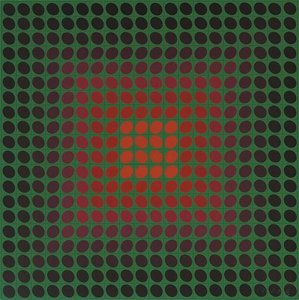
Discover Victor Vasarely’s ‘CTA 1’: a mesmerizing Op Art masterpiece featuring concentric circles of red & green. Explore geometric abstraction & optical illusions.
Victor Vasarely Pécs Croatia 1906 1997 Abstract 1 A Life Forged in Geometry: The World of Victor VasarelyBorn Károly Vaszary in 1906 in Pécs, a city then nestled within Austria-Hungary (now Croatia), Victor Vasarely’s journey to becoming a pioneer of Op Art and kinetic art was anything but predetermined. His early life hinted at a path far removed from the canvas; he initially pursued medica
Explore Victor Vasarely's mesmerizing Pixis – a vibrant serigraph masterpiece featuring geometric squares and circles that exemplify Op Art’s captivating visual illusions. Own a piece of modern art history!
Victor Vasarely Dive into Victor Vasarely's mesmerizing 'Abstract Composition 14'! This Op Art painting showcases dynamic geometric circles—a bold exploration of color and form, ideal for modern art enthusiasts.
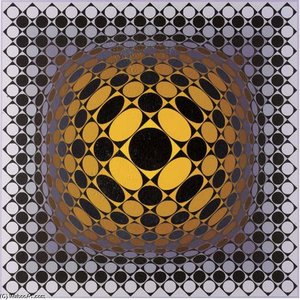
Explore Victor Vasarely’s ‘Vega-Wa-3,’ a mesmerizing Op Art masterpiece! This geometric abstraction creates an illusion of depth & movement through checkerboard patterns & vibrant hues.
Victor Vasarely (Hungarian: Győző Vásárhelyi; April 9, 1906 – March 15, 1997) was a Hungarian-French artist who is widely regarded as the "grandfather" and leader of the Op art movement. His work titled Zebra, created in 1937, is considered by some to be one of the earliest examples of Op art. His artistic journey began with medical studies at Eötvös Loránd University in Budapest but swiftly tran
This vibrant abstract painting by Victor Vasarely exemplifies the Op Art movement, utilizing geometric shapes and contrasting hues to create an illusion of movement. Inspired by Bauhaus principles and Bortnyik’s workshop, Vasarely's exploration into perception solidified his role as a pioneer in kinetic art. The artwork’s intricate design and bold color palette are characteristic of his signature
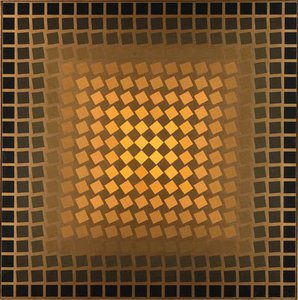
Victor Vasarely's CTA-103-OR is a striking Op Art tapestry showcasing dynamic yellow squares arranged on a black canvas. Created in 1968 by Tabard Frères et Soeurs, this artwork exemplifies Vasarely’s pioneering approach to perception and design, celebrated for its bold color contrasts and captivating optical illusion. It resides in The Metropolitan Museum of Art's collection (Object Number: 1981.
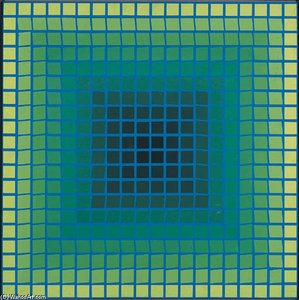
Victor Vasarely The image is a close up of a painting that features a blue and green grid pattern with yellow squares in the middle. The painting appears to be an abstract art piece, possibly inspired by Op-Art. The colors used are predominantly blue and green, with some yellow accents. The grid pattern creates a sense of depth and balance within the composition. The painting is displayed on a wa
Victor Vasarely (1906-1997), Hungarian-born artist, revolutionized art with his pioneering exploration of Op Art and kinetic art. Initially pursuing medicine, he transitioned to painting in 1927 after attending Sándor Bortnyik’s Műhely school influenced by Bauhaus principles. His signature style emerged from this formative period, characterized by geometric abstraction and optical illusions—specif