Showing 24 artworks out of 165 with Victor Vasarely and with Op Art

-
Victor Vasarely
-
Op Art
Not available for this selection
- Phthalo Green
- Espresso
- Cobalt Violet
- Black
- Midnight Blue
- Steel Blue
- Prussian Blue
- Walnut
- Sea Green
- Teal
- Sap Green
- Lime Green
- Gray
- Quinacridone Magenta
- Op Art
- Victor Vasarely
- Geometric Abstraction
- Optical Illusion
- Kinetic Art
- Modern Art
- Hungarian Artist
- Bauhaus Influence
- Visual Perception
- Abstract Painting
- Contemporary Art
- Abstract Art
- Color Field Painting
- Geometric Design
- Vibrant Colors
- Color Palette
- Geometric Shapes
- Art Deco Style
- Abstract Design
- Dynamic Composition
- Geometric Art
- 20Th Century Art
- Art Reproduction
- Circular Pattern
- Pattern Design
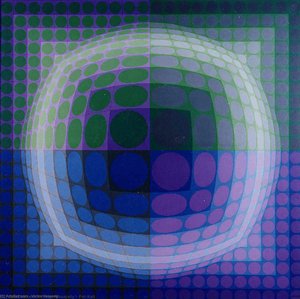
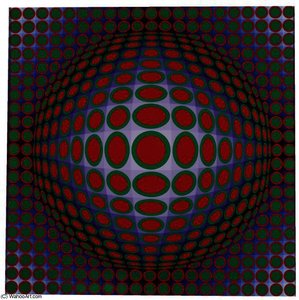
Experience Victor Vasarely's 'Pal-Ket,' a mesmerizing Op Art masterpiece from 1974! Explore dynamic geometric forms, vibrant colors, and optical illusions in this iconic work of modern art.
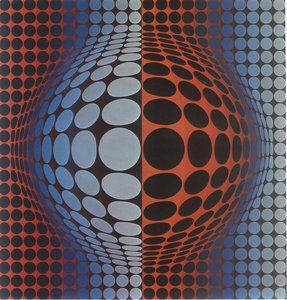
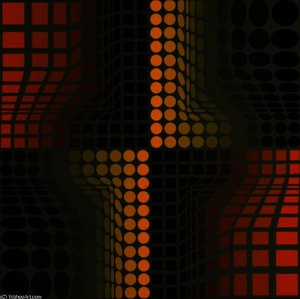
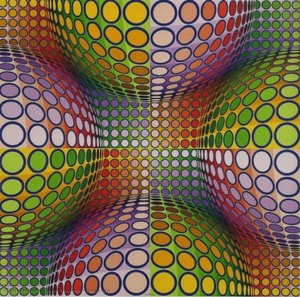
Explore Victor Vasarely's mesmerizing 'Kaglo II,' a vibrant geometric print inspired by natural forms like waves and architectural structures found in Provence and Gordes. Discover the artist’s Bauhaus influence and his pioneering role in Op Art.
This artwork exemplifies Vasarely’s signature style, characterized by repetitive geometric forms and optical illusions that stimulate perception.
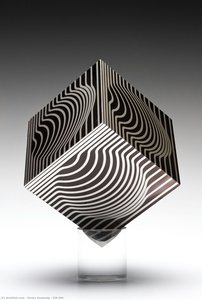
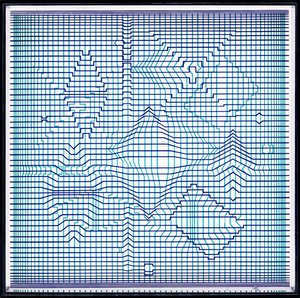
Experience Victor Vasarely's 'SIR-RIS': A mesmerizing Op Art sculpture of geometric abstraction! Explore its reflective surface, dynamic lines & optical illusions – a true masterpiece of modern art.
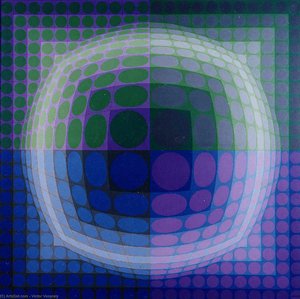
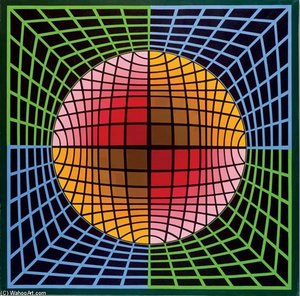
Victor Vasarely’s ‘Pal-Ket,’ created in 1974, exemplifies Op Art's captivating blend of geometry and illusion. This circular painting utilizes bold colors to generate a mesmerizing visual experience. Experience Victor Vasarely's mesmerizing 'Pal-Ket,' a vibrant Op Art masterpiece from 1974! Explore dynamic geometric forms and optical illusions – discover modern art at WikiArt.
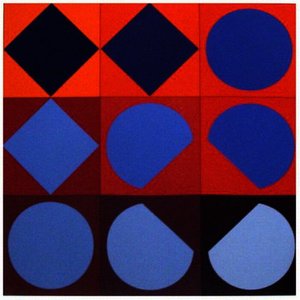
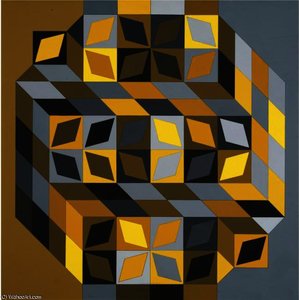
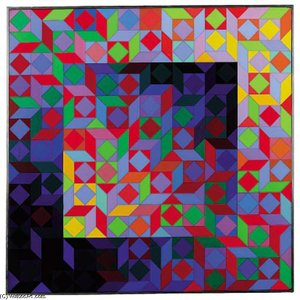
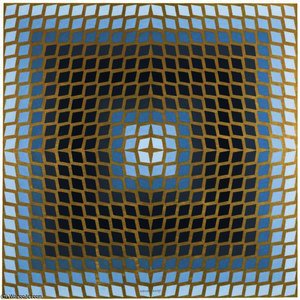
The painting utilizes a systematic geometric grid, reflecting the Bauhaus influence and establishing Vasarely as a key figure in modern art history. Its reproduction is available at ArtsDot.com for personalized dimensions and high-quality printing. Victor Vasarely’s ‘Lapidaire,’ created in 1966, is a captivating piece of Op Art characterized by its symmetrical arrangement of twelve squares – pred
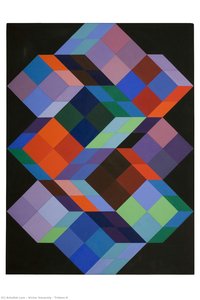
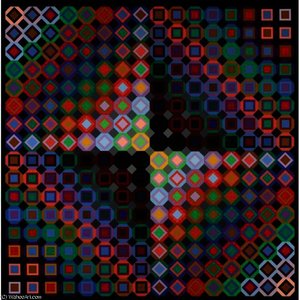
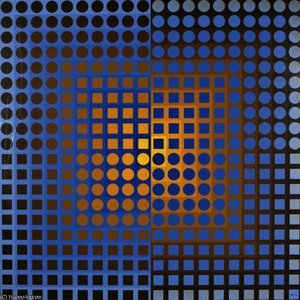
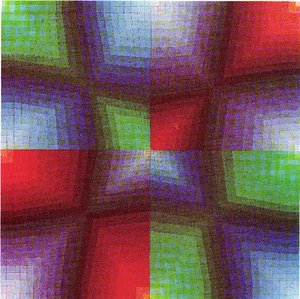
Explore Victor Vasarely’s mesmerizing ‘Tsipke,’ a vibrant Op Art masterpiece featuring intricate geometric patterns and bold colors—a captivating glimpse into the artist's groundbreaking vision.
Victor Vasarely Born Károly Vaszary in Pécs, Hungary (later Croatia), Victor Vasarely initially studied medicine but transitioned to painting after enrolling at the Podolini-Volkmann Academy and Sándor Bortnyik’s workshop. He embraced Bauhaus principles of functional design and geometric abstraction, establishing his distinctive Op Art style. Pécs Croatia 1906 1997 A captivating Op Art piece
Included Excellent condition. Nielsen metal frame (23.75 in x 23.75 in) Art © The Estate of the Artist. Photographs © Washington Color Gallery Heliogravure Washington Color Gallery Editions du Griffon, Neuchâtel, Switzerland Unsigned. With publisher's copyright notice en verso. 15.25 in x 15.25 in visible in mat framed size: 23.75 in x 23.75 in Explore Victor Vasarely's Koska-Rev (1974) –
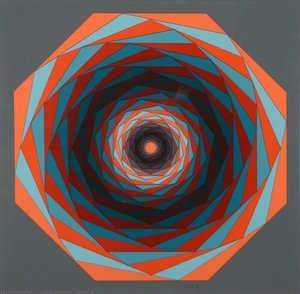
Victor Vasarely's 'Vega-Lep', created in 1970, exemplifies Op Art with its dynamic circular pattern featuring hues of yellow, green, red, blue, purple, orange, and pink. Measuring 150 x 150 cm on canvas, this artwork utilizes acrylic paint to generate an optical illusion—a swirling spiral—characteristic of Vasarely’s groundbreaking style. Influenced by Bauhaus principles and Sándor Bortnyik's work
Explore 'Ibadan' by Victor Vasarely: A mesmerizing Op Art masterpiece blending geometric abstraction and encaustic technique to challenge perception. Discover Vasarely's groundbreaking approach to visual art. Victor Vasarely (1906-1997), born Károly Vaszary in Pécs, Croatia, revolutionized visual perception with his pioneering work in Op Art and kinetic art. Initially pursuing medicine at Eötvös
Victor Vasarely (1906-1997), born in Pécs, Croatia, was a Hungarian avant-garde artist renowned for his pioneering contributions to Op Art and kinetic art. Initially pursuing medical studies at Eötvös Loránd University, he transitioned to painting in 1927 after enrolling at Sándor Bortnyik’s workshop – Műhely –, heavily influenced by the Bauhaus movement. This formative experience instilled a deep
Victor Vasarely Sikra A Life Forged in Geometry: The World of Victor VasarelyBorn Károly Vaszary in 1906 in Pécs, a city then nestled within Austria-Hungary (now Croatia), Victor Vasarely’s journey to becoming a pioneer of Op Art and kinetic art was anything but predetermined. His early life hinted at a path far removed from the canvas; he initially pursued medical studies at Eötvös Loránd Unive
Explore the mesmerizing world of Victor Vasarely's 'Barson-N,' a vibrant Op Art masterpiece featuring geometric shapes and captivating color combinations. Discover his legacy at Museo Víctor Balaguer & explore Argentine abstract art. The image is a painting of a geometric pattern with various shapes and colors. The painting features a mix of blue, green, yellow, and orange hues. There are several
Explore Victor Vasarely's 'Kilenz,' a vibrant Op Art masterpiece! Dive into geometric patterns & optical illusions – a stunning addition to any art collection.
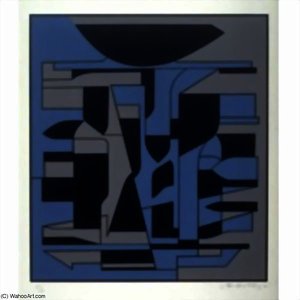
Explore Victor Vasarely's captivating 'Serigraph in black,' a striking Op Art piece blending geometric patterns and bold colors. Discover its history & artistic significance.
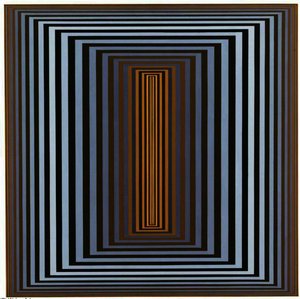
Victor Vasarely Vonal-Lap Pécs Croatia 1906 1997 The image is a painting of a blue and brown striped pattern with a large black square in the center. The painting appears to be an abstract art piece, possibly featuring Op-Art style. The image is a painting of a blue and brown striped pattern with a large black square in the center. The painting appears to be an abstract art piece, possibly
Victor Vasarely (1906-1997), Hungarian-French artist, revolutionized art with his pioneering Op Art style. Born in Pécs, Hungary, he initially pursued medicine but transitioned to painting after enrolling at Műhely Academy influenced by Bauhaus principles. His signature geometric abstractions and optical illusions captivated audiences worldwide, establishing him as a cornerstone of modern art. Va