Showing 7 artworks with William Blake
-
William Blake
Not available for this selection
- Putty
- Quinacridone Magenta
- Driftwood
Not available for this selection
- Romantic Art
- William Blake
- Dramatic Composition
- Blake Printmaking
- Symbolic Imagery
- British Art
- Symbolism
- Visionary Art
- Engraving Technique
- Biblical Narrative
- Divine Judgment Symbolism
- Illuminated Printing
- Religious Symbolism
- Saint James
- Line Engraving Technique
- Spiritual Allegory
- Dark Romanticism
- Dante Alighieri
- Medieval Art
- Mountain Landscape
- Gothic Revival Influence
- Print Reproduction
- Hell Imagery
- Blake Print
- Line Work Texture
- Victorian Era
- Heaven
- William Blake Engraving
- Angel Painting
- Divine Comedy
- Dreamlike Landscape
- Dante Virgil Cato Painting
- Blake Mythology
- Visionary Painting
- Biblical Art
- Mythological Narrative
- Victorian Era Art
- Mythic Illustration
- Angels
- Enlightenment Wall
- Sacrifice Theology
- Fantasy Illustration
- Medieval Mythology
- Blake Style Visionary
- Castle Illustration
- Watercolor Illustration
- Saint Peter
- Satan Summoning Legions
- Guardian Angel
- Black And White Drawing
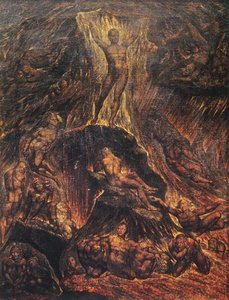
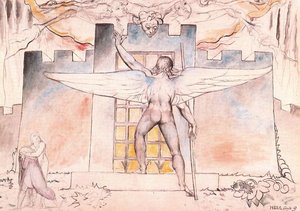
The painting portrays Satan summoning his legions from Hell, featuring figures on a mountain against dramatic rocky terrain. Blake's visionary style captures the intensity of biblical narrative.
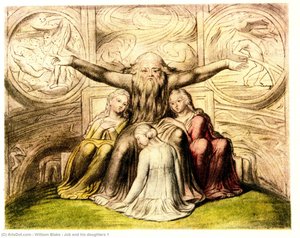
Job and His Daughters by William Blake - This iconic engraving depicts Job's daughters offering themselves to God as sacrifices, embodying themes of faith, sacrifice, and divine judgment during the Romantic era.
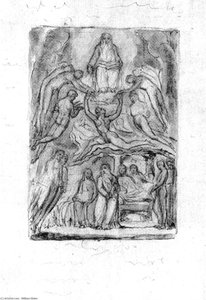
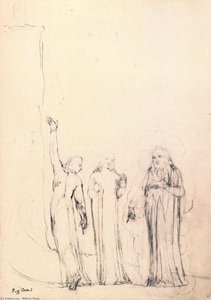
Blake's Dante, Virgil and Cato depicts three figures – Dante, Virgil, and Cato – confronting a wall symbolizing the challenges of spiritual enlightenment. The stark black and white print showcases Blake’s masterful engraving technique and reflects the Romantic preoccupation with mythic narratives and visionary art.
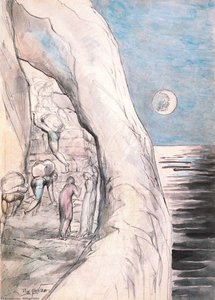
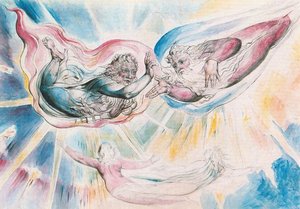
This stunning watercolor depicts Saint Peter and Saint James engaged in a celestial conflict against angelic figures, inspired by Dante Alighieri's 'Divine Comedy.' Executed in London around 1824-1827, it’s a masterful piece from Blake’s oeuvre and part of the National Gallery Victoria’s collection. Explore its symbolism and artistic technique!