Showing 16 artworks with Frederick William Elwell and with Balanced
-
Frederick William Elwell
-
Balanced
Not available for this selection
- Gray
- Driftwood
- Celadon
- Black
- Phthalo Green
- Quinacridone Magenta
- Walnut
- Sap Green
- Rosy Brown
Not available for this selection
- Elwell Painting
- Realistic Oil Painting
- Muted Color Palette
- 19Th Century Art
- Frederick Elwell
- Art Historical Piece
- Study For The First Born
- Yorkshire Landscape
- Workplace Painting
- "Melancholy Art"
- Early 20Th Century Art
- Impressionist Art
- Tent Scene Artwork
- Caregiving Scene
- Watercolor Style
- Illness Artwork
- 1920S Oil Painting
- Traditional Oil Paint
- Art Nouveau Influence
- Frederick William Elwell
- Loose Brushstrokes
- Joyful Summer
- Birth Scene Artwork
- 1913 Art Deco Style
- 1945 Artwork
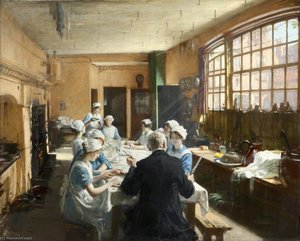
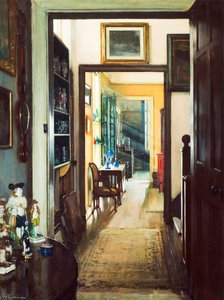
Discover 'An Old Inn Kitchen' by Frederick William Elwell (1922). A realistic oil painting capturing a bustling bakery scene. Explore its detailed composition & Yorkshire realism.
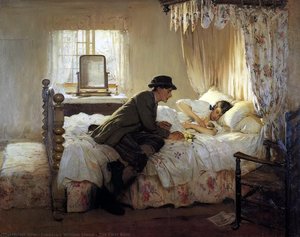
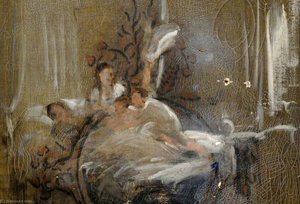
Explore 'The First Born' by Frederick William Elwell – a poignant 1913 oil painting of familial devotion. Realistic style, muted tones & subtle emotion. A beautiful example of late Romanticism.
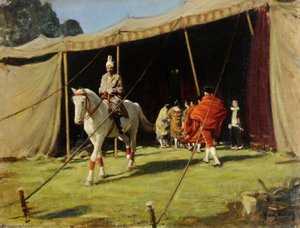
A regal man on a white horse enters a grand tent in this evocative 1923 painting by Frederick William Elwell that captures a sense of ceremony and light, perfect for adding historical elegance to your collection.
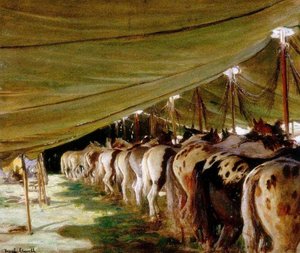
Discover Frederick William Elwell’s ‘Sanger’s Ring Horses,’ an evocative oil painting of horses under a tent – impressionistic style, muted tones & timeless travel theme.
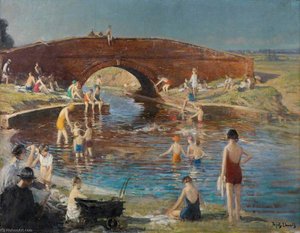
Frederick Elwell’s "Brick Bridge" captures a vibrant 1945 summer scene in East Riding Yorkshire. An impressionistic plein air painting, it showcases leisure & light with fluid brushstrokes.
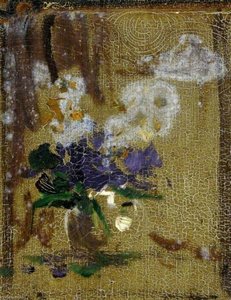
Explore Frederick William Elwell’s ‘Study of a Flower,’ a melancholic oil painting showcasing decaying beauty & textural detail. Impressionistic/Expressionist style, capturing transience & decay. A unique artwork.
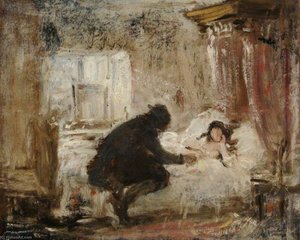
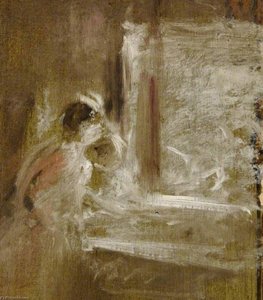
Explore 'Study for ‘The First Born’,' a poignant oil painting by Frederick William Elwell. Capturing intimacy & sorrow, its muted tones & impasto evoke late Romanticism. A powerful study of caregiving and vulnerability.