Showing 5 artworks with Hans The Elder Holbein and with Acrylic On Canvas
-
Hans The Elder Holbein
-
Acrylic On Canvas
Not available for this selection
- Putty
- Espresso
- Driftwood
Not available for this selection
- Hans Holbein Elder
- Northern Renaissance
- German Art History
- Religious Art
- Portraiture
- Renaissance Painting
- Renaissance Realism
- Book Illustration
- Family
- Baroque Influence
- Dignified Character Study
- Serene Expression
- Facial Detail
- Portrait
- Shading And Hatching
- Birds
- Renaissance Drawing
- Fifteenth Century Art
- Black Hat Gold Trim
- Detail
- Earth Tones
- Augsburg
- Art
- 16Th Century Painting
- Tudor Portraiture
- Realism
- Portrait Holbein
- Baroque Style
- Kissing
- Augsburg Sketch Study
- Augsburg Artist
- Maximilian I Holy Roman Emperor
- St Sebastian Altarpiece
- Holbein Elder
- Medieval Art
- Cityscape
- Formal Attire
- Medieval Drawing
- Crossbowman Study
- 16Th Century
- German
- Gothic Revival
- Holbein
- Silverpoint Technique
- Renaissance
- Fresco Mural
- Painting
- Augsburg Masterpiece
- Detailed Sketch
- Medieval Painting
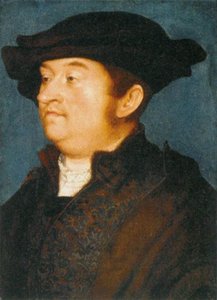
This striking portrait by Hans Holbein the Elder captures a man in formal attire, adorned with a black hat embellished with gold trim. His expressive gaze conveys surprise or shock as he looks into the distance, embodying the spirit of Northern Renaissance artistry.
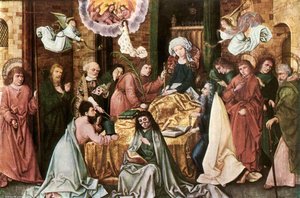
Experience the poignant beauty of Hans Holbein the Elder's 'Death of the Virgin,' a masterpiece of Northern Renaissance art depicting Mary Magdalene's solemn repose and honoring her spiritual journey.
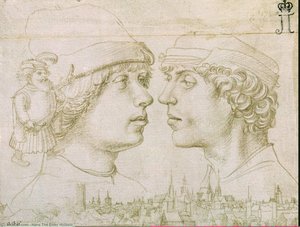
Admire 'Portrait of the Artist's Sons' by Hans Holbein the Elder (1514). This iconic Renaissance masterpiece showcases intimacy & detail, capturing a tender moment between two men in Augsburg.
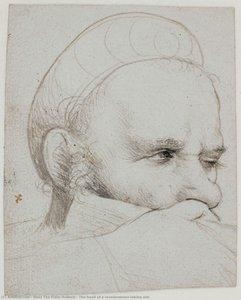
Admire Hans Holbein the Elder’s masterful silverpoint drawing ‘The Head of a Crossbowman Taking Aim,’ capturing Renaissance realism with meticulous detail and expressive shading—a study for St. Sebastian altarpiece.
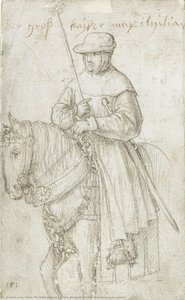
This sketch by Hans Holbein the Elder portrays Kaiser Maximilian I riding horseback, dressed modestly yet imbued with imperial authority. Created around 1510-1513, it exemplifies Holbein’s pioneering realism and offers a glimpse into the emperor's personal life during Augsburg’s Renaissance.