Showing 4 artworks with Sir William George Gillies
-
Sir William George Gillies
Not available for this selection
- Espresso
- Quinacridone Magenta
- Putty
Not available for this selection

- Scottish Art
- Gillies Artwork
- Paul Klee Color
- Still Life Composition
- Cézanne Influence
- Landscape Painting
- Cubism Influence
- Still Life Painting
- Jug Composition
- Botanical Illustration
- Floral Still Life
- Picasso Palette
- Mirror Backing
- Art Deco Influence
- Gillies Painting
- Gillies
- Cézanne Style
- Color Palette
- Botanical Print
- Vintage Painting
- Scottish Landscape
- Cubism Style
- Paul Klee Inspiration
- French Art
- Landscape Impressionism
- Watercolor Technique
- Cézanne Inspiration
- 1934 Painting
- Impressionistic Elements
- 1933 Painting
- Paul Klee Style
- Decorative Art
- Avant-Garde Art
- Surrealist Art
- Family Home Scene
- British Art History
- British Painter
- Oil Painting
- Trees Foliage
- Floral Arrangement
- 1938 Artwork
- Scottish Colourist
- Decorative Vase
- Family Portrait
- 1930S Art
- Cubism Inspiration
- Interior Landscape
- Minimalist Color Palette
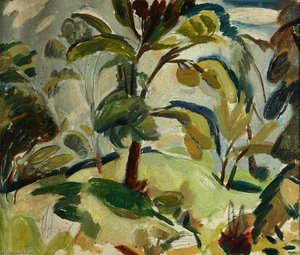
Admire Sir William George Gillies’ ‘Trees in Leaf,’ a serene landscape painting from 1934 infused with Cézanne's influence and inspired by Paul Klee's imaginative color palette. Explore Scottish art history.
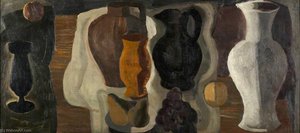
Sir William George Gillies Still Life with Black Jug Sir William George Gillies: A Life in Scottish Art Early Life and Education Born: Haddington, East Lothian, United Kingdom, 1898. Gillies initially enrolled at the Edinburgh College of Art but his studies were interrupted by service in World War I with the Royal Engineers. Following the war, he returned to complete his education at the Edinbur
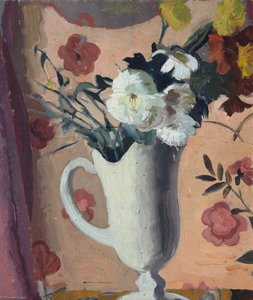
Explore 'Untitled,' a captivating mirror backing from Sir William George Gillies' iconic oil painting series. Inspired by Cézanne and Picasso, this delicate floral arrangement embodies Klee’s playful color palette – a testament to Scottish art history.
Gillies’ artistic development was significantly shaped by his exposure to Cubist principles and the visionary aesthetics of Paul Klee.