Showing 7 artworks with Vincent Willem Van Gogh and with 1890 and with Saint-Rémy
-
Vincent Willem Van Gogh
-
1890
-
Saint-Rémy
Not available for this selection
- Putty
- Espresso
- Sap Green
- Rosy Brown
- Driftwood
- Post-Impressionism
- Saint-Rémy
- Van Gogh
- 1890
- Art
- Rural Life
- Sketch
- Painting
- Dutch Art
- Art Reproduction
- Figures
- Blue
- Vincent Van Gogh
- Drawing
- Still Life
- Movement
- Expressive Lines
- Flowers
- Floral
- Monochrome
- Cottage
- Thatched Roofs
- Wahooart
- 1890S Art
- Couple
- Intimacy
- Color
- Diggers
- 1890S
- Dutch Countryside
- Monochromatic Palette
- Vincent Van Gogh Paintings
- Earthy Tones
- Impressionism
- Cottages
- Art History
- Pencil
- Landscape
- Charcoal Drawing
- Figure Drawing
- Roses
- Yellow
- Simplicity
- Vase
- Masterpiece
- Rural Scene
- Working Class
- Artwork
- Texture
- Labor
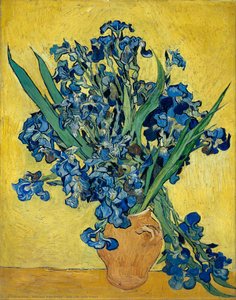
Van Gogh's 'Still Life with Irises' (1890) bursts with vibrant color & expressive brushstrokes. Explore this iconic Post-Impressionist masterpiece at ArtsDot.com!
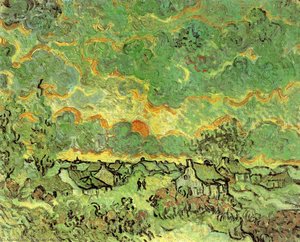
Van Gogh's 'Cottages and Cypresses' evokes Dutch memories with vibrant brushstrokes & earthy tones. Explore his Post-Impressionist masterpiece at ArtsDot.
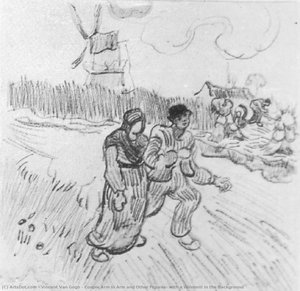
Explore Van Gogh's evocative drawing, 'Couple Arm in Arm and Other Figures with a Windmill.' A poignant glimpse into rural life, showcasing his expressive lines & emotional depth.
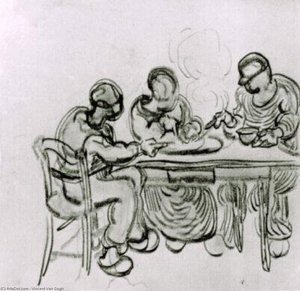
Explore Van Gogh's poignant 'Three Peasants at a Meal,' a monochrome drawing capturing the simplicity and intimacy of rural life with expressive lines and emotional depth.
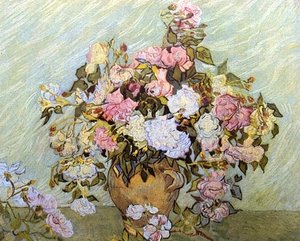
Van Gogh's 'Still Life: Vase with Roses' (1890) captures optimism & renewal through vibrant colors and bold brushstrokes, showcasing his post-impressionist style.
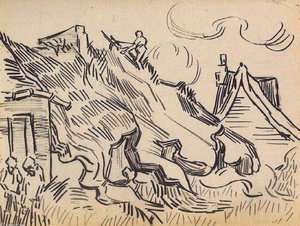
Experience Vincent van Gogh's "Cottages with Thatched Roofs and Figures." A captivating Post-Impressionist masterpiece depicting rural French life, brimming with vibrant color & emotion.
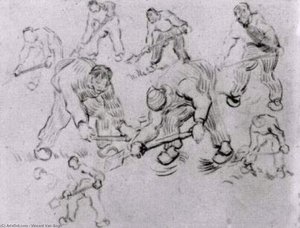
This drawing, created in 1890 during Van Gogh's stay in Saint-Rémy, exemplifies his signature draftsmanship—loose lines conveying movement and emotion. Executed on paper with charcoal or pencil, it depicts a group of diggers engaged in manual labor, reflecting Van Gogh’s empathy for the working class and utilizing a monochromatic palette to emphasize tonal variations and texture.