Showing 9 artworks with Benvenuto Cellini and with Acrylic On Canvas
-
Benvenuto Cellini
-
Acrylic On Canvas
Not available for this selection
- Espresso
- Quinacridone Magenta
- Phthalo Green
- Walnut
- Gray
- Rosy Brown
- White
Not available for this selection
- Renaissance Art
- Renaissance Sculpture
- Benvenuto Cellini
- Italian Renaissance
- Mythological Art
- Cellini Masterpiece
- Renaissance Jewelry
- Mannerist Style
- Italian Art History
- Fine Art Reproduction
- Italian Sculpture
- Shield Decorative Art
- Sculpting Technique
- 16Th Century Sculpture
- Seal
- Cellini Narcissus
- Shield Design
- Narcissus Reflection
- Italian Goldsmith Sculpture
- Italian Renaissance Sculpture
- Numismatic Art
- Florence Artist
- Cellini Testone Artwork
- Mannerist Sculpture
- Charles Ix Shield
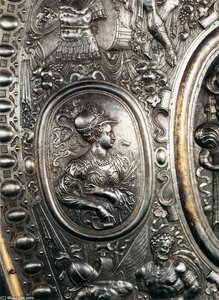
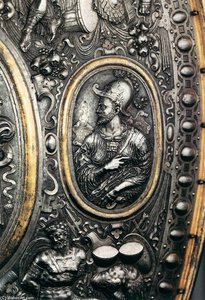
Admire the masterful craftsmanship of Benvenuto Cellini’s ‘Shield for Francesco I de' Medici,’ a breathtaking Renaissance metalwork sculpture adorned with intricate reliefs and floral motifs.
Admire the intricate artistry of Benvenuto Cellini’s ‘Shield for Francesco I de' Medici’! This Renaissance masterpiece showcases masterful metalwork and symbolic figures—a testament to Florentine craftsmanship.
Cellini’s work aligns with the Mannerist movement following the High Renaissance, characterized by dramatic flair and stylistic complexity. Commissioned by Cardinal Ippolito d'Este and later Duke Cosimo I of Florence, it exemplifies Cellini’s versatility as an artist—a goldsmith, sculptor, draftsman, soldier, musician, and writer.
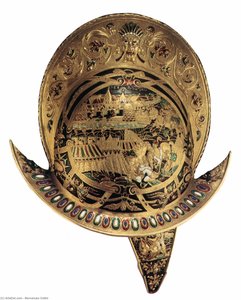
Admire Benvenuto Cellini's masterful Helmet (c. 1570), crafted from repoussé steel and gilded, housed in the Louvre Museum. Explore Renaissance artistry and royal symbolism.
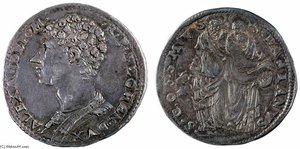
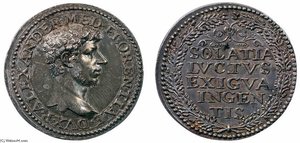
Admire Benvenuto Cellini’s exquisite 1530 ‘Medal of Alessandro de’ Medici.’ Bronze detail, classical numismatics & historical symbolism – a rare piece for collectors.
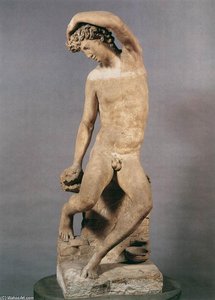
Benvenuto Cellini’s Narcissus (circa 1540) is a captivating marble statue embodying Mannerist artistry. Inspired by Cosimo I's acquisition of Greek marble and Cellini's ambition to rival Bandinelli, this sculpture portrays Narcissus gazing at his reflection—a poignant symbol of vanity and contemplation—within the Bargello Museum.
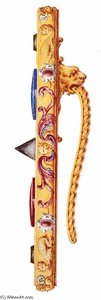
This detailed drawing depicts Cellini’s Cope Pin, created around 1520 for Pope Clement VII. Recognized for its Mannerist style and exquisite craftsmanship—including scales and facial features—it exemplifies Renaissance artistry.
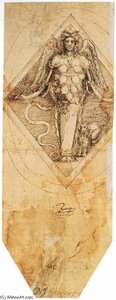
Admire Benvenuto Cellini's 'Study for a Seal,' a stunning 1560 pen drawing showcasing the Renaissance master’s intricate style & mythological themes. Explore this Louvre masterpiece!