Showing 24 artworks out of more than 240+ with Fernand Léger

-
Fernand Léger
Not available for this selection
- Cubism
- Geometric Abstraction
- Cubist
- Cubist Synthesis
- Cubist Style
- Cubism Cubism
- Cubist Expressionism
- Cubist Tubism
- Cubist Modernity
- Cubist Movement
- Cubist Expression
- Cubist Still Life
- Tubism
- Cubist Abstraction
- Expressionism
- Purism Purism
- Purism
- Cubist Modernism
- Naïve Art Primitivism
- Orphism
- Precisionism
- Purism Style
- Purist Abstraction
- Purist Movement
- Surrealist Expression
- See all
- Phthalo Green
- Espresso
- Black
- Midnight Blue
- Putty
- Prussian Blue
- Sea Green
- Gray
- Sap Green
- Royal Blue
- Quinacridone Magenta
- Fernand Léger
- Modern Art
- Cubism
- Geometric Abstraction
- Machine Age
- Dynamic Composition
- Abstract Painting
- Contemporary Art
- Geometric Art
- Geometric Shapes
- Tubism
- 20Th Century Art
- Bold Colors
- Cubist Painting
- Abstract Art
- Painting
- Surrealism
- Art Reproduction
- French Artist
- Industrial Design
- Industrial Art
- French Painter
- Early 20Th Century
- Avant-Garde Art
- Modern Art Style
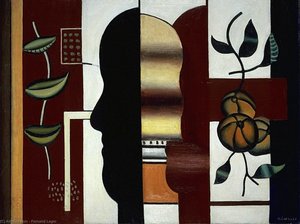
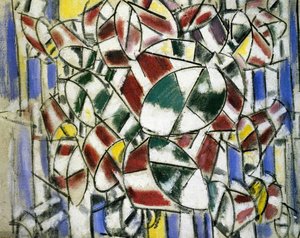
Fernand Léger's 'Still Life with Face Profile' embodies the modernist spirit through abstracted forms and vibrant colors, capturing the energy of industrial progress while retaining an element of recognizable representation.
Fernand Léger, born Joseph Fernand Henri Léger in 1881 amidst the rural landscapes of Argentan, Normandy, stands as a pivotal figure in the evolution of modern art. His journey from the farmlands of his youth to the forefront of Parisian avant-garde circles is a testament to an unwavering artistic vision and a relentless pursuit of capturing the spirit of the machine age.
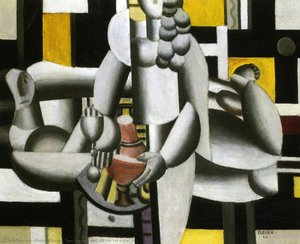
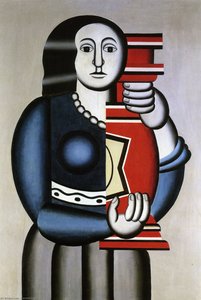
Fernand Leger’s ‘Two Women & Still Life’ (1920) is a striking Cubist masterpiece. Explore fragmented forms, stark contrasts, and geometric abstraction in this iconic work.
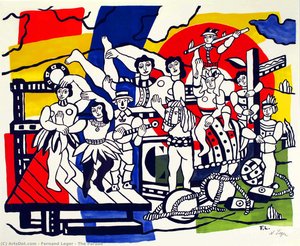
Fernand Léger’s "The Parade" explodes with geometric form and industrial spirit! This Cubist lithograph captures the dynamism of modern life through fragmented figures & bold abstraction. Explore a masterpiece of 20th-century art!
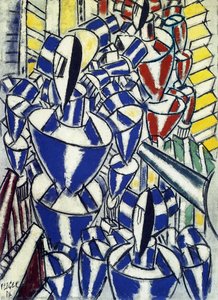
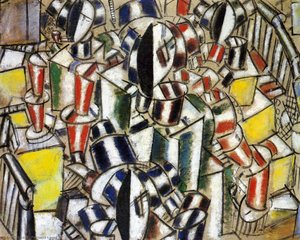
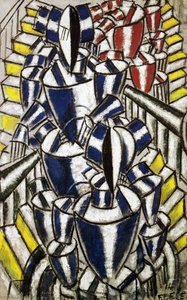
The Exit of the Russian Ballet by Fernand Léger – A striking painting depicting a group of figures standing before a building, adorned with scattered cups and bowls, capturing the energy of urban life through Léger’s distinctive geometric abstraction.
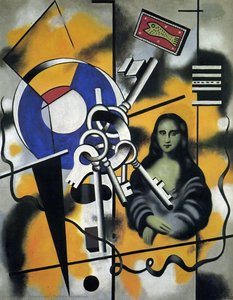
The Mona Lisa with keys - Fernand Léger's painting captures a woman gazing intently at the viewer amidst a backdrop of keys, fish, and a clock – symbolizing modern life’s complexities.
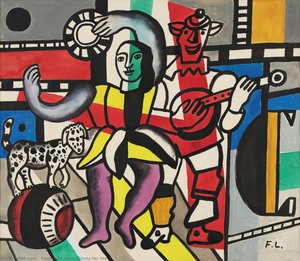
Fernand Léger's 'Acrobats in the Circus' (1918) embodies Cubist dynamism with fractured forms and bold colors—a pivotal precursor to Pop Art, celebrated at Stedelijk Van Abbe Museum.
Geometric standards by Fernand Léger – A vibrant painting featuring bold geometric shapes and colors (reds, greens, yellows, blues, oranges) reflecting the dynamism of the machine age.
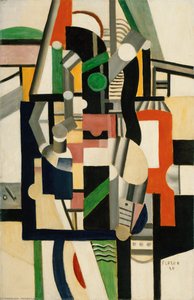
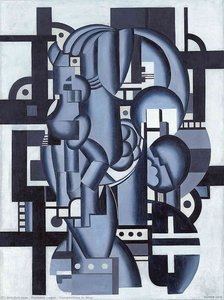
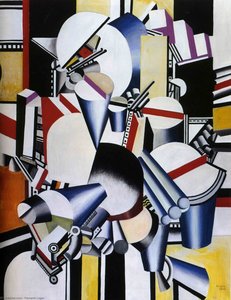
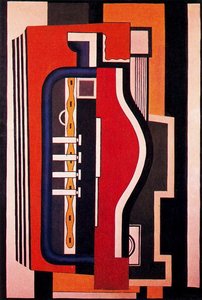
Experience the rhythmic energy of Fernand Leger's Mechanical Elements, a 1924 Cubist masterpiece celebrating industrial harmony through geometric gears and pipes, perfect for collectors seeking modern dynamism.
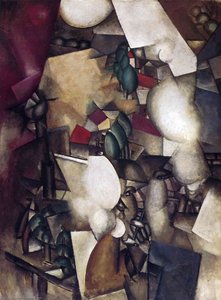
This striking cubist painting by Fernand Léger depicts a large white bird amidst oranges and scattered smaller birds, embodying the artist's exploration of machine age dynamism within an abstract visual language.
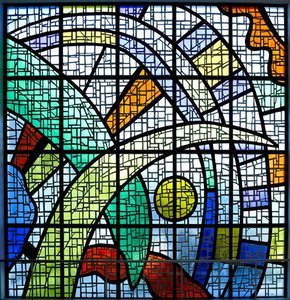
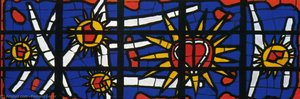
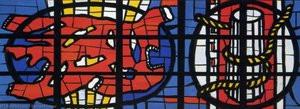
Explore Fernand Léger's vibrant stained-glass windows for the University of Caracas! A stunning Cubist masterpiece blending geometric shapes & bold colors.
Explore Fernand Léger's 'Composition in Blue,' a striking modernist masterpiece blending cubism & futurism. Discover bold forms and vibrant color!
Fernand Léger Fernand Léger was born Joseph Fernand Henri Léger in 1881 amidst the rural landscapes of Argentan, Normandy. He pursued architecture initially but transitioned to painting around 1900, establishing himself in Paris and supporting fellow artists. Argentan France 1881 1914 1955 A painting depicting a staircase filled with people moving upwards. The figures are adorned with helme
Experience the dynamic energy of Fernand Leger's 1927 Cubist masterpiece The Study for the City Centre where industrial Machine Age aesthetics meet bold geometric forms and a captivating invitation to explore modern art.
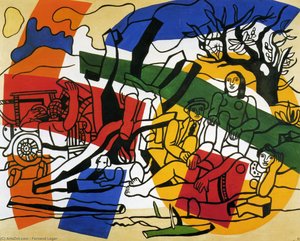
Fernand Léger's 'The Outing in the Country' (1954) captures a vibrant, communal scene in his signature Tubism style – a lively depiction of leisure and modern life with bold colors and dynamic forms.
This reproduction captures the essence of Léger's artistic vision—a harmonious blend of abstraction and representation. Explore high-resolution images and detailed information on WikiArt.
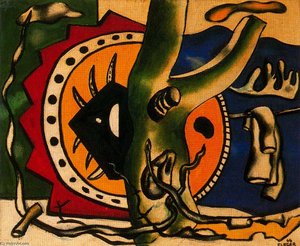
Fernand Léger's 'The Green Tree,' painted in 1932, exemplifies Tubism—a revolutionary style characterized by simplified geometric forms and vibrant colors that capture the dynamism of the machine age. This iconic piece showcases Léger’s masterful blend of abstraction and observation.
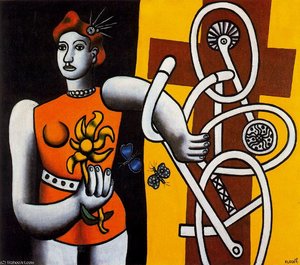
Fernand Léger's 'Woman with Wheel' embodies cubist innovation, blending organic forms—like the woman’s body—with geometric structures—the wheel and cross—to convey the impact of industrialization on human experience.
Accordion Player, 1953 by Fernand Leger Paper Art Print - 20874-LEG Fine Art Paper Print of Accordion Player, 1953 by Fernand Leger ✓ Museum Quality Giclée ✓ Customize Size ✓ Framing Options ✓ Ships Worldwide • TopArtPrint 20874-LEG The accordion – Fernand Leger as art print or hand painted oil. The accordion Artist: Fernand Léger (Argentan, 1881- Gif-sur-Yvette, 1955) Style: Purism Title: The acc
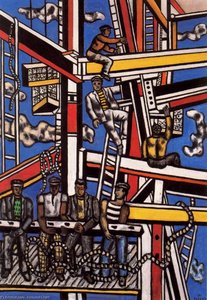
Fernand Léger’s "String Constructors" embodies the spirit of collaboration and industrial progress through fragmented geometric forms against a vibrant blue sky.
Explore this artwork on WikiArt.com for high-resolution images and detailed information.
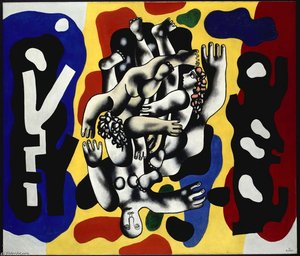
Experience the vibrant energy of Fernand Léger's modernist 'Divers on a Yellow Background,' capturing dynamic human forms with bold color for your collection.