Showing 24 artworks out of 206 with Francis Bacon and with Acrylic On Canvas

-
Francis Bacon
-
Acrylic On Canvas
Not available for this selection
- Expressionism
- Expressionist Abstraction
- Contemporary Realism
- Expressionist Painting
- Surrealist Expression Surrealism
- Surrealism
- Expressionist Surrealism
- Surrealist Expression
- Expressionistic Surrealism
- Expressionism Expressionism
- Surrealist Expressionism
- Expressionist Portraiture
- Expressionist Horror
- Expressionist
- Expressionist Figuration
- Surrealism Surrealism
- Expressionistic Horror
- Contemporary Expressionism
- Other
- Neo-Figuration
- Expressionist Distortion
- Expressionistic Abstraction
- Surrealist Movement
- Expressionist Minimalism
- Surrealist Movement Surrealist Movement
- See all
- Espresso
- Phthalo Green
- Black
- Gray
- Sea Green
- Sap Green
- Walnut
- Steel Blue
- Quinacridone Magenta
- Cobalt Violet
- Francis Bacon
- Expressionism
- Surrealism
- Painting
- Dublin Artist
- Modern Art
- British Art
- Psychological Art
- Distortion
- Portrait Painting
- Postwar Art
- Bacon Art Print
- Abstract Expressionism
- Irish Artist
- Portrait
- Portraiture
- Anxiety
- Contemporary Art
- British Painter
- Black And White Art
- Dark Palette
- Emotion
- Distorted Figure
- Isolation
- Emotional Intensity
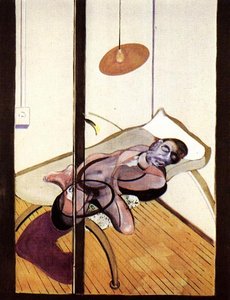
Sleeping Figure, 1974 - This haunting painting by Francis Bacon depicts a man lying on a bed with his head turned to the side, capturing a moment of profound stillness amidst unsettling imagery. The room’s details—chairs, lamps, and a clock—contribute to an atmosphere of quiet contemplation.
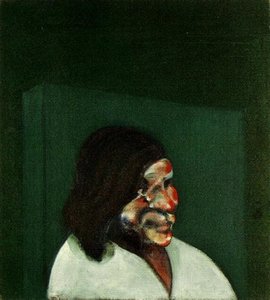
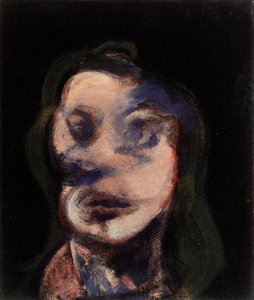
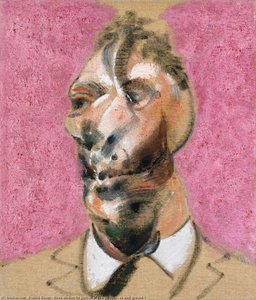
Francis Bacon's 'Head of a Woman' presents a hauntingly distorted portrait, capturing raw emotion and unsettling realism characteristic of his work. This iconic piece from the 20th-century artist evokes visceral intensity – explore this dramatic masterpiece and bring it into your collection.
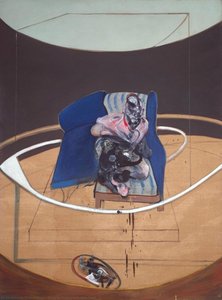
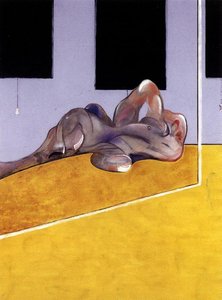
Francis Bacon’s ‘Lying Figure in a Mirror’ captures raw emotion through a stark depiction of a nude woman before a reflective surface, embodying the artist's visceral style and exploring themes of isolation. Discover this iconic work and bring its powerful imagery into your space.
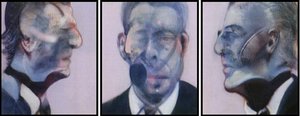
Francis Bacon’s ‘Studies for Portrait (Looking Right)’ 1964 captures a hauntingly intimate portrait of a woman with closed eyes, embodying the artist's visceral style and exploring themes of isolation. Discover this iconic work and bring its powerful emotion into your space.
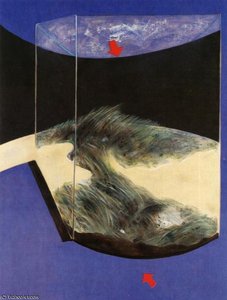
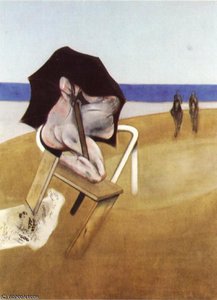
Experience Francis Bacon's visceral Landscape, a haunting beach scene brimming with unsettling detail and raw emotion from 1978. Explore this iconic work and discover the depth of his unique style.
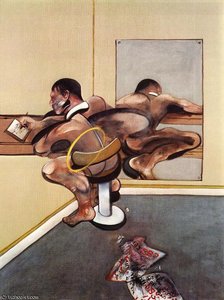
Francis Bacon’s "Figure Writing Reflected in a mirror" – a haunting surrealist masterpiece. Explore its unsettling composition, expressive lines & muted colors. A unique piece for art collectors.
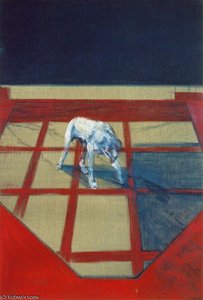
Francis Bacon’s visceral ‘Dog II’, 1952, captures the raw emotion of Expressionism through a haunting depiction of a dog on a checkered floor, a timeless piece perfect for art lovers and collectors.
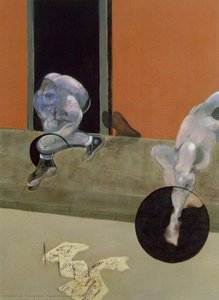
Francis Bacon's 'Figures in Movement' (1973) captures raw emotion and unsettling intimacy through stark black & white. Explore the visceral intensity of this private portrait, a key work in Bacon’s oeuvre.
“Self-Portrait” was created in 1973 by Francis Bacon in Expressionism style. Find more prominent pieces of self-portrait at WikiArt.org – best visual art database.
Francis Bacon, a name synonymous with the visceral intensity of 20th-century art, was born in Dublin, Ireland, in 1909. Despite lacking formal training, he cultivated a distinctive style influenced by diverse sources, creating unforgettable canvases that grapple with themes of anxiety and isolation.
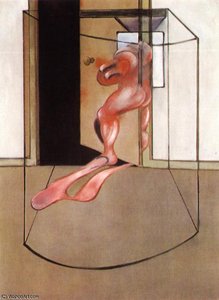
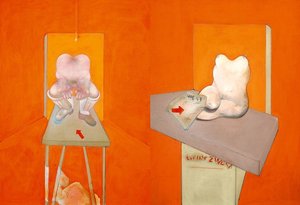
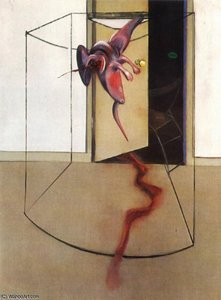
Tript. Insp. By The Oresteia Of Aeschylus, Left - Francis Bacon Painting Analysis The painting depicts a grotesque creature with an open mouth and two eyes, positioned beside a doorway featuring a hole. Francis Bacon (1909-1992), born in Dublin, Ireland, was a British painter known for his visceral depictions of human emotion and psychological torment. Influenced by Surrealism and Expressionism,
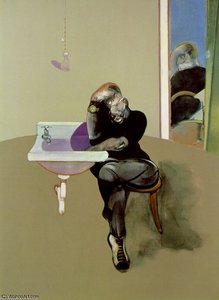
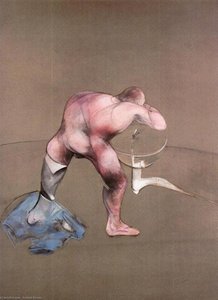
The painting depicts a naked man standing before a sink with his back turned to the viewer, embodying themes of vulnerability and isolation through expressive brushstrokes and bold colors.