Showing 7 artworks with Kazimir Malevich and with 1920 and with Accent

-
Kazimir Malevich
-
1920
-
Accent
Not available for this selection
- White
- Black
- Phthalo Green
- Espresso
- Brown
- Putty
- Kazimir Malevich
- Suprematism
- 1920S Art
- Ukrainian Artist
- Abstract Art
- Russian Avant-Garde
- Geometric Abstraction
- Abstract Painting
- Non-Objective Art
- Modern Art
- Geometric Shapes
- Minimalist Art
- Geometric Art
- Black And White Print
- Black And White
- Suprematism Art
- Kazimir Severinovich Malevich
- Art Reproduction
- Avant-Garde Movement
- Geometric Painting
- Pure Abstraction
- 20Th Century Art
- Contemporary Design
- Russian Art
- Monochrome Drawing
- Spatial Composition
- Gift Idea
- Minimalist Decor
- Charcoal Sketch
- Unovis Vitebsk Lithograph
- Art Collector
- Minimalism
- Malevich Sketch
- Radical Geometry
- Red Line Circle
- Red Circle Black Dot
- Avant-Garde Art
- Square Composition
- Avant-Garde Painting
- Color Palette Red Black
- Bold Colors
- Minimalist Grid
- Malevich
- Triangle
- Wall Art
- Negative Space
- Black Square
- Monochrome Palette
- Square
- Home Interior
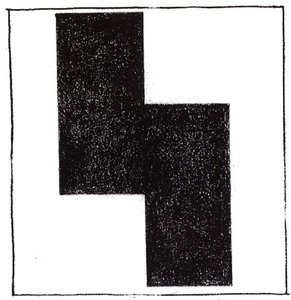
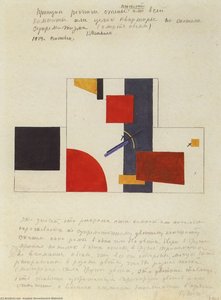
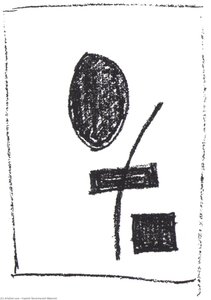
Explore Kazimir Malevich's 'Movement Suprematist square,' a pivotal work of abstract art from 1920. Discover the essence of Suprematism and its revolutionary impact on modern art. Museum-quality reproductions available at ArtsDot.
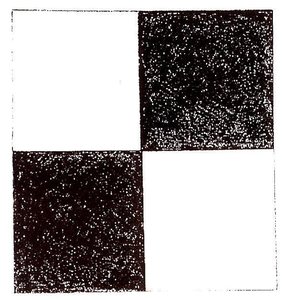
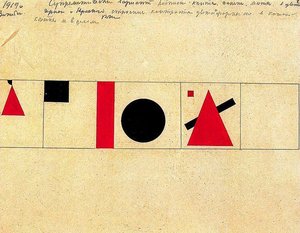
Experience the radical geometry of Kazimir Malevich's Suprematic Group, a 1920 masterpiece of abstract minimalism that captures pure feeling through stark shapes and invites you to explore the essence of modern art.
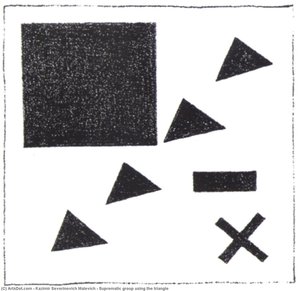
Explore "Suprematic group using the triangle" by Kazimir Malevich (1920). A key work of Suprematism, showcasing pure geometric abstraction and a revolutionary vision of art.
Kazimir Severinovich Malevich (1878–1935) was a pioneer of abstract art. Early influences included Ukrainian folk culture and Impressionism, leading him to explore diverse styles before embracing Suprematism – a radical departure from representational imagery.
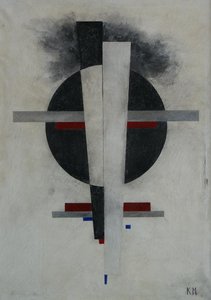
Kazimir Malevich’s striking geometric masterpiece, ‘The Principle of Painting the Walls,’ embodies Suprematism's radical rejection of illusionism. This 1920 painting showcases concentric circles and squares against a backdrop of clocks—a bold exploration of abstraction from the influential Russian avant-garde.