Showing 24 artworks out of 26 with Marc Chagall and with 1923
-
Marc Chagall
-
1923
Not available for this selection
- White
- Putty
- Rosy Brown
- Phthalo Green
- Espresso
- Quinacridone Magenta
- Gray
- Celadon
Not available for this selection
- Marc Chagall
- Naïve Art
- Etching
- Expressionism
- Jewish Folklore
- Symbolism
- Fine Art Reproduction
- Dreamlike Painting
- Dead Souls
- Black And White
- Primitivism
- Surrealism
- Folklore
- Russian Art
- Illustration
- Symbolic Art
- Naive Art
- Vintage Print
- Vitebsk
- Jewish Art
- Black And White Print
- 20Th Century Art
- 1923 Artwork
- Marc Chagall Etching
- Vintage Art
- Black And White Drawing
- Texture
- Lithograph
- Rural Scene
- Chagall Lithograph
- Cubism
- Russian Folklore
- Fantasy Art
- Chagall Artwork
- Symbolic Imagery
- Modern Art Style
- Naïve Art Surrealism
- Still Life
- Belarusian Artist
- Gogol Dead Souls
- Symbolic Depth
- Naïve Art Style
- Dreamlike Art
- Gogol
- Chagall Painting
- Avant-Garde
- Biblical Message
- Domestic Scene
- Dreamlike Imagery
- Bureaucracy
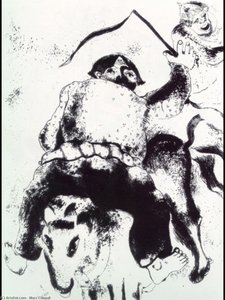
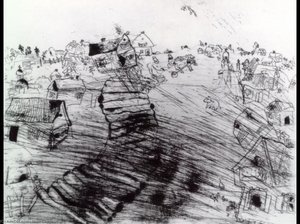
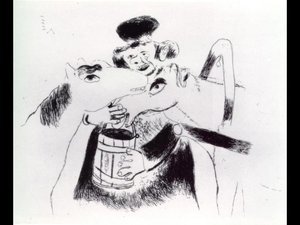
A whimsical black and white dreamscape of a man riding a horse by Marc Chagall captures the surreal essence of 1923 folklore through expressive charcoal lines, inviting you to bring this piece of myth into your collection.
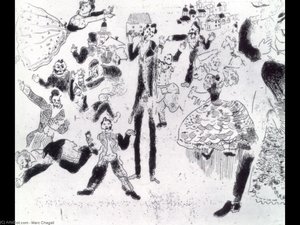
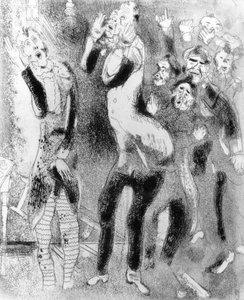
Marc Chagall’s "Banquet Degenerates into Brawl" (1923) – a vibrant Expressionist lithograph capturing chaotic energy & Jewish folklore. Explore this iconic artwork's dynamic composition & unique style.
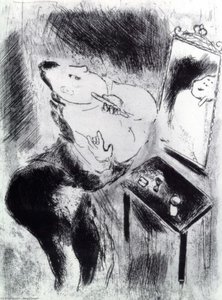
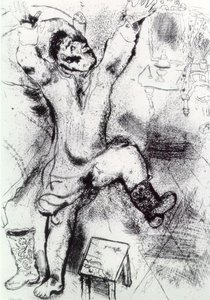
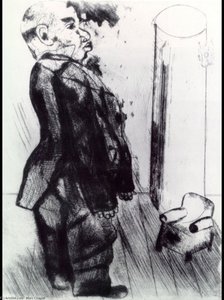
A nostalgic black and white etching by Marc Chagall from 1923 captures a pensive man near an armchair with dreamlike precision, offering a poignant glimpse into his expressive style that you can bring to your collection.
WikiArt provides comprehensive information about Marc Chagall's life and artistic career, including biographical details, stylistic influences, and a catalog of his artworks.
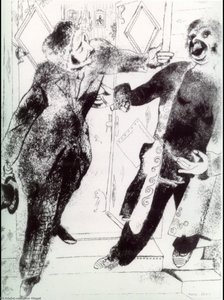
This etching, created around 1923 by Marc Chagall, exemplifies Naïve Art's distinctive aesthetic. Featuring two figures engaged in an altercation on a staircase before a doorway, it utilizes hatching and crosshatching to convey depth and texture. Reflecting Chagall’s fascination with Vitebsk’s cultural blend and Gogol’s ‘Dead Souls,’ the artwork embodies surrealism and dreamlike qualities.
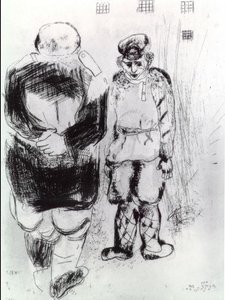
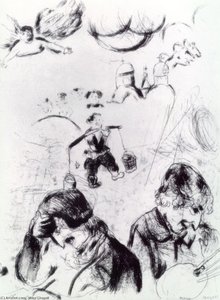
Explore Marc Chagall’s dreamlike 'Gogol and Chagall' (1923), a striking black & white ink drawing blending surrealism, expressionism, and folk art influences—a poignant homage to literary inspiration.
Marc Chagall (1887-1985), born Moishe Shagal in Vitebsk, Belarus, developed a distinctive artistic style blending realism with dreamlike imagery. Influenced by Jewish tradition and Belarusian landscapes, he achieved international acclaim for his paintings, etchings, and stained glass windows—establishing himself as one of the most celebrated artists of the 20th century.
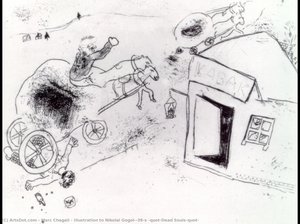
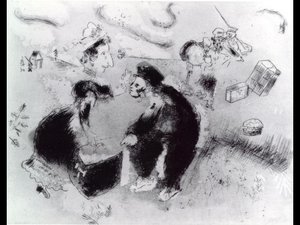
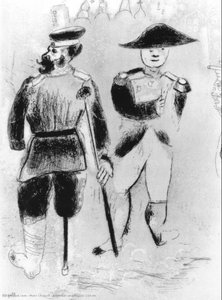
Explore Marc Chagall's "Illustration to Nikolai Gogol’s Dead Souls," an etching inspired by the novel's satirical spirit, featuring dynamic figures and expressive hatching—a masterpiece of Expressionism.
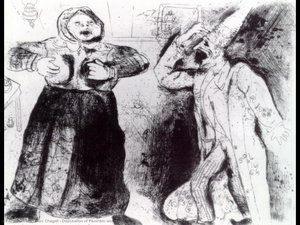
Explore Marc Chagall’s ‘Disputation of Pliushkin and Mavra,’ a striking etching from 1923 inspired by Russian folklore, showcasing expressive lines and dramatic contrasts in Naïve Art style.
Explore the vibrant world of Marc Chagall (1887-1985), a Russian-French master known for his dreamlike paintings, Jewish folklore themes, and stunning stained glass art. Discover his legacy!
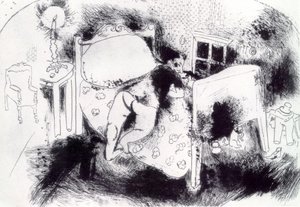
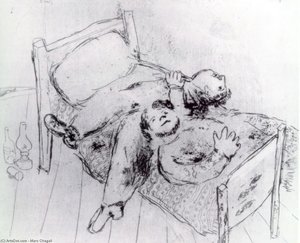
'Tchitchikov on his bed' was created in c.1923 by Marc Chagall in Naïve Art (Primitivism) style. Find more prominent pieces of illustration at Wikiart.org ...
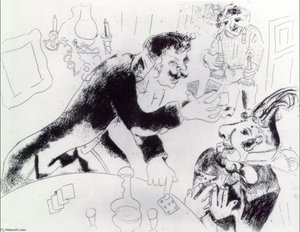
Marc Chagall’s “Nozdryov and Tchitchikov,” created in 1923, embodies Chagall’s distinctive blend of Expressionism and Cubism. This etching illustrates Gogol's novel “Dead Souls” with stylized figures and a dreamlike atmosphere achieved through hatching and crosshatching—a testament to Chagall’s artistic vision.
Marc Chagall (1887-1985) was a Russian-French master known for his dreamlike paintings, Jewish folklore themes, and stunning stained glass art. His life mirrored the tumultuous currents of the 20th century.