Showing 8 artworks with Nicolaes Pietersz Berchem and with 1650

-
Nicolaes Pietersz Berchem
-
1650
Not available for this selection
- Celadon
- Gray
- Quinacridone Magenta
- Espresso
- Rosy Brown
- Putty
- Nicolaes Berchem
- Dutch Golden Age
- Landscape Painting
- Golden Light
- Classical Influence
- Pastoral Art
- Baroque Style
- 17Th Century Art
- Allegory
- Baroque Painting
- Still Life Painter
- Tranquility
- Haarlem Artist
- Hunting Scene
- Pastoral Scene
- Classical Art
- Mythology
- Italian Inspiration
- Tranquility Landscape
- Sunset Scene
- 17Th Century Painting
- Travel Painting
- Haarlem Painter
- Geometric Shapes
- European Art
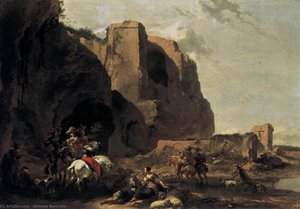
Nicolaes Berchem’s "Return from the Falcon Hunt" (1650) – a dramatic Baroque landscape showcasing hardship & beauty in 17th-century Netherlands. Oil on canvas, rich textures, and evocative lighting.
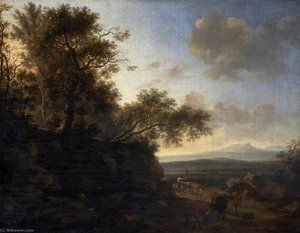
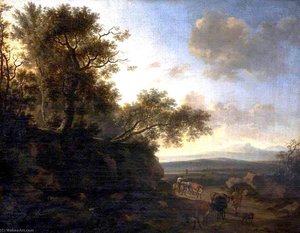
Explore Nicolaes Pietersz Berchem's 'Landscape with a Huntsman and Cattle,' a serene pastoral scene infused with classical influences, capturing the beauty of Dutch Golden Age art.
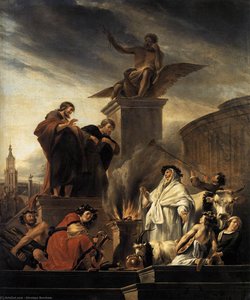
Nicolaes Berchem’s luminous depiction of Paul and Barnabas at Lystra embodies the serene beauty characteristic of Dutch Golden Age pastoralism. This masterful painting captures a biblical moment with classical influences, inviting viewers to immerse themselves in its tranquil atmosphere and explore owning this timeless masterpiece.
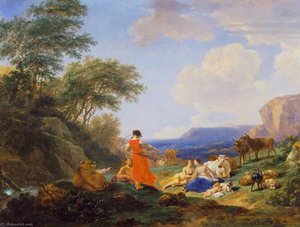
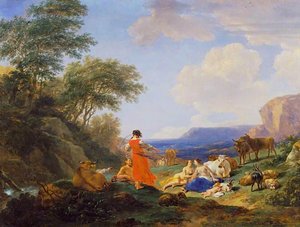
Nicolaes Pietersz Berchem’s ‘The Infant Jupiter with the Nymphs on Mount Ida,’ painted in 1650, exemplifies the Dutch Golden Age's fascination with classical ideals and serene landscapes. Featuring cows, sheep, goats, horses, nymphs, and a radiant sunset, this artwork embodies tranquility and artistic mastery.
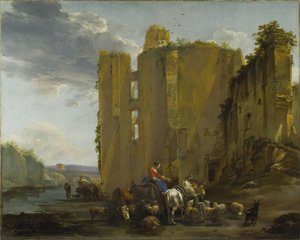
A serene Italianate landscape featuring the ruins of Brederode Castle and pastoral life by Dutch Golden Age master Nicolaes Pietersz Berchem invites you to bring this timeless moment of tranquility into your home.
Explore Nicolaes Berchem's masterpiece, 'The Infant Jupiter with the Nymphs on Mount Ida,' a luminous Baroque landscape capturing mythological serenity and classical elegance from 1650.