Showing 6 artworks with Paolo Veronese and with Late Renaissance
-
Paolo Veronese
-
Late Renaissance
Not available for this selection
- Espresso
- Putty
- Gray
Not available for this selection
- Paolo Veronese
- Fine Art Reproduction
- Classical Composition
- Italian Renaissance
- Venetian Renaissance
- Religious Iconography
- Venetian Art
- Renaissance Art
- Renaissance Painting
- Venetian Painting
- Mythology Fresco
- Biblical Scene
- Historical Painting
- Religious Painting
- Mannerism Art
- 'Portrait Painting
- Sword Execution Scene
- Faith Symbolism
- Ultramarine Pigment
- Dramatic Baroque Style
- 'Renaissance Art
- Opulent Feast Scene
- Veronese
- Mythological Art
- Venetian Masters
- Bacchus Ceres Myth
- 16Th Century Painting
- Veronese Painting
- Mannerism Style
- Religious Allegory
- Christ Washing Feet
- Celestial Angels
- Doge'S Palace Artwork
- 'Nobleman
- 'Hunting Scene
- Color Palette Richness
- Saint George Martyrdom
- Renaissance Mythology
- Art History
- Decorative Art History
- Color Palette
- 'Mannerism
- Late Renaissance Style
- Mythological Narrative
- Late Renaissance Mannerism
- 'Classical Influence
- Blue And White Tones
- Sacred Throne Scene
- Religious Fresco
- Glorious Color
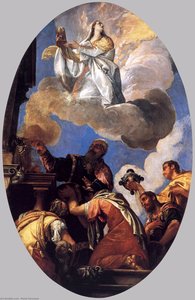
Veronese’s Religio and Fides resides within the Sala del Collegio of Venice’s Doge’s Palace, symbolizing the Republic’s commitment to religious piety. Its ambitious scale and intricate detail reflect the artistic conventions of its time, cementing Veronese's legacy as a pivotal figure in Venetian Renaissance art.
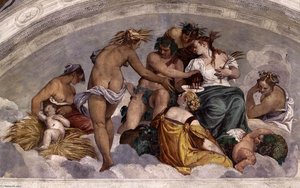
Paolo Veronese’s ‘Bacchus and Ceres,’ completed in 1560-61, showcases his signature style—bold color, dramatic composition, and opulent depictions of feasts and architecture. Located in Villa Barbaro, Maser, Italy, this masterpiece captures the spirit of Venetian Renaissance art.
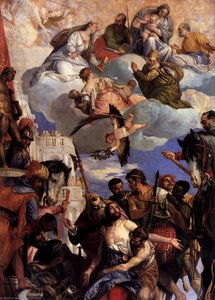
Paolo Veronese Experience the dramatic grandeur of Paolo Veronese’s ‘Martyrdom of St George,’ a masterpiece of Mannerist painting depicting Saint George's courageous sacrifice. Explore this iconic image at ArtsDot.
Veronese flourished during the Venetian Renaissance, a period marked by artistic innovation and patronage driven by wealthy families like the Giustiniani. His work reflects the Mannerist movement's rejection of High Renaissance ideals—favoring asymmetry, exaggerated forms, and intense color—demonstrating a sophisticated understanding of visual rhetoric.
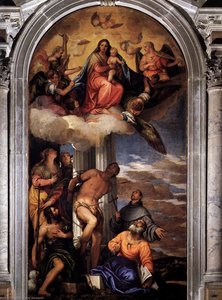
A magnificent fresco of the Virgin and Child surrounded by celestial saints captures Paolo Veronese's signature Venetian splendor and vibrant color, offering a timeless piece of Renaissance history for your collection.
Paolo Veronese’s ‘Nobleman in Hunting Attire,’ completed between 1560 and 1561, showcases Mannerist elegance within Villa Barbaro's fresco—a Venetian masterpiece blending opulent color and dramatic perspective.