Showing 24 artworks out of more than 240+ with Paul Gustave Doré

-
Paul Gustave Doré
Not available for this selection
- Romanticism
- Romantic Realism
- Romantic Illustration
- Romantic Movement
- Romantic Engraving
- Romantic Symbolism
- Horror Illustration
- Romantic Baroque
- Illustrative Realism
- Realism
- Romantic Era Illustration
- Romantic Horror
- Contemporary Realism
- Topographical Engraving
- Social Realism
- Realistic Illustration
- Romanticism And Detailed Realism
- See all
- Espresso
- Phthalo Green
- Gray
- Rosy Brown
- White
- Black
- Midnight Blue
- Gustave Doré
- Romanticism
- Biblical Illustration
- Engraving
- Dramatic Lighting
- 19Th Century Art
- Symbolic Imagery
- Medieval Art
- Gustave Doré Engraving
- Black And White Print
- Fine Art Reproduction
- Dramatic Composition
- Romantic Art
- Wood Engraving
- Doré Engraving
- Romantic Illustration
- Dante'S Inferno
- Black And White Art
- Victorian Art
- Fine Art Print
- Gustave Dore
- Symbolism
- Biblical Art
- Illustration
- Religious Art
- Engraving Technique
- Nineteenth Century Art
- Black And White Printmaking
- Victorian Illustration
- Romantic Realism
- Dramatic Illustration
- Dramatic Art
- Symbolic Art
- Victorian Era Art
- Monochromatic Print
- Art History
- Romanticism Art
- Fine Line Drawing
- Medieval Illustration
- Etching Technique
- Gothic Art
- Religious Symbolism
- Detailed Engraving
- Romantic Art Style
- Medieval Literature
- Doré Masterpiece
- Wood Engraving Technique
- Hell Imagery
- Religious Painting
- Gustave Doré Artwork
Paul Gustave Doré (1832-1883) was a prolific artist known for his evocative wood engravings and illustrations, particularly his depictions of biblical narratives and Dante's Inferno. He achieved fame through collaborations with literary giants like Tennyson and Dickens, establishing himself as a cornerstone of Romantic illustration. Doré’s distinctive style—characterized by meticulous detail, chia
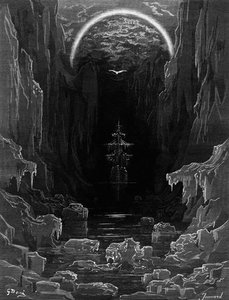
Paul Gustave Doré J.J. Grandville The Appearance Of The Albatross To Lead The Marooned Ship Out A breathtaking monochrome engraving depicting a ship emerging from an icy landscape, guided by an albatross under the moonlight. Doré’s meticulous line work and theatrical composition exemplify Romanticism, conveying themes of rescue and divine intervention. Copper plate, burin tool, ink, paper Eng
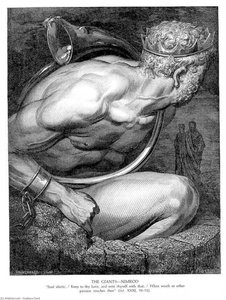
Witness the colossal Nimrod captured by Gustave Doré's dramatic engraving! Explore themes of power, captivity, and divine judgment in this iconic Romantic masterpiece.
Gustave Doré Delve into Gustave Doré's masterful engraving 'untitled (6572)', depicting figures submerged in water—a poignant exploration of faith, despair, and artistic brilliance from the Romantic era.
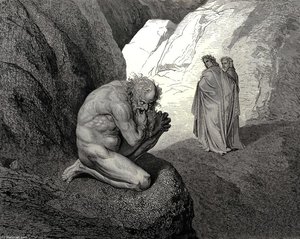
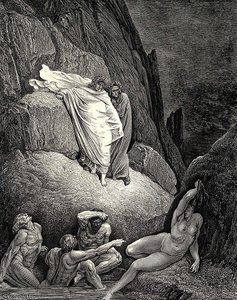
Paul Gustave Doré The Inferno, Canto 7 Strasbourg France 1832 The artwork is entirely monochromatic, relying on shades of gray to define form, texture, and depth. The image utilizes a triangular composition with the kneeling man forming the base, leading the eye upwards towards the two standing figures further back. The background consists of jagged rock faces that create a sense of enclosur
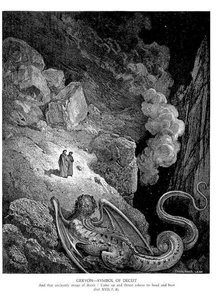
This engraving depicts a harrowing scene from Dante's Inferno, featuring a monstrous creature confronting humanity amidst desolate rock formations. Doré’s meticulous detail and masterful use of line work convey dread and symbolize deception. Created using etching technique on copper plate, this artwork showcases Romantic realism and captures the essence of gothic horror. Dive into Gustave Doré's
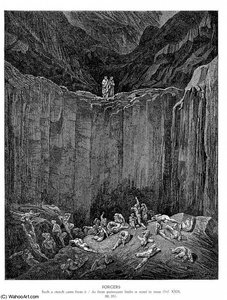
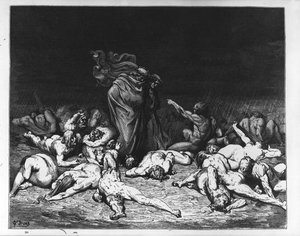
Experience the harrowing beauty of Dante's Inferno through Doré’s masterful engraving! Witness tormented souls and dramatic lighting as he captures the essence of Hell with unparalleled detail.
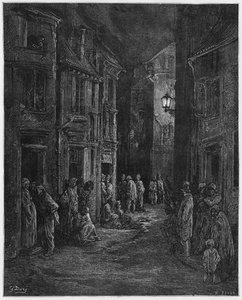
Explore Gustave Doré's poignant depiction of London’s impoverished Bluegate Fields slum in 'The Picture of Dorian Gray.' This evocative wood engraving captures social realism and despair with masterful detail. This artwork presents a detailed and atmospheric depiction of a narrow, urban street scene rendered in black and white. It evokes a sense of poverty, hardship, and social commentary through
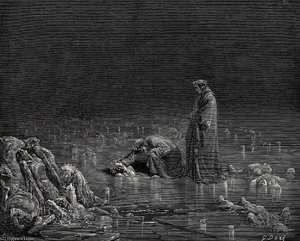
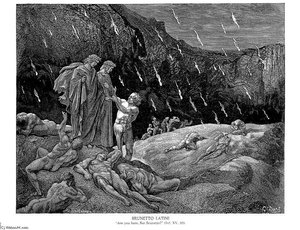
Paul Gustave Doré Brunetto Latini Monochromatic (Shades of Gray) Horizontally oriented landscape emphasizing breadth; central grouping of three figures dominates the foreground. This engraving portrays Brunetto Latini, a Florentine scholar, confronting two figures in Hell's desolate landscape under torrential rain. Doré’s signature illustrative realism utilizes dramatic composition and express
Paul Gustave Louis Christophe Doré (UK: DOR-ay, US: dor-AY; French: [ɡystav dɔʁe]; 6 January 1832 – 23 January 1883) was a French printmaker, illustrator, painter, comics artist, caricaturist, and sculptor. He is best known for his prolific output of wood-engravings illustrating classic literature, especially those for the Vulgate Bible and Dante's Divine Comedy. Doré's Dante illustrations cement
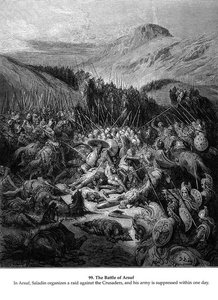
Gustave Doré Experience the dramatic intensity of Gustave Doré's 'The Battle of Arsuf,' a monumental wood engraving depicting Richard I’s siege of Arsuf during the Crusades. Explore masterful detail & Romantic storytelling at ArtsDot.
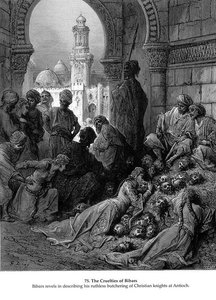
Delve into Gustave Doré's masterful engraving 'The Cruelties of Bibars,' capturing a harrowing depiction of violence and aftermath with intricate linework and dramatic tonal contrasts.
Paul Gustave Doré Dore Gustave 44. It-s Thais the prostitute who answered at the words of her lover -Don't you owe This monumental engraving captures a pivotal moment from Dante’s Divine Comedy, portraying Thais—a prostitute—responding to Dante’s plea for forgiveness. Doré’s meticulous technique utilizes dramatic chiaroscuro and dense cross-hatching to convey the profound emotional turmoil of th
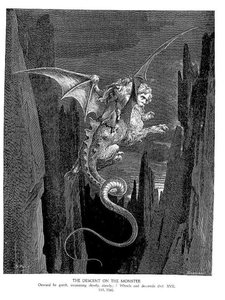
Paul Gustave Doré The Descent on The Monster Strasbourg France 1832 1883 This engraving depicts a monstrous creature descending into an abyss, guided by a human figure. Characterized by grayscale tones and intricate hatching lines, it embodies Romantic drama and explores themes of terror and descent. Doré's work reflects the Romantic era’s fascination with darkness and imagination. Copper
Paul Gustave Louis Christophe Doré, celebrated as Gustave Doré, was a prodigious artist who seamlessly blended illustration, painting, and sculpture. Born in Strasbourg, France, on January 6th, 1832, his artistic journey unfolded during the Romantic era's twilight, marked by evolving aesthetic sensibilities. Strasbourg France 1832 1883 Paul Gustave Doré Monochromatic gray tones dominate the
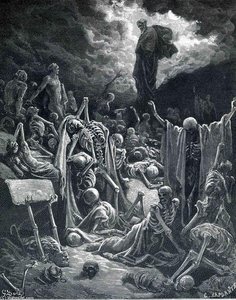
Gustave Doré Explore Gustave Doré's dramatic engraving "The Vision of the Valley of Dry Bones," depicting Ezekiel’s prophetic vision of resurrected bones—a masterpiece of Romantic illustration and symbolic storytelling.
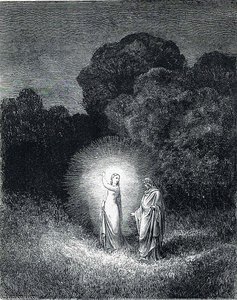
Doré’s masterful use of light and shadow elevates this printmaking technique, creating a mood of contemplation and hinting at symbolic meanings like enlightenment and hope. Paul Gustave Doré untitled (2096) Strasbourg France 1832 1883 This striking black and white engraving depicts two women in a nighttime setting, illuminated by a radiant glow. Doré’s meticulous linework captures the essen
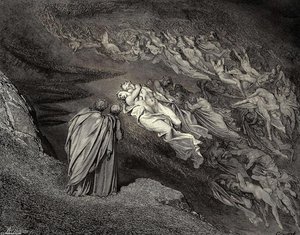
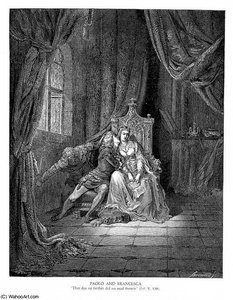
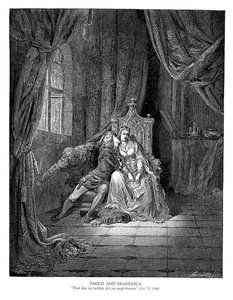
Delve into Dante's Inferno with Gustave Doré’s haunting engraving depicting Paolo and Francesca's illicit love affair—a masterpiece of Romantic illustration capturing passion, betrayal, and eternal damnation.
A Life Etched in Shadow and Light: The World of Gustave Doré Paul Gustave Louis Christophe Doré, known to the world as Gustave Doré, was a figure who straddled the worlds of illustration, painting, and sculpture with an astonishing virtuosity. Born in Strasbourg, France, on January 6th, 1832, his life unfolded during a period of immense social and artistic change, a time when Romanticism still hel
Inspired by Vincent van Gogh's painting ‘Prisoners’ Round’, reflecting the themes of confinement and suffering. Pushkin Museum, Moscow Vincent van Gogh Paul Gustave Doré Paolo and Francesca This iconic wood engraving depicts Paolo and Francesca, figures from Dante’s Inferno, embodying passion and despair. Doré's meticulous line work and tonal shading create a haunting portrayal of forbidden l
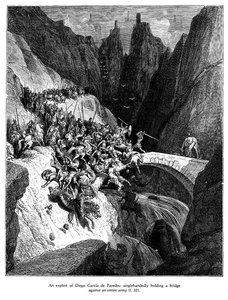
This monumental wood engraving depicts a pivotal moment from Miguel de Cervantes’ *Don Quixote*, capturing Diego Garcia de Paredes bravely defending a bridge against overwhelming odds. Doré’s meticulous technique—characterized by hatching, cross-hatching, and strong diagonal lines—creates a dynamic composition brimming with texture and conveying the intensity of medieval chivalry. The artwork exem
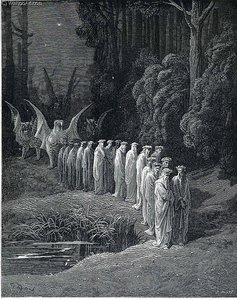
This untitled (6048) engraving by Gustave Doré exemplifies Romanticism’s fascination with biblical narratives and spiritual contemplation. Executed in monochrome, Doré utilizes detailed hatching and cross-hatching to convey textures—bark, fabric folds, flowing water—creating a palpable atmosphere of reverence. The symmetrical composition emphasizes the grandeur of the forest setting and the serene
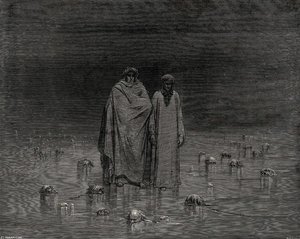
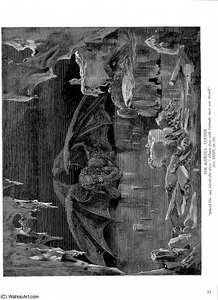
Gustave Doré Experience the chilling grandeur of Gustave Doré's 'The Judecca Lucifer,' a masterful engraving depicting Dante’s Inferno. Explore intricate linework and dramatic chiaroscuro, capturing the terror of Lucifer imprisoned in ice.