Showing 10 artworks with Wassily Wassilyevich Kandinsky and with 1911 and with Acrylic On Canvas
-
Wassily Wassilyevich Kandinsky
-
1911
-
Acrylic On Canvas
Not available for this selection
- Phthalo Green
- Driftwood
- Black
- Gray
- Celadon
- Rosy Brown
- Putty
- Expressionism
- Abstract Art
- Kandinsky
- Wassily Kandinsky
- Modern Art
- Spirituality
- Color Theory
- Geometric Abstraction
- 1911
- Russian Art
- Munich
- Dynamic Composition
- Avant-Garde Painting
- Klänge
- Spiritual Art
- Color Symbolism
- Woodcut
- Vibrant Colors
- Romantic Landscape
- Bauhaus Style
- Movement
- Impression Iii
- Last Judgment
- Blue
- Religious Symbolism
- Schoenberg Influence
- Red
- Concert
- Plein Air Painting
- Geometric
- Geometric Forms
- Visual Language
- Sounds
- Red Blue Black Colors
- Color
- Geometric Art
- Impressionist Influence
- 1913
- Colour Theory
- Printmaking
- All Saints Day Ii
- Geometric Composition
- Color Painting
- Russian Avant-Garde
- Woodcut Print
- Impression Iii Concert
- Bauhaus
- Angel Painting
- Dynamic
- Musical Timbre
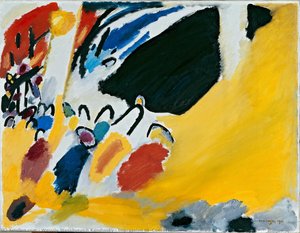
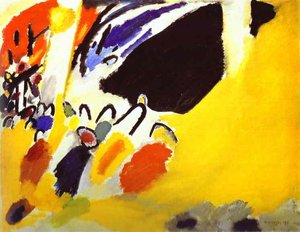
Experience Wassily Kandinsky's 'Impression III (Concert)' – a vibrant abstract masterpiece inspired by Schoenberg’s music. Explore color, form & emotion in this iconic 1911 painting.
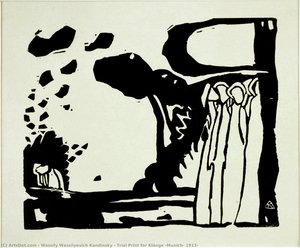
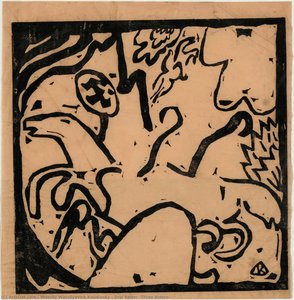
Experience Wassily Kandinsky's 'Trial Print for Klänge'! This iconic 1913 woodcut captures his pioneering abstract style, blending color & form to evoke emotion. A must-see masterpiece.
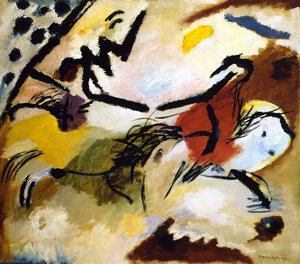
"Improvisation No. 20" by Wassily Kandinsky is an iconic expressionist painting featuring two riders and vibrant yellow hues—a masterpiece exploring emotion & movement! View more on ArtsDot.com.
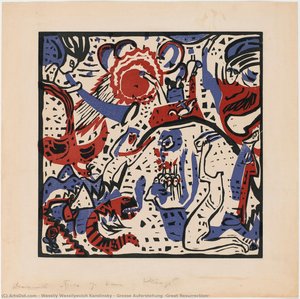
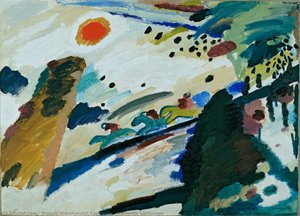
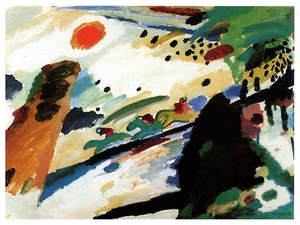
A breathtaking Romantic landscape by Wassily Kandinsky (1911). This oil painting captures a serene yet dynamic scene with figures amidst nature, reflecting the artist's innovative abstract style and spiritual depth.
The painting draws inspiration from Schoenberg’s ‘Impression,’ marking a pivotal moment in musical history.
Wassily Wassilyevich Kandinsky (1866-1944), a Russian painter, was a pioneer of abstract art. Initially drawn to Impressionism, he transformed his artistic vision after witnessing Wagner’s opera ‘Lohengrin,’ embracing expressive color and form as central to conveying inner experience.