Showing 11 artworks with 1900 and with Museum Of Applied Arts

-
1900
-
Museum Of Applied Arts
Not available for this selection
- Putty
- Gray
- Clay
- Phthalo Green
- Quinacridone Magenta
- Driftwood
- White
- Hungarian Art
- Vienna Secession
- Walter Crane
- Decorative Art
- Austrian Art Deco
- Illustration
- Red And Black Palette
- German Symbolism
- Vintage Print
- Budapest
- Female Nude Sculpture
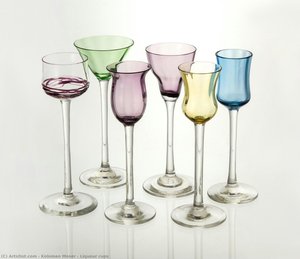
- Elegant Glassware Set
- 1898
- René Lalique Jewelry
- 1900 Artwork
- Decorative Cabinet
- Vienna Werkstätte Aesthetic
- Fine Art Print
- Furniture Design
- Parisian Dancer Style
- Classical Building Art
- Glass Jewelry Art
- Magyar Iparművészet
- Geometric Inlay
- Decorative Illustration
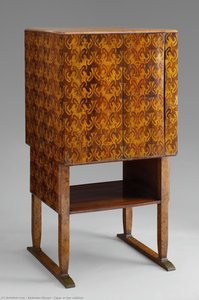
This cabinet exemplifies the Vienna Secession's aesthetic principles: geometric forms combined with natural motifs. Created by Koloman Moser (1868–1918), it showcases exceptional craftsmanship and embodies the Gesamtkunstwerk ideal – a fusion of art and design. Featured in the eighth Sezession exhibition, this piece reflects the artistic spirit of its time.
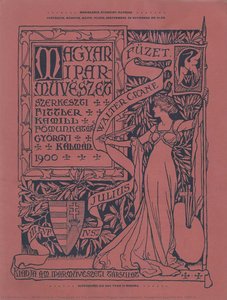
1900 Walter Crane cover for Magyar Iparművészet. Art Nouveau design featuring an allegorical female figure & crane emblem. A beautiful, historic print.
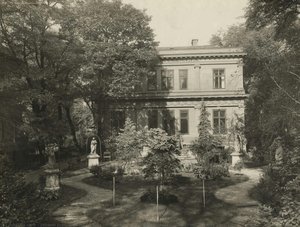
A captivating black and white architectural photograph of the György Ráth Villa by Johann Justus Georg Kloess captures a stately mansion with numerous windows, showcasing early 20th-century European design. Explore this timeless image and bring its elegance into your space.
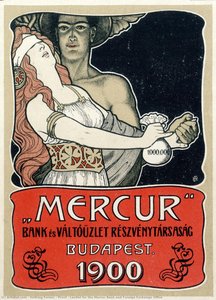
Featuring the powerful symbolism of Mercury and Fortuna, this 1900 masterpiece by Ferenc Helbing captures the essence of German Symbolism, inviting you to explore a timeless piece of Hungarian graphic history.
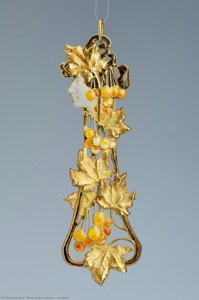
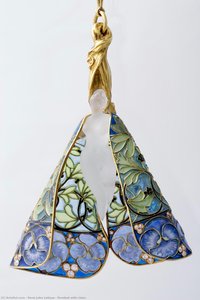
Admire René Lalique’s ‘Pendant with Chain,’ a stunning Art Nouveau jewel featuring translucent enamel & gold. Explore this exquisite 1900 masterpiece – a symbol of Parisian elegance.
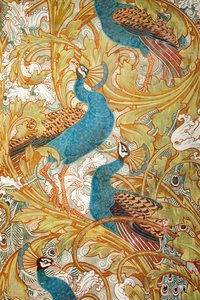
A vibrant wallpaper design by Walter Crane, 'Peacock Garden,' showcasing exotic birds and lush foliage from 1898 Budapest. A beautiful example of Arts & Crafts style.
The group considered the interior design an integral part of a building, and their designs for utilitarian objects had an artistic aesthetic. The artists of the Wiener Werkstätte would design complete interiors, with all that was required: furniture, soft furnishings, decorative panelling, metal, ceramic and glass objects, clothes and accessories, jewellery.