Showing 24 artworks out of 42
- Adriaen Coorte
- Alfred Freddy Krupa
- Amedeo Clemente Modigliani
- Ben Nicholson Om
- Cristóbal Balenciaga Eizaguirre
- Edward Hopper
- Georges Braque
- Georgia O'Keeffe
- Gerhard Richter
- Giorgio Morandi
- James Abbott Mcneill Whistler
- Julião Manuel Tavares Sena Sarmento
- Kazimir Malevich
- Michael Francis Kenna
- Monica Bonvicini
- Morris Louis
- No Alternate Name Found
- Oh, Hein-Kuhn
- Pablo Picasso
- Pedro Pablo Rodriguez
- Piet Mondrian
- Robert Colquhoun
- Robert Indiana
- Roy Lichtenstein
- Victor Vasarely
- Impressionism
- Post-Impressionism
- Romanticism
- Surrealism
- Fauvism
- Romantic Landscape
- American Realism
- Romantic Landscape Painting
- Expressionism
- Hudson River School
- Realism
- Symbolist Painting
- Symbolism
- Pop Art
- Neo-Impressionism
- Contemporary Realism
- Cubism
- Impressionist Painting
- Impressionistic Landscape
- Modernism
- Tonalism
- Impressionistic Landscape Painting
- Wassily Kandinsky
- Naïve Art
- German Romanticism
- See all
- Espresso
- Phthalo Green
- Gray
- Cobalt Violet
- Quinacridone Magenta
- Sap Green
- Black
- Sea Green
- Steel Blue
- Walnut
- Impressionism
- Landscape Painting
- Sunset
- Claude Monet
- French Art
- Landscape
- Painting
- Monet
- Oil Painting
- Light
- Art
- Fine Art Reproduction
- Nature
- Color
- Sunset Painting
- Color Palette
- Post-Impressionism
- Sunset Landscape
- Serene
- Art Reproduction
- Tranquility
- Oil On Canvas
- Modern Art
- Oil Painting Reproduction
- Fine Art Print
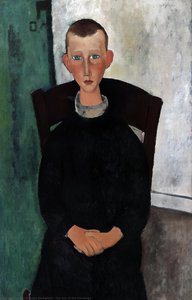
Captured in Modigliani’s distinctive elongated portrait style, this evocative painting portrays a young man's quiet contemplation amidst simple furnishings—a poignant glimpse into the artist’s melancholic vision of the 1918 era. Explore exquisite reproductions and bring home this timeless masterpiece.
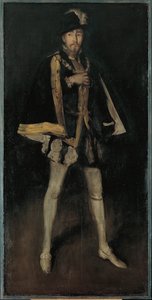
Arrangement in Black, No. 3: Sir Henry Irving as Philip II of Spain
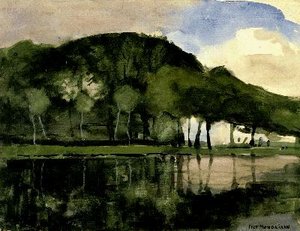
Along the Amstel by Piet Mondrian captures a serene Dutch landscape with stylized trees and mountains – a testament to Mondrian’s early exploration of simplification and color theory, reflecting his formative influences from Hague School and Impressionism.
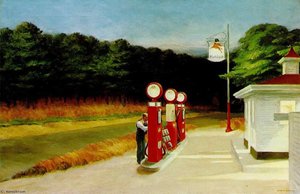
Edward Hopper’s ‘Gas, Moma, NY’ captures a poignant study in isolation with its stark monochrome palette and unsettling stillness, reflecting the anxieties of 1940s America. Discover this iconic masterpiece and bring home a timeless work of art.
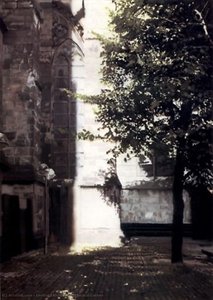
This photograph showcases Gerhard Richter’s masterful depiction of a cathedral courtyard bathed in diffused sunlight, emphasizing architectural lines against natural foliage. Richter’s signature blurring technique creates an evocative atmosphere reflecting his exploration of perception and memory. The artwork is housed in the Metropolitan Museum of Art's collection.
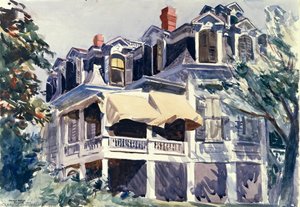
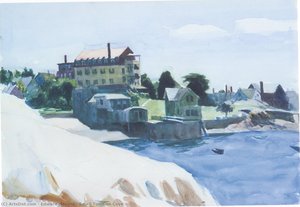
Edward Hopper’s "The Mansard Roof" (1923) captures the poignant solitude of American Modernism with its precise watercolor rendering and tranquil Gloucester harbor scene. Discover this iconic piece and bring home a timeless reflection on urban life.
James Abbott McNeill Whistler’s evocative black and white sketch captures a quiet Parisian sidewalk scene featuring three figures and a dog outside a building—a testament to aestheticism's focus on pure visual beauty, inviting you to explore this timeless masterpiece.
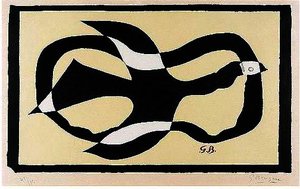
Georges Braque’s evocative Cubist painting captures a bird's soaring flight amidst swirling clouds—a masterful blend of geometric form and expressive color reflecting the artist’s pioneering spirit during the early 20th century. Explore this timeless masterpiece and bring its beauty into your home.
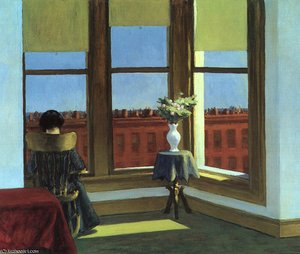
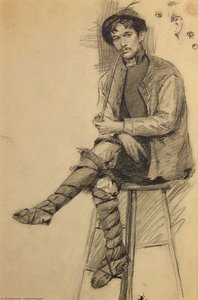
Edward Hopper's 'Colonial Gentleman Seated on a Stool and Holding a Pipe' captures urban solitude with meticulous detail—a diner interior bathed in light, featuring figures lost in contemplation. Explore Hopper’s masterful realism.
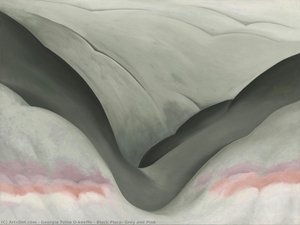
This striking piece exemplifies Georgia O’Keeffe’s signature style—abstract expressionism prioritizing form and color. The artwork depicts a dominant rock structure rendered in shades of grey and pink, contrasted with a dark expanse, capturing serenity and vastness through simplified shapes and blended textures reminiscent of O'Keeffe’s later works.
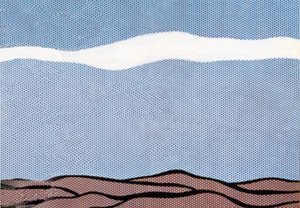
Roy Lichtenstein’s bold Landscape (1964) reimagines nature through geometric abstraction and vibrant Ben-Day dots—a defining piece of Pop Art that captures the era's fascination with accessible imagery. Explore this iconic artwork and bring a touch of Lichtenstein’s vision home.
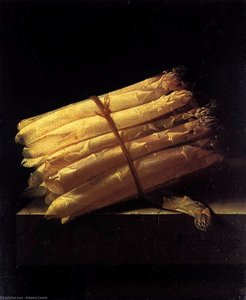
Admire Adriaen Coorte's 'Still Life with Asparagus,' a serene baroque masterpiece capturing the beauty of simple vegetables—a testament to Dutch Golden Age artistry and meticulous observation.
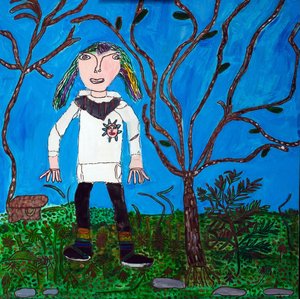
Gary Wragg’s ‘Sasha’ is a captivating Color Field artwork reflecting his profound influence from Wu Kwong Yu. Featuring a solitary figure amidst lush greenery, the painting embodies tranquility and explores form’s emotive potential.
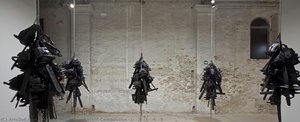
Explore Monica Bonvicini's captivating motorcycle painting – a striking juxtaposition of industrial design and architectural minimalism reflecting themes of power, gender, and queer culture.
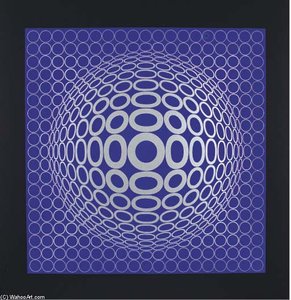
Victor Vasarely (1906-1997) was a Hungarian-French artist renowned as the "grandfather" and leader of the Op art movement. His groundbreaking approach to visual perception revolutionized modern art, prioritizing simplicity and mathematical precision. The artwork, Guimen, exemplifies Vasarely’s signature style—a mesmerizing exploration of optical illusions achieved through geometric abstraction. C
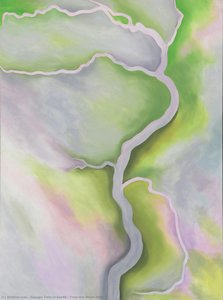
Georgia O’Keeffe's "From the River—Pale," painted in 1959, embodies minimalist landscape principles championed by Arthur Wesley Dow. This serene canvas captures muted greenish-yellow hues and sparse trees, reflecting O’Keeffe’s masterful use of glazing technique.
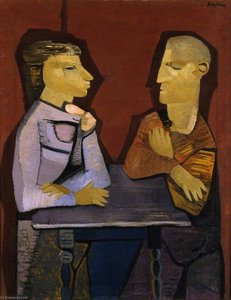
This evocative painting by Robert Colquhoun depicts two figures seated at a table, bathed in natural light. Featuring a detailed depiction of the room's interior, including a clock and chairs, it exemplifies Colquhoun’s signature expressionist style.
Inspired by Ernest Hemingway's short story 'Invincible,' Hopper’s work explores themes of isolation and urban life.
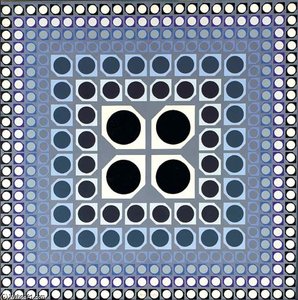
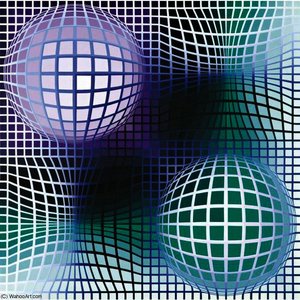
This painting exemplifies Vasarely's signature style: bold geometric abstraction that challenges perception. Dive into the mesmerizing world of Victor Vasarely’s VEGA-P – a vibrant Op Art masterpiece featuring interlocking spheres and geometric patterns, celebrating artistic innovation.
Victor Vasarely (1906-1997), born Károly Vaszary in Pécs, Croatia, revolutionized visual perception with his pioneering work in Op Art and kinetic art. Initially pursuing medicine at Eötvös Loránd University, he transitioned to painting in 1927 after encountering Sándor Bortnyik’s Bauhaus-influenced workshop – Műhely. This formative experience instilled him with the principles of functional design