 Preview
 Send
Send Share
Share
 Details

 Download
 Similars
 X-Ray
X-Ray Diaporama
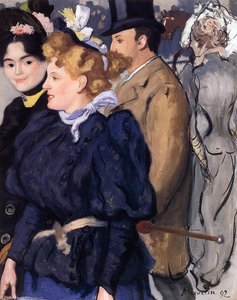
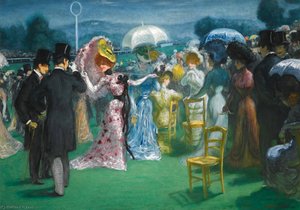
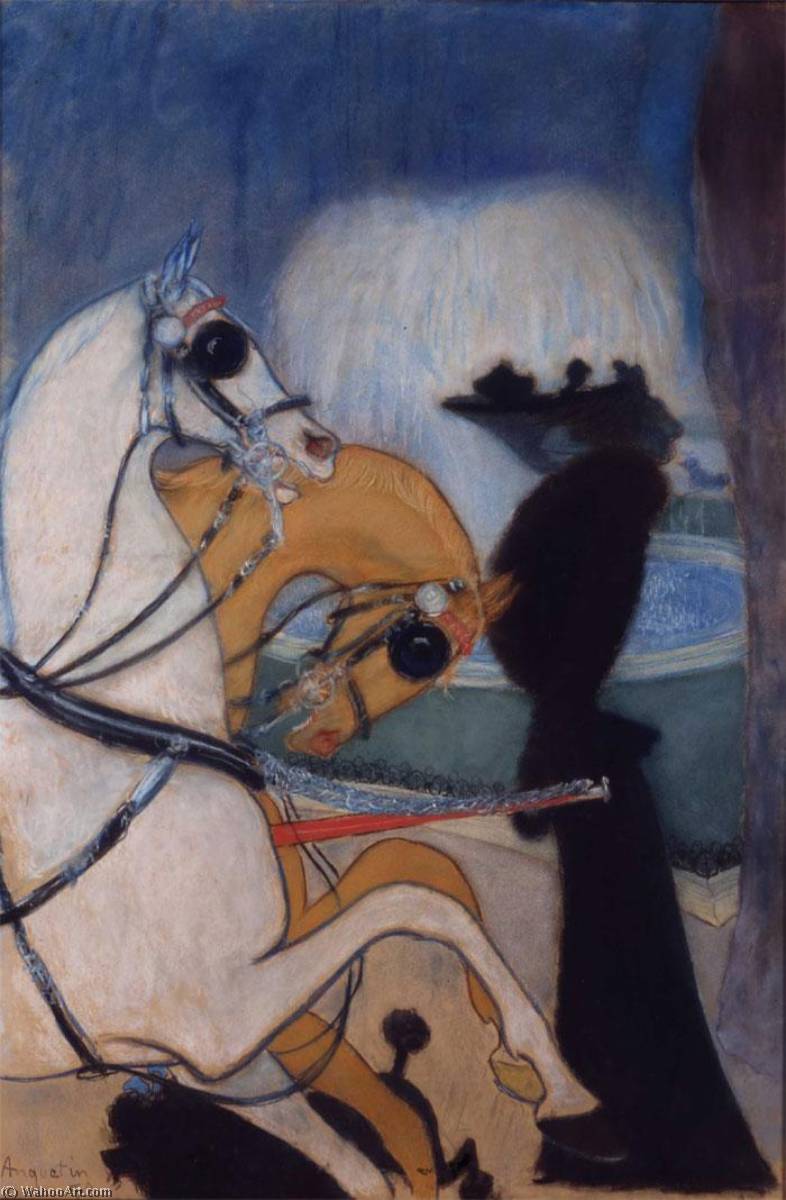
Le rond point des Champs Élysées

 Read More
Hand Made Oil Reproduction
Hand-painted oil on canvas in your size and frame, made to order by our artists. ( Buy Print Buy Image)




































Pick from our preset sizes that match the artwork's original proportions.

You may enter your own dimensions to fit a specific frame or space. If your selected size does not match the original image's proportions, we will either crop the artwork or extend the painting with additional hand-painted elements. A digital mockup will be sent for your approval before production begins.
Please note that the on-screen preview does not reflect the actual cropping or extension. Only the mockup will accurately show the final composition.
While custom sizes are available, we recommend selecting a dimension from the predefined list to preserve the original proportions.
After order, ArtsDot.com team will email client for instructions and provide a mockup preview
Worldwide Delivery () in 3/4 weeks instead of standard 5 weeks. (16 August). No compromise on quality.

Free Worldwide Express Shipping

High-Quality Linen Canvas

Full Shipping Insurance

Customs Tax Refund Guarantee

True Color Matching Guarantee

60-Day Return Policy (Defects Only)

100% Money-Back Guarantee

Bulk Discount Offer
 Glass option is only available in size under 110 CM

Le rond point des Champs Élysées
Reproduction Medium
Reproduction Size
-


Total Price
$ 263
Related Artworks
Artist Biography
The Visionary Architect of Form: The Life and Legacy of Louis Anquetin
Born in the coastal atmosphere of Etretat, Normandy, in 1861, Louis Émile Anquetin emerged as a singular force within the turbulent landscape of late nineteenth-century French painting. His artistic journey was never one of mere imitation; instead, it was a profound exploration of how tradition could be dismantled and rebuilt through a modern lens. While his early years were touched by the burgeoning light of Impressionism, Anquetin possessed an innate restlessness that pushed him beyond the fleeting effects of atmosphere toward something more structural, more permanent, and deeply symbolic. Alongside his contemporary Henri de Toulouse-Lautrec, he navigated the vibrant, often chaotic art circles of Paris, shaped by the mentorship of Fernand Cormon, yet he always maintained a stylistic independence that would eventually redefine the boundaries of modern composition.
The most revolutionary chapter of Anquetin’s career arrived with the birth of Cloisonnism, a technique he pioneered in collaboration with Émile Bernard. This movement sought to reject the soft, blended edges of Impressionism in favor of a bold, graphic clarity inspired by the stark outlines of stained glass and the elegant simplicity of Japanese ukiyo-e prints. By applying flat areas of saturated color bounded by heavy black contours, Anquetin created works that possessed an almost sculptural weight. This method did more than just capture a scene; it distilled reality into its most essential, symbolic elements, creating a visual language that felt both ancient and avant-garde. Through this lens, the canvas became a space of deliberate design rather than a mere window onto nature.
A Synthesis of Grandeur and Modernity
As his career matured, Anquetin’s aesthetic underwent a fascinating metamorphosis, moving away from the flat planes of Cloisonnism toward a profound reverence for the Rubensian tradition. This shift represented a return to the grandeur of the Old Masters, characterized by an embrace of complex allegorical narratives and a meticulous attention to anatomical and compositional detail. He began to weave together the structural boldness of his earlier experiments with the sweeping, muscular energy of Peter Paul Rubens. In masterpieces such as “Rinaldo and Armida,” one can witness this breathtaking synthesis: the emotional depth and classical drama of the Baroque era meeting the modern sensibility of a painter who understood the power of the line.
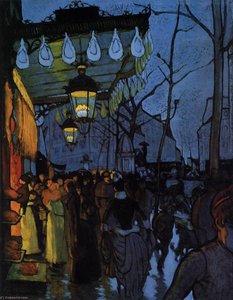
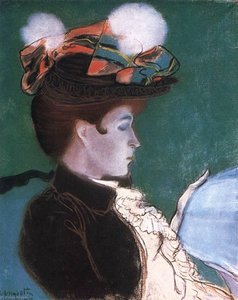
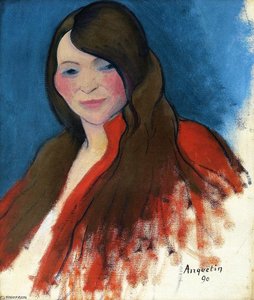
Anquetin’s ability to navigate these disparate worlds—the ephemeral energy of Parisian street life and the timeless weight of historical myth—is what secures his place in art history. His works often capture the pulse of a changing world, such as the evocative “Avenue de Clichy Five O'Clock in the Evening,” where the bustling nocturnal energy of Paris is rendered with an elegant, almost cinematic grace. Whether through the intimate, delicate rendering of a “Portrait of a Young Woman with Long Hair” or the bold, graphic strength of his more experimental pieces, Anquetin’s oeuvre remains a testament to the power of stylistic evolution. He remains a vital figure for any collector seeking to understand the bridge between the classical past and the dawn of modernism.
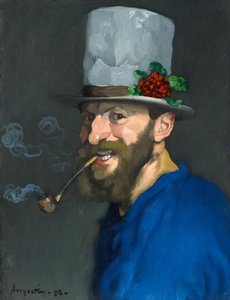
Louis Anquetin
1861 - 1932 , France
Quick Facts
- Artistic Movement Or Style: Cloisonnism & Rubensian Style
- Artists Or Movements Influenced By This Artist: ['Rubens']
- Artists Who Influenced This Artist:
- Henri Toulouse-Lautrec
- Fernand Cormon
- Vincent van Gogh
- Date Of Birth: 26 January 1861
- Date Of Death: 19 August 1932
- Full Name: Louis Émile Anquetin
- Nationality: French
- Notable Artworks:
- Avenue de Clichy: Five o’clock in the evening
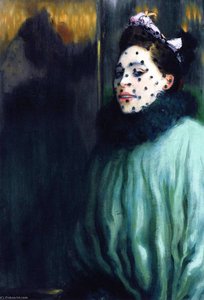
- Femme à la Voilette
- Le Pont Neuf
- Place Of Birth: Etretat, France