 Preview
 Send
Send Share
Share
 Details

 Download
 Similars
 X-Ray
X-Ray Diaporama
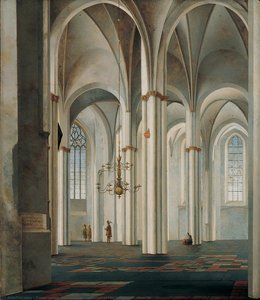
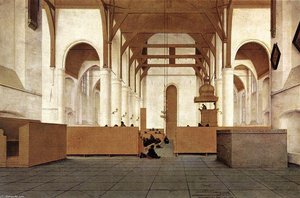
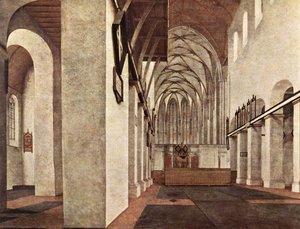
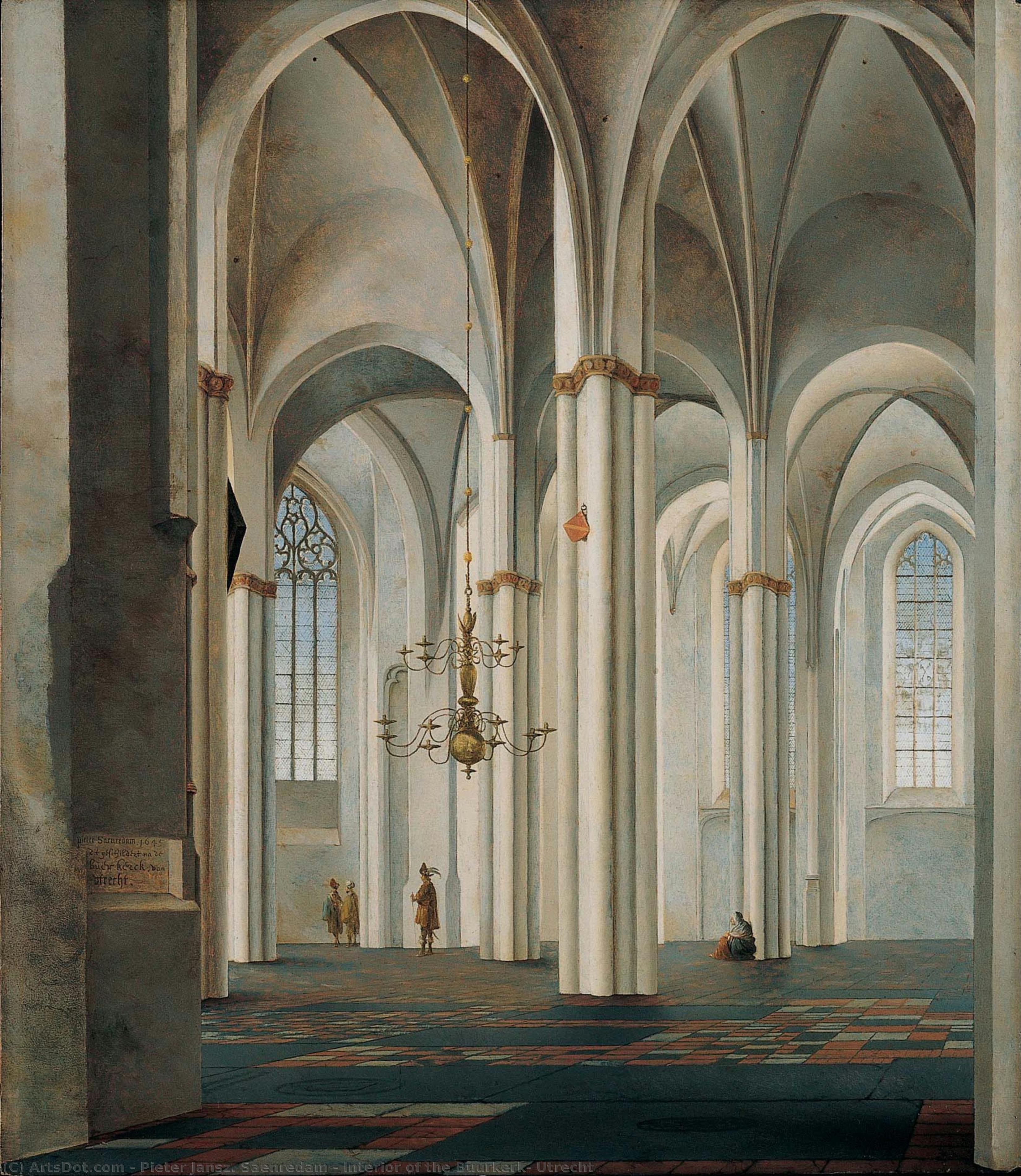
Interior of the Buurkerk, Utrecht
 Acrylic On Canvas
- WallArt
- Dutch Golden Age
 1645
1645 58.0 x 50.0 cm
 Kimbell Art Museum
 Read More
Hand Made Oil Reproduction
Hand-painted oil on canvas in your size and frame, made to order by our artists. ( Buy Print Buy Image)




P118B $10

P118H $10

P118W $10

P438Z $10

P508JH $12

P508YH $12

P805H $10

P805Z $10

P919BZ $10

P919G $10

P919XJ $10

P959ZH $10

P968JZ $12

W106C $8

W218G $10

W218JH $8

W218Y $10

W307PJ $10

W316G $10

W316PJ $8

W316Y $10

W398PJ $8

W4111J $10

W500HY $15

W500JH $15

W692G $12

W849H $8

W940BG $15

W953PJ $8




Pick from our preset sizes that match the artwork's original proportions.

You may enter your own dimensions to fit a specific frame or space. If your selected size does not match the original image's proportions, we will either crop the artwork or extend the painting with additional hand-painted elements. A digital mockup will be sent for your approval before production begins.
Please note that the on-screen preview does not reflect the actual cropping or extension. Only the mockup will accurately show the final composition.
While custom sizes are available, we recommend selecting a dimension from the predefined list to preserve the original proportions.
After order, ArtsDot.com team will email client for instructions and provide a mockup preview
Worldwide Delivery () in 3/4 weeks instead of standard 5 weeks. (27 August). No compromise on quality.

Free Worldwide Express Shipping

High-Quality Linen Canvas

Full Shipping Insurance

Customs Tax Refund Guarantee

True Color Matching Guarantee

60-Day Return Policy (Defects Only)

100% Money-Back Guarantee

Bulk Discount Offer
 Glass option is only available in size under 110 CM

Interior of the Buurkerk, Utrecht
Reproduction Medium
Reproduction Size
-


Total Price
$ 263
Artwork Description
A Moment Frozen in Time: Pieter Saenredam’s Masterpiece
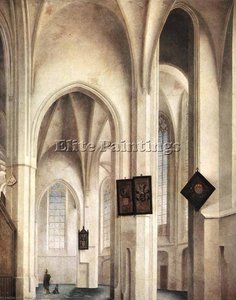
Pieter Jansz. Saenredam's "Interior of the Buurkerk, Utrecht" isn't merely a painting; it’s an invitation into a hushed and profoundly contemplative space. Completed around 1645, this remarkable work transcends the simple depiction of a church interior, becoming instead a meditation on light, geometry, and the enduring spirit of Calvinist piety. Saenredam, a relatively obscure figure within the bustling artistic landscape of the Dutch Golden Age, carved out a unique niche for himself by focusing almost exclusively on the austere beauty of Protestant churches – buildings stripped bare of their opulent Catholic past, yet retaining an inherent dignity and spiritual resonance.
The scene unfolds within the Buurkerk, a church in Utrecht that had been converted to Protestant worship following the Reformation. Saenredam’s genius lies not just in his technical skill – meticulously rendered perspective, subtle color gradations, and a masterful understanding of light – but also in his ability to capture an atmosphere of serene stillness. The painting feels less like a snapshot of a specific building and more like a distillation of the very essence of worship: a quiet reverence for the divine.
The Architect’s Eye: Precision and Perspective
What distinguishes Saenredam's work is his almost obsessive attention to detail, rooted in a rigorous process of observation and measurement. He didn’t simply paint what he *saw*; he painted what he *understood*. As documented by the meticulous drawings that served as his foundation – now housed in the Municipal Archives of Utrecht – Saenredam began with incredibly detailed site sketches, painstakingly measuring every column, arch, and vault. These measurements were then translated into a complex system of geometric coordinates, allowing him to create an accurate representation of the church’s interior on a smaller scale.
- The Drawing as Blueprint: The surviving preparatory drawing reveals a remarkable level of precision, with faint pencil lines indicating the exact placement of each architectural element.
- Linear Perspective: Saenredam masterfully employs linear perspective to create an illusion of depth and space, guiding the viewer’s eye through the vast interior.
- Subtle Adjustments: Interestingly, Saenredam subtly manipulated his initial drawing, exaggerating the height of the columns and arches to heighten the sense of loftiness and spiritual aspiration – a technique borrowed from Renaissance architect Andrea Palladio.
Symbolism and Light: A Dialogue with Faith
Beyond its technical brilliance, “Interior of the Buurkerk” is rich in symbolic meaning. The whitewashed walls, devoid of religious imagery, represent the simplicity and austerity demanded by Protestant faith. The carefully positioned figures – a young boy training his dog, for example – add a human element to the scene, suggesting themes of obedience and learning. The placement of the Ten Commandments and the image of Moses further reinforces the painting’s theological context.
However, Saenredam's use of light is arguably the most compelling aspect of the work. A crisp, cool light floods the interior, illuminating the varied surfaces of the vaults and floor tiles with subtle hues of blue and pink. This isn’t a dramatic, theatrical illumination; it’s a soft, diffused light that evokes a sense of peace and tranquility – a visual representation of divine grace.
A Legacy of Serenity: Reproduction and Inspiration
Reproductions of “Interior of the Buurkerk” offer a remarkable opportunity to experience Saenredam's vision firsthand. Whether adorning a contemporary living space or serving as a focal point in a study, this painting’s quiet grandeur and profound sense of serenity can transform any environment. Its timeless appeal lies not only in its technical mastery but also in its ability to evoke a deep emotional response – a reminder of the enduring power of faith, beauty, and perspective.
Related Artworks
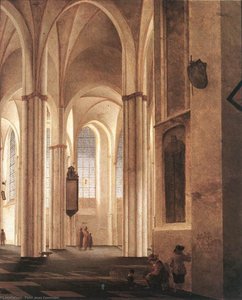
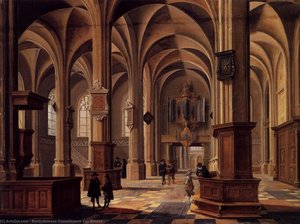
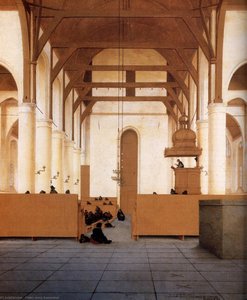
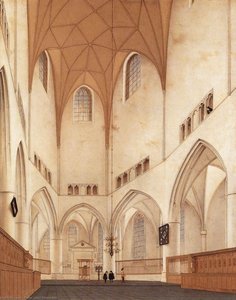
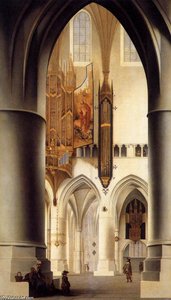
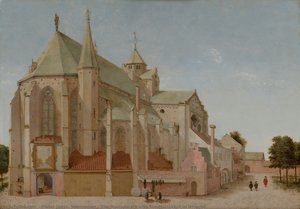
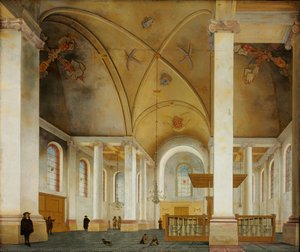
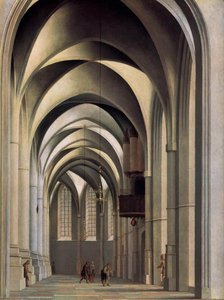
Artist Biography
A Life Illuminated: The Architectural Visions of Pieter Jansz. Saenredam
Pieter Jansz. Saenredam, born in the quiet Dutch village of Assendelft in 1597, dedicated his artistic life to a singular and profoundly moving pursuit: capturing the serene grandeur of Dutch churches. He wasn’t interested in bustling genre scenes or dramatic historical narratives; instead, he found beauty and spiritual resonance within the cool, spacious interiors of Protestant houses of worship. This dedication set him apart from many of his contemporaries during the Dutch Golden Age, establishing him as a unique voice focused on architectural precision and an almost meditative stillness. His early artistic journey began around 1612 with an apprenticeship to Frans Pietersz de Grebber, a prominent Haarlem portraitist. This foundational training instilled in Saenredam essential skills in draftsmanship and technique, providing the building blocks for his later mastery. However, it was his friendship with Jacob van Campen, a painter and architect of considerable renown, that truly shaped his artistic direction, fostering a deep understanding of perspective and architectural principles that would become hallmarks of his style.The Architect’s Eye: Style and Development
Saenredam specialized in painting the interiors of Dutch churches, particularly those belonging to the Protestant Reformed Church—a reflection of the religious landscape of his time. His work is immediately recognizable for its remarkable precision, meticulous detail, and masterful application of perspective. He wasn’t striving for dramatic effect or emotional intensity; rather, he aimed for an almost scientific accuracy in his depictions. Unlike many artists who populated their scenes with figures to add narrative or life, Saenredam often omitted them entirely, choosing instead to emphasize the architectural space itself as the primary subject. This deliberate choice draws the viewer’s eye to the soaring arches, the play of light and shadow on whitewashed walls, and the subtle nuances of the building's structure. His palette was deliberately restrained, primarily employing whites, grays, and subtle tonal variations to convey depth and luminosity within the church interiors. He understood that less could be more, allowing the architecture to speak for itself with quiet dignity. This approach wasn’t simply about technical skill; it reflected a particular sensibility—a reverence for the space as a testament to faith and human ingenuity.Landmarks in Paint: Major Works and Achievements
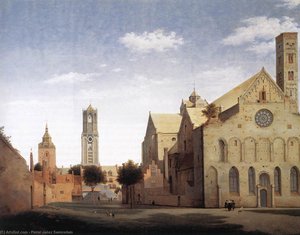
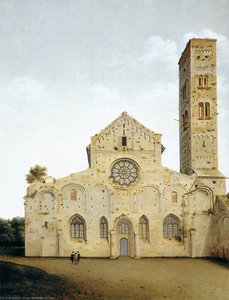
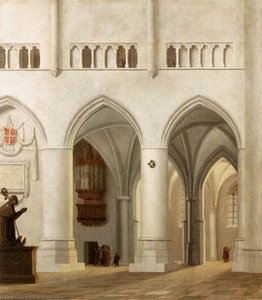
Several works stand out as testaments to Saenredam's exceptional talent. Interior of St Bavo’s Church in Haarlem, for example, is a masterpiece showcasing his ability to capture the vastness and intricate detail of a large church interior. The sheer scale of the space is breathtaking, rendered with an astonishing level of accuracy. Similarly, Interior of the Sint-Odulphuskerk in Assendelft demonstrates his dedication to faithfully representing architectural features, revealing a deep respect for the building’s history and design. The Nave and Choir of the Mariakerk in Utrecht (1641) exemplifies his skill in rendering complex spatial relationships, creating a convincing illusion of depth and volume. And The West Façade of the Church of Saint Mary in Utrecht (1662) is a stunning architectural panel that showcases the precision and clarity characteristic of Dutch Golden Age painting. These works weren’t merely representations; they were acts of preservation, capturing buildings as they existed at a specific moment in time—a valuable historical record for future generations.Legacy of Light and Space: Influences and Historical Significance
Saenredam's artistic vision was profoundly influenced by the architectural theories and designs of his friend, Jacob van Campen. Van Campen’s emphasis on classical principles and harmonious proportions informed Saenredam’s understanding of spatial composition and contributed to the sense of order and balance in his paintings. However, Saenredam's work also stands apart from the more overtly dramatic religious paintings prevalent during the period, offering a unique perspective on Dutch Protestant worship spaces—spaces often characterized by their simplicity and austerity following the Reformation. His paintings serve as invaluable historical documents, preserving images of churches that have undergone alterations or even been destroyed over time. His influence can be seen in later artists who focused on architectural subjects and precise perspective, contributing to the development of Dutch realism. He paved the way for a more analytical and objective approach to depicting architecture, influencing generations of painters to come.A Lasting Impression: Final Years and Enduring Influence
Pieter Jansz. Saenredam continued painting throughout his life, refining his technique and producing a substantial body of work that continues to captivate viewers today. He died in Haarlem in 1665, leaving behind a legacy as one of the most important architectural painters of the Dutch Golden Age. His paintings are not merely depictions of buildings; they are meditations on light, space, and the enduring power of architecture to inspire awe and reverence. They offer a glimpse into a specific time and place—the Netherlands in the 17th century—but their beauty and timeless quality transcend historical boundaries, ensuring that Saenredam’s vision continues to resonate with audiences for centuries to come. His work remains a testament to the power of art to preserve memory, celebrate beauty, and illuminate the human spirit.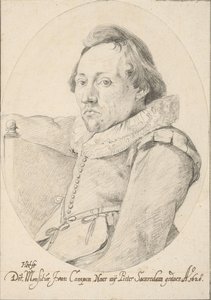
Pieter Jansz. Saenredam
1597 - 1665 , Netherlands
Quick Facts
- Artistic Movement Or Style: Dutch Golden Age painting
- Artists Or Movements Influenced By This Artist:
- Dutch realism
- Architectural painters
- Artists Who Influenced This Artist: ['Jacob van Campen']
- Date Of Birth: 1597
- Date Of Death: 1665
- Full Name: Pieter Jansz. Saenredam
- Nationality: Dutch
- Notable Artworks:
- Interior of St Bavo's Church
- Sint-Odulphuskerk in Assendelft
- Mariakerk in Utrecht (1641)
- Church of Saint Mary (1662)
- Place Of Birth: Assendelft, Netherlands
Related Articles
Johannes Bosboom: Light, Landscape & the Dutch Realist Tradition
Explore the captivating world of Johannes Bosboom, a master of Dutch Realism renowned for his evocative church interiors & landscapes. Discover his life, techniques, and enduring legacy with ArtsDot.

Dutch Baroque Masters: 10 Paintings That Shaped an Era | ArtsDot
Journey through the Golden Age with our guide to the Top 10 Dutch Baroque masterpieces! Explore iconic paintings by Rembrandt, Vermeer & Frans Hals. Find museum-quality art reproductions and elevate your home decor at ArtsDot.com.

Dutch Masters: 10 Golden Age Paintings That Still Inspire |
Journey into the Dutch Golden Age! Explore 10 iconic paintings by Rembrandt, Vermeer & Hals. Discover the stories behind these Baroque masterpieces and find museum-quality art reproductions to elevate your home decor on .

Golden Age Reflections: Dutch Baroque Painting & Cultural Innovation
Explore the Dutch Golden Age of painting! Discover key artists like Vermeer & ter Borch, their innovative techniques, and the rich cultural context behind these Baroque masterpieces. Learn about collecting & appreciating this iconic art period.
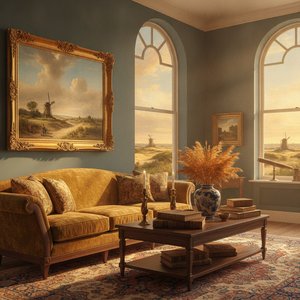
Golden Light & Dutch Skies: Bringing the Magic of Dutch Golden Age Landscapes into Your Home
Transform your home with the breathtaking light of Dutch Golden Age landscapes. Discover how hand-painted oil reproductions of masterworks like Ruisdael and Vermeer bring timeless elegance, atmosphere, and soulful texture to modern interiors. Elevate your space with museum-quality art.