 Preview
 Send
Send Share
Share
 Details

 Download
 Similars
 X-Ray
X-Ray Diaporama
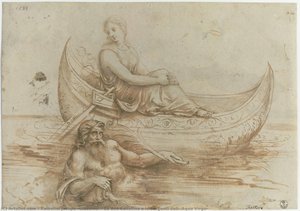
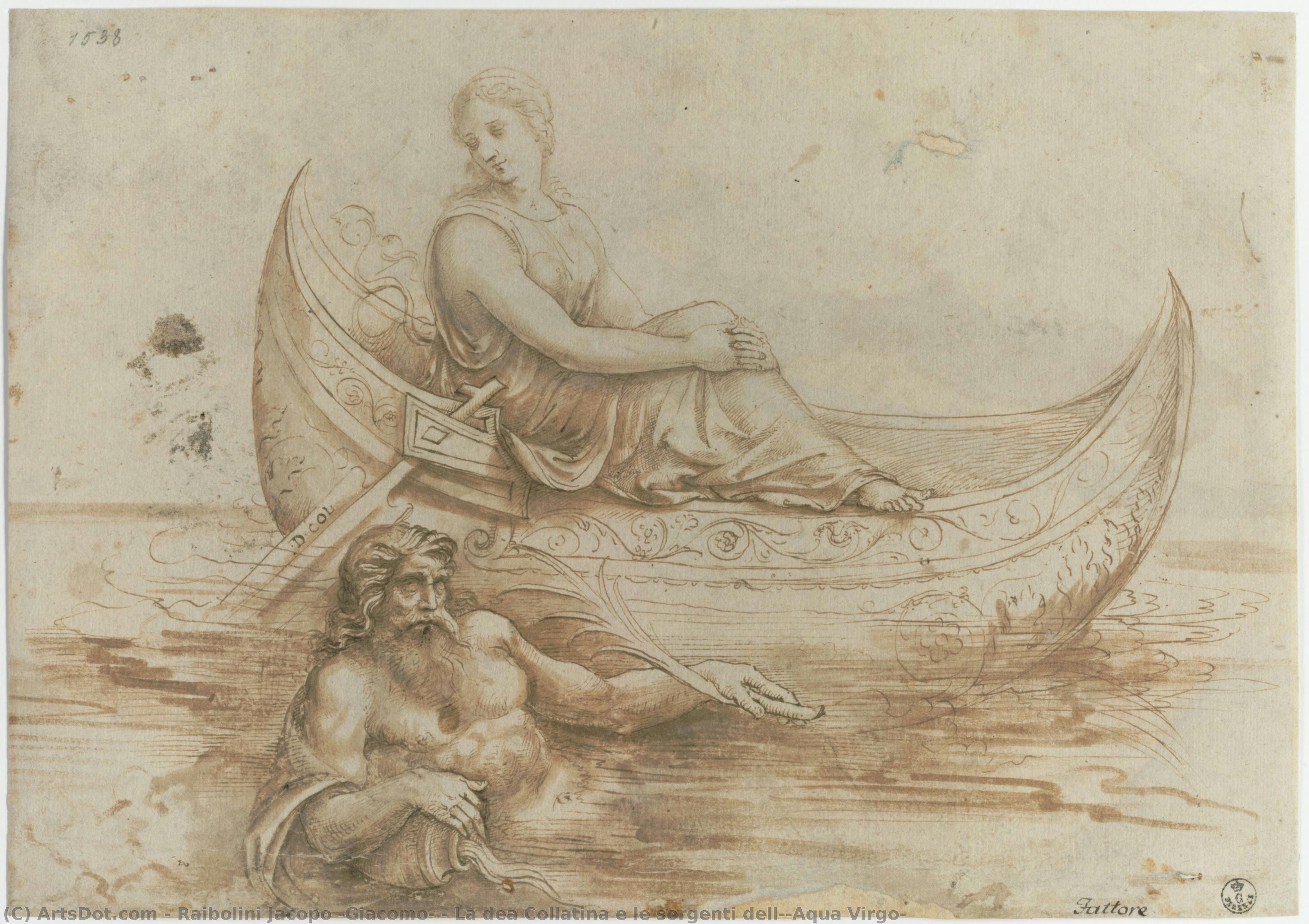
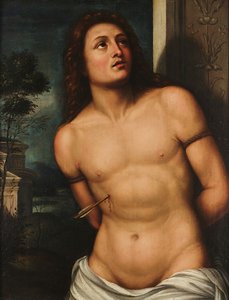
La dea Collatina e le sorgenti dell’“Aqua Virgo”

 Read More
Hand Made Oil Reproduction
Hand-painted oil on canvas in your size and frame, made to order by our artists. ( Buy Print Buy Image)




































Pick from our preset sizes that match the artwork's original proportions.

You may enter your own dimensions to fit a specific frame or space. If your selected size does not match the original image's proportions, we will either crop the artwork or extend the painting with additional hand-painted elements. A digital mockup will be sent for your approval before production begins.
Please note that the on-screen preview does not reflect the actual cropping or extension. Only the mockup will accurately show the final composition.
While custom sizes are available, we recommend selecting a dimension from the predefined list to preserve the original proportions.
After order, ArtsDot.com team will email client for instructions and provide a mockup preview
Worldwide Delivery () in 3/4 weeks instead of standard 5 weeks. (25 August). No compromise on quality.

Free Worldwide Express Shipping

High-Quality Linen Canvas

Full Shipping Insurance

Customs Tax Refund Guarantee

True Color Matching Guarantee

60-Day Return Policy (Defects Only)

100% Money-Back Guarantee

Bulk Discount Offer
 Glass option is only available in size under 110 CM

La dea Collatina e le sorgenti dell’“Aqua Virgo”
Reproduction Medium
Reproduction Size
-


Total Price
$ 263
Related Artworks








Artist Biography
The Radiant Legacy of Giacomo Raibolini
In the vibrant heart of the Italian Renaissance, where the intellectual fervor of humanism met the exquisite craftsmanship of the Bolognese school, emerged a figure of profound grace and technical mastery: Giacomo Raibolini. Known to history by several names, including Jacopo Francia or Giacomo Francia, this versatile master was far more than a mere painter; he was a true Renaissance polymath whose artistry bridged the worlds of fine painting, intricate goldsmithing, and delicate printmaking. Born in Bologna around 1486, Raibolini was steeped in an environment of artistic excellence from his very first breath, being the eldest son of the esteemed Francesco Raibolini. This lineage provided him with a foundation of unparalleled skill, as he spent his formative years not only absorbing the painterly traditions of his father but also mastering the meticulous precision required of a goldsmith.
The trajectory of Raibolith's life was deeply intertwined with the family workshop, a place where art and commerce danced in harmony. Following the death of his father in 1517, Giacomo and his brother Giulio assumed the mantle of the family business, transforming it into a powerhouse of religious and civic commissions. Together, they executed magnificent altarpieces that adorned the churches of Bologna and beyond, often marking their collaborative triumphs with the Latinized initials (I I) for Iacobus and Iulius. This period of his life was marked by a burgeoning sense of monumental scale, as he began to move away from the delicate ornamentalism of his goldsmithing roots toward a more robust, commanding presence in his compositions.
A Synthesis of Style and Spirit
To gaze upon a work by Raibolini is to witness a sophisticated dialogue between different artistic currents of the sixteenth century. His style represents a breathtaking synthesis: he possessed the ability to marry the luminous, atmospheric color palettes characteristic of the Venetian school with the rigorous anatomical accuracy and drapery detail favored in the Emilian tradition. While his early works whisper of the meticulousness learned from his father, his mature compositions resonate with the grandeur of Raphael. The influence of the High Renaissance is unmistakable in his ability to organize complex groups of saints and divine figures into harmonious, balanced arrangements that feel both naturalistic and transcendent.
As his career progressed, Raibolini’s artistic vocabulary continued to evolve, absorbing new textures and moods from the changing landscape of Italian art. In his later years, one can detect the evocative, almost dreamlike influence of Dosso Dossi, which infused his work with a more poetic and perhaps slightly more enigmatic quality. This evolution demonstrates an artist who was never static, but rather a lifelong student of light, form, and emotion. His mastery extended significantly into the realm of printmaking, where he utilized techniques such as drypoint etching to achieve astonishing tonal gradations. Through subtle scratches on copper plates, he could replicate the softest glow of skin or the heavy weight of velvet, bringing the intimacy of his drawings to a much wider audience.
Historical Significance and Enduring Impression
The historical importance of Giacomo Raibolini lies in his role as a vital link in the continuity of the Bolognese Renaissance. He did not merely replicate the styles of his predecessors; he refined them, creating a bridge between the late fifteenth-century traditions and the more dynamic, Mannerist tendencies that would follow. His ability to navigate multiple disciplines—painting, engraving, and goldsmithing—allowed him to infuse every medium with a unique sense of tactile beauty and structural integrity.
Though he passed away in Bologna in 1557 (with some records suggesting 1567), his impact remained etched in the cultural fabric of Italy. His works, now housed in prestigious institutions such as the Pinacoteca Nazionale in Bologna and the Prado in Madrid, serve as enduring testaments to a period of unparalleled creative fertility. Through his religious altarpieces and delicate engravings, Raibolini captured the very essence of the Renaissance spirit: a profound reverence for the divine, an unyielding curiosity about the natural world, and an unwavering commitment to the pursuit of aesthetic perfection.
raibolini jacopo (giacomo)
1486 - 1557 , Italy
Quick Facts
- Artistic Movement Or Style: Renaissance
- Artists Or Movements Influenced By This Artist: ['Bolognese Painting']
- Artists Who Influenced This Artist: ['Venetian School']
- Date Of Birth: Around 1486
- Date Of Death: 1557
- Full Name: Jacopo Francia
- Nationality: Italian
- Notable Artworks: ['La dea Collatina']
- Place Of Birth: Zola Predosa, Italy