 Preview
 Send
Send Share
Share
 Details

 Download
 Similars
 X-Ray
X-Ray Diaporama
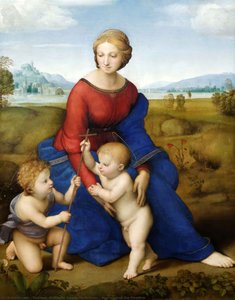
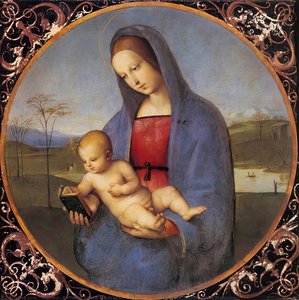
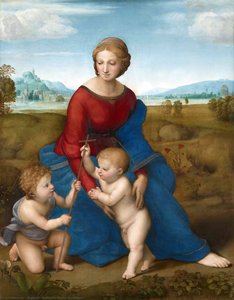
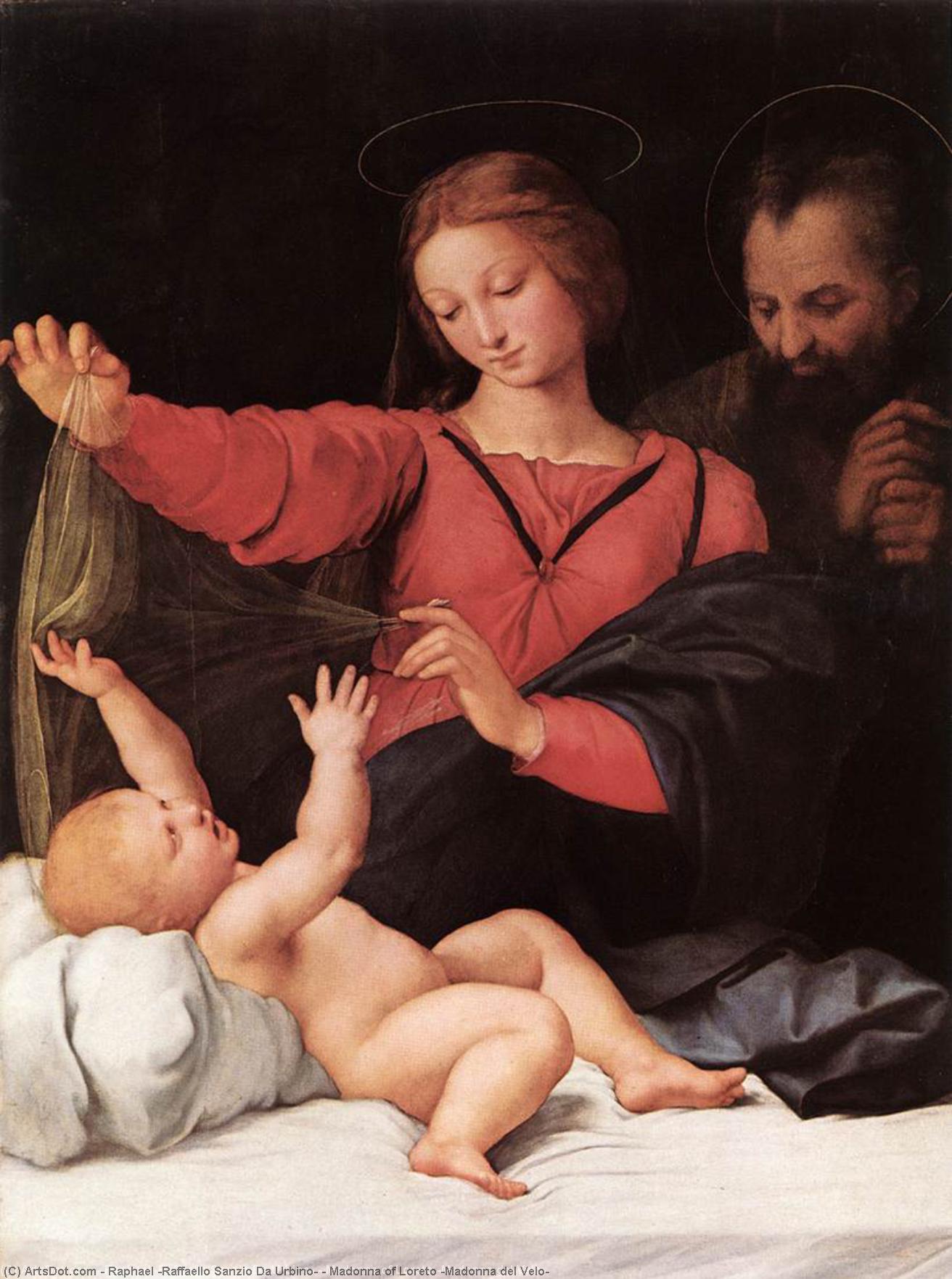
Madonna of Loreto (Madonna del Velo)
 Oil On Canvas
- WallArt
- High Renaissance
 1509
1509- Renaissance
 120.0 x 90.0 cm
 Condé Museum
 Read More
Hand Made Oil Reproduction
Hand-painted oil on canvas in your size and frame, made to order by our artists. ( Buy Print Buy Image)




P118B $10

P118H $10

P118W $10

P438Z $10

P508JH $12

P508YH $12

P805H $10

P805Z $10

P919BZ $10

P919G $10

P919XJ $10

P959ZH $10

P968JZ $12

W106C $8

W218G $10

W218JH $8

W218Y $10

W307PJ $10

W316G $10

W316PJ $8

W316Y $10

W398PJ $8

W4111J $10

W500HY $15

W500JH $15

W692G $12

W849H $8

W940BG $15

W953PJ $8




Pick from our preset sizes that match the artwork's original proportions.

You may enter your own dimensions to fit a specific frame or space. If your selected size does not match the original image's proportions, we will either crop the artwork or extend the painting with additional hand-painted elements. A digital mockup will be sent for your approval before production begins.
Please note that the on-screen preview does not reflect the actual cropping or extension. Only the mockup will accurately show the final composition.
While custom sizes are available, we recommend selecting a dimension from the predefined list to preserve the original proportions.
After order, ArtsDot.com team will email client for instructions and provide a mockup preview
Worldwide Delivery () in 3/4 weeks instead of standard 5 weeks. (16 August). No compromise on quality.

Free Worldwide Express Shipping

High-Quality Linen Canvas

Full Shipping Insurance

Customs Tax Refund Guarantee

True Color Matching Guarantee

60-Day Return Policy (Defects Only)

100% Money-Back Guarantee

Bulk Discount Offer
 Glass option is only available in size under 110 CM

Madonna of Loreto (Madonna del Velo)
Reproduction Medium
Reproduction Size
-


Total Price
$ 263
Artwork Description
The Sistine Madonna: A Renaissance Masterpiece
Domenico Ghirlandaio, Raphael's teacher and mentor, was brought in to decorate the Santa Maria del Popolo church and its chapels in Rome. Both paintings by Raphael, Julius II and the Madonna were hung on pillars during feast days or high holy days.
As a means of indicating Julius' appreciation of the Madonna, which resulted in the pairing of paintings, Julius commissioned another Madonna painting, the Sistine Madonna, in the last year of his life where his adoration is shown by the Pope kneeling at the feet of the Virgin.
Historical Context and Creation
Commissioned by Pope Julius II around 1512-1514, the Sistine Madonna stands as a testament to the High Renaissance's artistic zenith. It was created for the church of San Sisto in Piacenza, Italy, but later moved to Dresden, Germany, where it resided until World War II. The painting was evacuated during the war and is now housed in the Gemäldegalerie Alte Meister in Dresden.
The Sistine Chapel itself, adorned with Michelangelo's iconic frescoes, served as a backdrop for Raphael’s artistic development. His exposure to Michelangelo's monumental style undoubtedly influenced his approach to composition and figure representation. The painting reflects the humanist ideals prevalent during the Renaissance, emphasizing human dignity and beauty.
Composition, Technique, and Symbolism
The Sistine Madonna is renowned for its innovative composition and masterful use of oil paint. Raphael employed a pyramidal structure, with the Virgin Mary at the apex, creating a sense of stability and grandeur. The figures are rendered with remarkable realism and anatomical accuracy, showcasing Raphael's exceptional skill as a draftsman.
The painting is rich in symbolism. The cherubs flanking the Madonna’s skirts have become iconic images, representing innocence and divine presence. Their playful gestures and expressions add a touch of humanity to the sacred scene. The curtain drawn back behind the Virgin alludes to the revelation of the divine.
I The inclusion of Pope Julius II kneeling at the Madonna’s feet symbolizes the Church's devotion to the Virgin Mary and its recognition of her importance as intercessor between humanity and God. The Sistine Chapel itself, named after Pope Sixtus IV who commissioned Michelangelo's frescoes, further reinforces the painting's connection to papal authority.
Emotional Impact and Legacy
The Sistine Madonna evokes a profound sense of awe and reverence. The Virgin Mary’s serene expression and gentle gaze inspire feelings of peace and tranquility. The cherubs’ playful antics add a touch of warmth and humanity to the sacred scene, making it accessible to viewers of all ages.
B The painting's legacy extends far beyond its artistic merit. It has become an enduring symbol of faith, hope, and divine grace. Reproductions of the Sistine Madonna adorn countless homes and churches around the world, serving as a constant reminder of the power of art to inspire and uplift.
I The painting's influence can be seen in numerous subsequent works of art, demonstrating its lasting impact on Western artistic tradition. It remains one of the most beloved and admired paintings in the world, captivating viewers with its beauty, symbolism, and emotional depth.
Reproductions and Interior Design
High-quality reproductions of the Sistine Madonna offer a unique opportunity to bring this Renaissance masterpiece into your home or office. Whether you choose a canvas print, framed poster, or tapestry, a reproduction of the Sistine Madonna can add a touch of elegance and sophistication to any space.
B Consider incorporating reproductions of the Sistine Madonna into interior design schemes inspired by Renaissance art. Pair them with antique furniture, rich fabrics, and warm lighting to create an atmosphere of timeless beauty and refinement. A reproduction of the Sistine Madonna can serve as a focal point in a living room, bedroom, or study, inspiring contemplation and appreciation for artistic excellence.
I For collectors seeking investment-grade art reproductions, consider limited-edition prints authorized by the Gemäldegalerie Alte Meister. These high-quality reproductions are accompanied by certificates of authenticity, ensuring their value and provenance.
Related Artworks
Artist Biography
The Urbino Renaissance: Raphael’s Early Life and Formation
Raffaello Sanzio da Urbino, known to the world as Raphael, emerged from a remarkably fertile cultural landscape. Born in 1483 within the walls of Urbino, a small but intellectually vibrant city-state in central Italy, his earliest years were steeped in an atmosphere that prized both artistic skill and humanist learning. His father, Giovanni Santi, was not merely a painter employed by Duke Federico da Montefeltro—he was a man deeply engaged with the currents of Renaissance thought, a poet who chronicled the Duke’s life and actively sought out innovative artistic ideas from across Italy and beyond. This immersion in a courtly environment, one that valued refinement and intellectual discourse, profoundly shaped the young Raphael's sensibilities. The loss of his father at age eleven thrust responsibility upon him, but also provided an opportunity to hone his skills within the family workshop, absorbing techniques and traditions under the guidance of local artists. Even in these early works, a gentle grace and meticulous attention to detail—hallmarks of his mature style—began to emerge.
From Umbria to Florence: Absorbing New Influences
Raphael’s artistic journey was one of continuous evolution, marked by periods of intense study and assimilation. His initial training under Pietro Perugino in Perugia laid a solid foundation in the Umbrian style—characterized by its soft modeling, harmonious compositions, and serene religious scenes. However, Raphael possessed an insatiable curiosity that drove him to seek out new challenges and expand his artistic horizons. In 1504, he journeyed to Florence, a city then pulsating with the energy of artistic innovation. Here, he encountered the masterpieces of Leonardo da Vinci and Michelangelo, artists who were pushing the boundaries of painting in unprecedented ways. He meticulously studied their techniques—Leonardo’s sfumato, his subtle gradations of light and shadow, and Michelangelo’s powerful anatomical precision and dramatic compositions. This Florentine period was a crucible for Raphael, forcing him to confront new artistic possibilities and synthesize them into his own unique vision. The influence is visible in the increased dynamism and psychological depth of his works from this time, particularly in his series of Madonnas.
The Roman Triumph: Commissions and Masterpieces
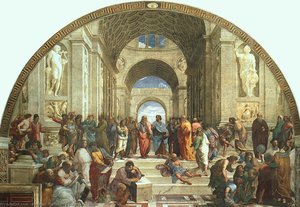
In 1508, Raphael received a summons that would alter the course of his career—an invitation from Pope Julius II to come to Rome. This marked the beginning of his most prolific and celebrated period. The Eternal City offered him an unparalleled opportunity to showcase his talents on a grand scale, adorning the papal apartments in the Vatican with breathtaking frescoes. The School of Athens, arguably his most famous work, stands as a testament to his mastery of composition, perspective, and philosophical allegory. Within its majestic space, Raphael brought together figures from classical antiquity—Plato, Aristotle, Pythagoras, Euclid—creating a vibrant tableau that celebrated human reason and the pursuit of knowledge. He continued working for subsequent Popes, Leo X among them, undertaking monumental projects like the decoration of the Stanze della Segnatura and the Stanza d'Eliodoro. His frescoes in these rooms are not merely decorative; they are profound statements about papal power, religious belief, and the ideals of the Renaissance.
A Synthesis of Grace and Grandeur: Raphael’s Artistic Style
Raphael’s artistic style is often described as a harmonious blend of grace, clarity, and idealized beauty. He possessed an extraordinary ability to synthesize diverse influences—the Umbrian tradition, Florentine innovations, classical antiquity—into a uniquely balanced aesthetic. His compositions are meticulously planned, exhibiting a sense of order and proportion that reflects his deep understanding of Renaissance principles. His figures radiate a serene dignity and emotional expressiveness, embodying the humanist ideal of human perfection. He was also a master colorist, employing rich, luminous hues to create works that are both visually captivating and intellectually stimulating. Unlike Michelangelo’s often dramatic and turbulent style, Raphael's work exudes a sense of calm and harmony—a quality that has endeared him to audiences for centuries.
Legacy and Enduring Influence
Raphael’s untimely death in 1520 at the age of thirty-seven cut short a career brimming with potential. Yet, his legacy endures as one of the most significant figures in Western art history. His work became a cornerstone of the High Renaissance aesthetic, serving as a model for generations of artists. While Michelangelo’s influence would later dominate artistic discourse, Raphael's emphasis on clarity, harmony, and idealized beauty experienced a revival during the Neoclassical period, championed by critics like Johann Joachim Winckelmann. Today, his paintings continue to inspire awe and admiration, captivating viewers with their technical brilliance, emotional depth, and enduring appeal. His influence can be seen in countless works of art that followed, solidifying his place as a true master of the Renaissance—a painter who captured not only the physical likeness of his subjects but also the very essence of human grace and dignity.
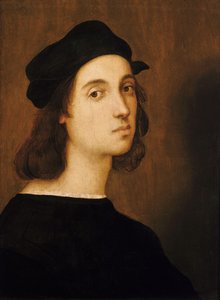
Raphael
1483 - 1520 , Italy
Quick Facts
- Artistic Movement Or Style: High Renaissance
- Artists Or Movements Influenced By This Artist: ['Neoclassical painting']
- Artists Who Influenced This Artist:
- Leonardo da Vinci
- Michelangelo
- Date Of Birth: 1483
- Date Of Death: 1520
- Full Name: Raphael
- Nationality: Italian
- Notable Artworks:
- School of Athens
- Sistine Madonna
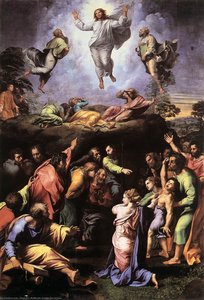
- The Transfiguration
- Place Of Birth: Urbino, Italy
Related Articles
Raphael's Masterpieces: 25 Iconic Paintings & Renaissance Art for Your Home
Explore 25 breathtaking Raphael paintings! Journey through the Italian Renaissance with masterpieces like 'School of Athens' & iconic Madonnas. Find museum-quality art reproductions and elevate your home decor on ArtsDot.com.

Uffizi's 25 Masterpieces: Renaissance Art & Timeless Decor Inspiration
Journey through the Uffizi Gallery's 25 most iconic Renaissance artworks! Explore Botticelli, Leonardo da Vinci & Michelangelo’s masterpieces. Find museum-quality art reproductions and curated decor ideas to bring timeless Italian beauty into your home. Discover all masterpieces on ArtsDot.com
Pietro Perugino: Umbrian Master of Serenity & Precursor to Raphael's High Renaissance
Explore the life & art of Pietro Perugino, a pivotal Renaissance master and Raphael’s influential teacher. Discover his serene compositions, Sistine Chapel frescoes, and lasting legacy with ArtsDot.
Jacob Henricus Maris: A Master of Dutch Atmospheric Realism & the Intimate Landscape
Explore the captivating world of Jacob Henricus Maris, a leading figure of the Dutch Hague School. Discover his atmospheric landscapes, signature brushstrokes & lasting influence on 19th-century art. Learn more at ArtsDot.

Giotto's Masterpieces: 25 Renaissance Artworks for Your Home | ArtsDot
Explore 25 breathtaking artworks by Giotto di Bondone, a Renaissance master. Discover the stories behind iconic frescoes & paintings like the Scrovegni Chapel cycle. Find museum-quality Giotto reproductions and elevate your home decor with ArtsDot.com.