

 Preview
 Send
Send Share
Share
 Details

 Download
 Similars
 X-Ray
X-Ray Diaporama
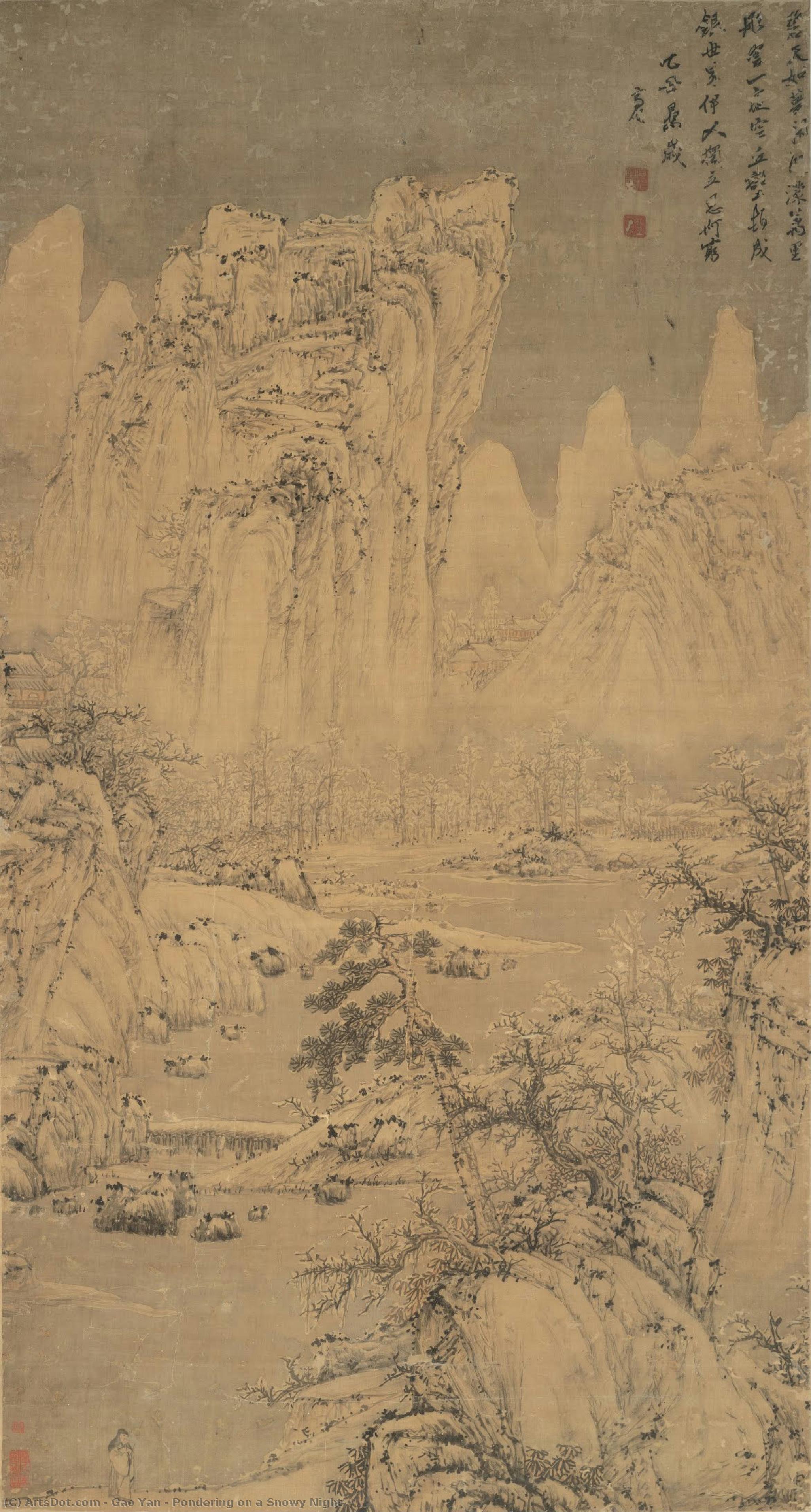
Pondering on a Snowy Night
 1686
1686 169.0 x 92.0 cm
 Read More
Hand Made Oil Reproduction
Hand-painted oil on canvas in your size and frame, made to order by our artists. ( Buy Print Buy Image)




































Pick from our preset sizes that match the artwork's original proportions.

You may enter your own dimensions to fit a specific frame or space. If your selected size does not match the original image's proportions, we will either crop the artwork or extend the painting with additional hand-painted elements. A digital mockup will be sent for your approval before production begins.
Please note that the on-screen preview does not reflect the actual cropping or extension. Only the mockup will accurately show the final composition.
While custom sizes are available, we recommend selecting a dimension from the predefined list to preserve the original proportions.
After order, ArtsDot.com team will email client for instructions and provide a mockup preview
Worldwide Delivery () in 3/4 weeks instead of standard 5 weeks. (18 August). No compromise on quality.

Free Worldwide Express Shipping

High-Quality Linen Canvas

Full Shipping Insurance

Customs Tax Refund Guarantee

True Color Matching Guarantee

60-Day Return Policy (Defects Only)

100% Money-Back Guarantee

Bulk Discount Offer
 Glass option is only available in size under 110 CM

Pondering on a Snowy Night
Reproduction Medium
Reproduction Size
-


Total Price
$ 263
Related Artworks
Artist Biography
Gao Yan (1616–1689): A Pioneer of Lingnan Landscape Painting
Gao Yan, born around 1616 in Guangdong Province, China, stands as a pivotal figure in Qing Dynasty landscape painting and calligraphy, embodying the spirit of the Lingnan School – a movement that sought to synthesize Western artistic concepts with traditional Chinese aesthetics. His life coincided with a period of significant cultural exchange between East and West, shaping his artistic vision and contributing to the enduring legacy of Guangdong art history. While biographical details remain somewhat sparse due to historical records, Gao Yan’s influence on subsequent generations of artists is undeniable.- Early Life & Training: Little is known about Gao Yan's formative years beyond confirming his birth in Guangdong. He honed his artistic skills under the tutelage of prominent Lingnan masters like Zhang Ruo’ai and Ju Chao, absorbing stylistic elements from Song Yuan painters such as Ni Zan and Shen Zhou – artists who championed a contemplative approach to landscape depiction emphasizing subtle tonal gradations and expressive brushwork.
- The Lingnan School & Artistic Philosophy: Gao Yan was instrumental in establishing the Lingnan School, which emerged as a reaction against prevailing artistic trends. This school advocated for “New Chinese Painting,” prioritizing observation of nature alongside Western techniques like perspective and chiaroscuro. Gao Yan’s philosophy centered on capturing the essence of Guangdong's mountainous terrain and conveying emotions through masterful brushstrokes—a deliberate departure from more formal conventions.
- Notable Works: Gao Yan produced numerous landscape paintings characterized by their serene beauty and profound symbolism. “Strolling in Autumn,” completed around 1687, exemplifies his signature style – a vertical composition featuring meticulously rendered trees and rocks bathed in autumnal light. The painting’s subtle tonal variations and expressive brushstrokes reflect the Lingnan School's commitment to capturing atmospheric conditions and conveying emotional depth.
- Influence & Legacy: Gao Yan’s artistic innovations profoundly impacted Guangdong art, inspiring artists who followed him to explore new avenues of expression while retaining core principles of traditional Chinese painting. His work continues to be studied and admired for its technical brilliance and spiritual resonance—a testament to his enduring contribution to the history of Chinese art.
Technique & Style: Embracing Song Yuan Traditions
Gao Yan’s artistic style was deeply rooted in the traditions of the Song and Yuan dynasties, specifically drawing inspiration from Ni Zan and Shen Zhou. These masters championed a contemplative aesthetic prioritizing tonal harmony and expressive brushwork—a deliberate contrast to prevailing stylistic preferences during Gao Yan's time. He skillfully employed techniques such as *gongbi* (realistic brushwork) – characterized by meticulous detail and precise rendering – alongside subtle tonal gradations achieved through layering ink washes. This approach allowed him to convey not only the visual appearance of landscapes but also their emotional atmosphere.- Gongbi Brushwork: Gao Yan’s mastery of gongbi brushwork is evident in his paintings, where every stroke contributes to a harmonious composition and conveys nuanced emotion. He meticulously rendered rocks, trees, and mountains with painstaking accuracy, capturing the textures and contours of nature with remarkable fidelity.
- Tone & Atmosphere: Gao Yan's use of tonal gradation—the layering of ink washes to create subtle variations in color—was particularly noteworthy. This technique allowed him to evoke moods of tranquility and contemplation, mirroring the philosophical ideals of the Lingnan School.
- Compositional Considerations: Like Ni Zan and Shen Zhou before him, Gao Yan favored vertical compositions that emphasized grandeur and serenity. He skillfully arranged elements within the frame to create balanced visual narratives—a hallmark of Song Yuan landscape painting.
“Horse Under a Tree”: A Reflection of Lingnan Spirit
“Horse Under a Tree,” painted around 1672, stands as one of Gao Yan’s most celebrated works and exemplifies the Lingnan School's artistic ethos. The painting depicts a solitary horse standing beneath a tree—a motif frequently employed by Lingnan artists to convey themes of resilience, contemplation, and harmony with nature. Gao Yan’s meticulous brushwork captures the horse’s musculature and posture with remarkable realism, while subtle tonal gradations imbue the scene with an ethereal quality.- Detailed Rendering: The painting showcases Gao Yan's exceptional skill in rendering detail—particularly evident in the depiction of the horse’s skeleton and the texture of its coat. This meticulous approach reflects the Lingnan School’s commitment to capturing natural forms with uncompromising accuracy.
- Symbolic Significance: The horse symbolizes strength, nobility, and perseverance—values that resonated deeply within Guangdong culture during Gao Yan's lifetime. Its placement beneath a tree reinforces the painting’s overarching theme of harmony between humanity and nature.
- Atmospheric Impression: Gao Yan skillfully captures atmospheric conditions through subtle tonal gradations—creating an impression of misty autumn light that enhances the painting’s contemplative mood.
Historical Context & Significance
Gao Yan's artistic endeavors unfolded against a backdrop of significant cultural transformation during the Qing Dynasty – specifically, the burgeoning influence of Western art and thought. Recognizing this shift, Gao Yan championed “New Chinese Painting,” blending Western techniques with traditional Chinese aesthetics—a bold move that signaled a departure from established conventions. His work represents a pivotal moment in Guangdong art history, marking the emergence of a new artistic idiom that would shape the trajectory of subsequent generations of artists. Gao Yan’s legacy endures as an inspiration for those who strive to honor tradition while embracing innovation—solidifying his place among China's most influential landscape painters.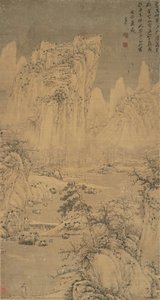
gao yan
1616 - 1689 , China
Quick Facts
- Artistic Movement Or Style: Song Yuan Style Art
- Artists Or Movements Influenced By This Artist: ["Zhang Ruo'ai"]
- Artists Who Influenced This Artist:
- Ni Zan
- Shen Zhou
- Date Of Death: 1689
- Full Name: Gao Yan
- Nationality: Chinese
- Notable Artworks: ['Pondering on a Snowy Night']
- Place Of Birth: China

