 Preview
 Send
Send Share
Share
 Details

 Download
 Similars
 X-Ray
X-Ray Diaporama
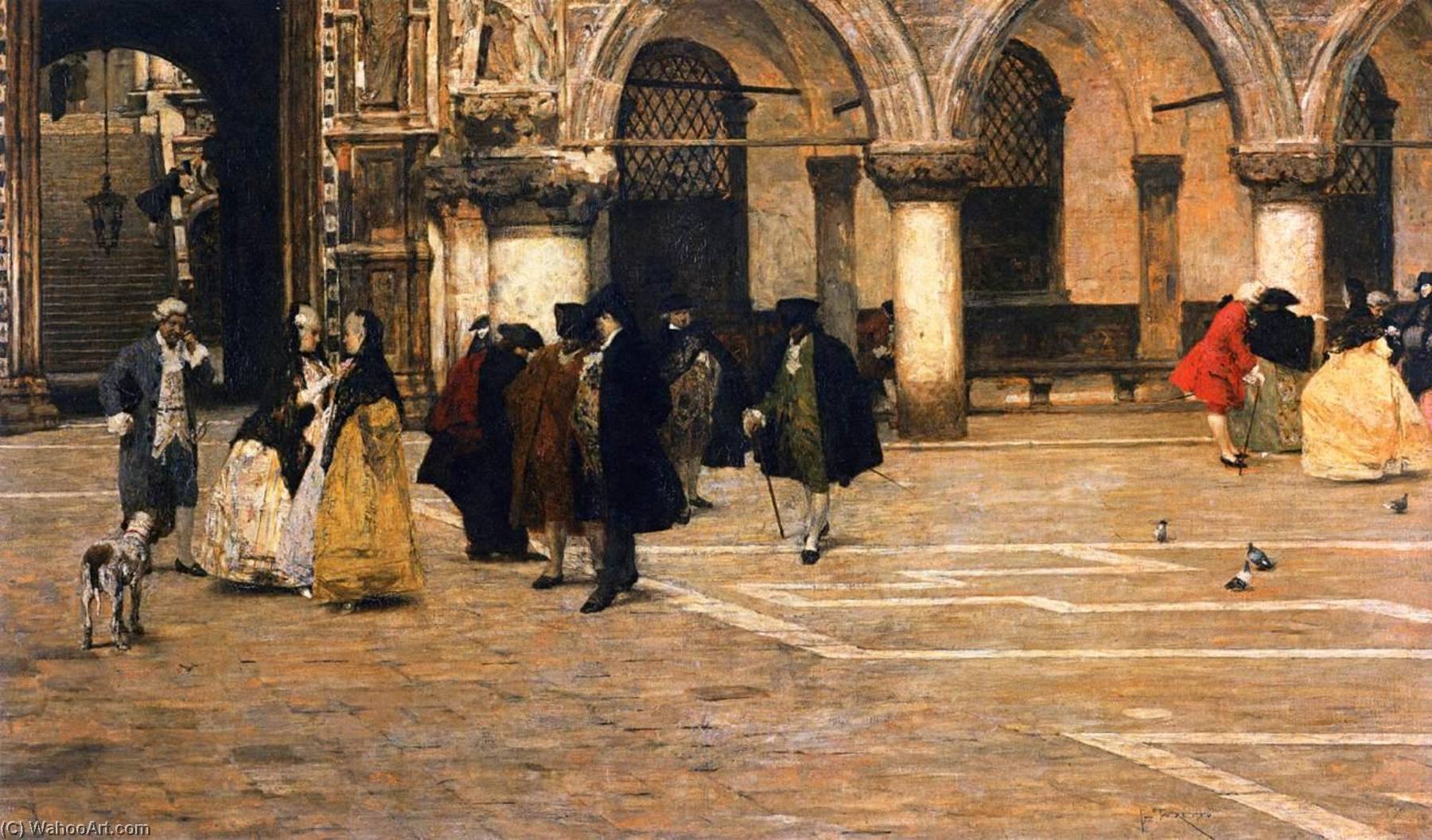
Promenade in the Piazzetta
 1884
1884 74.0 x 126.0 cm
 Museo d’Arte Moderna Ca’ Pesaro
 Read More
Hand Made Oil Reproduction
Hand-painted oil on canvas in your size and frame, made to order by our artists. ( Buy Print Buy Image)




































Pick from our preset sizes that match the artwork's original proportions.

You may enter your own dimensions to fit a specific frame or space. If your selected size does not match the original image's proportions, we will either crop the artwork or extend the painting with additional hand-painted elements. A digital mockup will be sent for your approval before production begins.
Please note that the on-screen preview does not reflect the actual cropping or extension. Only the mockup will accurately show the final composition.
While custom sizes are available, we recommend selecting a dimension from the predefined list to preserve the original proportions.
After order, ArtsDot.com team will email client for instructions and provide a mockup preview
Worldwide Delivery () in 3/4 weeks instead of standard 5 weeks. (17 August). No compromise on quality.

Free Worldwide Express Shipping

High-Quality Linen Canvas

Full Shipping Insurance

Customs Tax Refund Guarantee

True Color Matching Guarantee

60-Day Return Policy (Defects Only)

100% Money-Back Guarantee

Bulk Discount Offer
 Glass option is only available in size under 110 CM

Promenade in the Piazzetta
Reproduction Medium
Reproduction Size
-


Total Price
$ 263
Related Artworks
Artist Biography
Giacomo Favretto: Venetian Painter of Everyday Life
Giacomo Favretto (August 11, 1849 – June 12, 1887) was an Italian painter who achieved renown for his captivating genre scenes depicting the vibrant life of Venice during the late nineteenth century. Born into a modest family in Venice, his father was a carpenter, shaping his formative years amidst the artisan traditions of his hometown.
Favretto’s artistic journey began at the Accademia di Belle Arti di Venezia in 1864, where he honed his skills under the tutelage of Pompeo Marino Molmenti. Recognizing his innate talent and visionary approach to art, Molmenti championed Favretto's distinctive style—one that diverged from prevailing academic trends.
A pivotal moment arrived when Favretto encountered Alessandro Ciardi, a fellow artist who recognized his potential and secured him a position at the Venice Academy. This encounter proved instrumental in fostering Favretto’s artistic development, exposing him to influential figures and broadening his horizons. Notably, he lost sight in one eye due to a severe infection in 1877, an experience that profoundly impacted his perspective on life and art.
Favretto's breakthrough came at the Brera Academy Exhibition of 1873, where his genre painting garnered considerable acclaim from Camillo Boito, a celebrated poet and critic. Boito recognized Favretto’s ability to capture the essence of Venetian society—its rituals, customs, and daily routines—with remarkable sensitivity and artistic precision.
Inspired by younger artists like Domenico Morelli, Favretto embraced a stylistic ethos that prioritized observation and spontaneity over grand narratives. He eschewed mythological or historical subjects in favor of scenes from ordinary life, portraying Venetian citizens engaged in their occupations and leisure activities. His technique involved alternating between meticulously finished areas and loose, expressive sketches—a deliberate choice reflecting his belief in conveying emotion and atmosphere authentically.
Favretto’s palette favored muted hues—grays, browns, whites, blacks—creating a tranquil ambiance reminiscent of Venetian interiors. He skillfully blended colors to evoke subtle nuances of light and shadow, mirroring the atmospheric conditions prevalent in Venice during his era. His canvases pulsed with vitality thanks to flashes of vibrant color—orange, green, red—adding dynamism and visual interest.
Favretto’s success propelled him into Venetian society's upper echelons, where he cultivated relationships with prominent figures like Queen Margherita. He became a symbol of artistic achievement and Venetian cultural pride. Despite facing hardships such as illness and personal loss, Favretto remained steadfast in his dedication to art—a testament to his unwavering passion for capturing the beauty and complexity of human experience.
His legacy solidified at the Venice National Exhibition of 1887, where his paintings captivated audiences and critics alike. Among his most celebrated works was *Liston Odierno* (*Promenade Today* in Venice), a masterpiece that exemplifies Favretto’s distinctive style—characterized by its atmospheric perspective and nuanced portrayal of Venetian life.
Favretto's influence extended beyond his own lifetime, inspiring subsequent generations of Venetian artists. He championed the notion that art should reflect the realities of everyday existence, fostering a tradition of genre painting rooted in observation and empathy. Giacomo Favretto remains an enduring figure in Italian art history—a painter who transformed Venice into a canvas for capturing the spirit of its time.
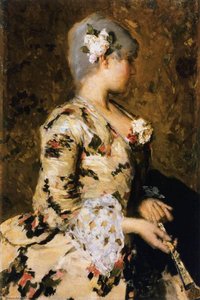
giacomo favretto
1849 - 1887
Quick Facts
- Artistic Movement Or Style: Venetian Genre Painting
- Artists Or Movements Influenced By This Artist: ['Michelangelo Grigoletti']
- Artists Who Influenced This Artist: ['Pompeo Marino Molmenti']
- Date Of Birth: August 11, 1849
- Date Of Death: June 12, 1887
- Full Name: Giacomo Favretto
- Nationality: Italian
- Notable Artworks:
- The Poultry Seller
- After the Bath
- Entrance to a Noble Home
- Place Of Birth: Venice, Italy