 Preview
 Send
Send Share
Share
 Details

 Download
 Similars
 X-Ray
X-Ray Diaporama
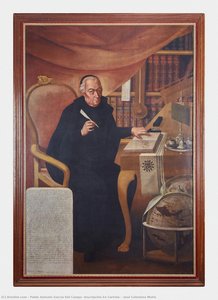
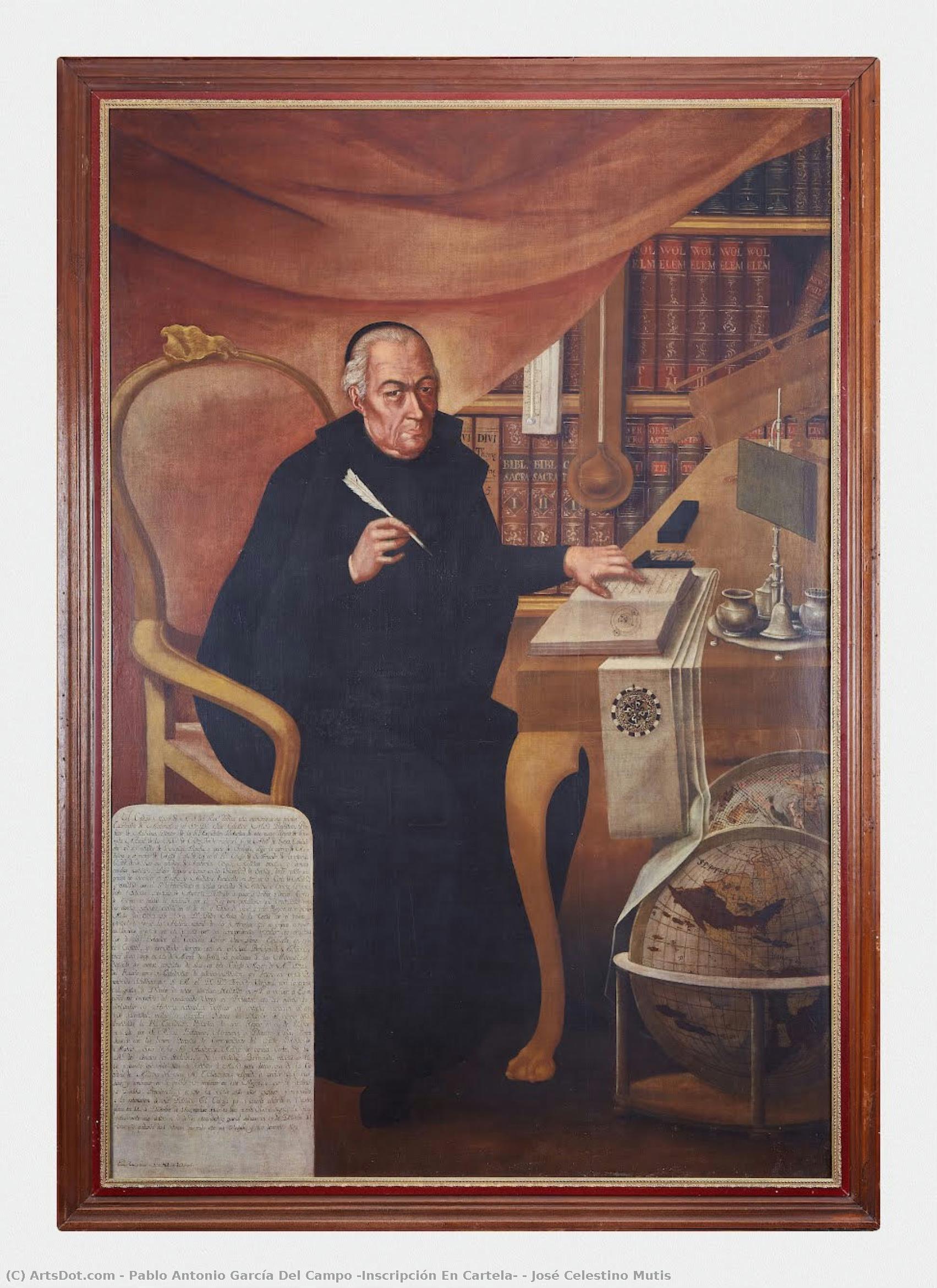
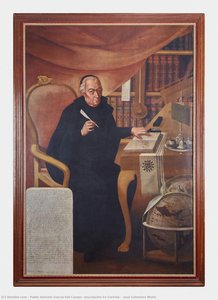
José Celestino Mutis

 Read More
Hand Made Oil Reproduction
Hand-painted oil on canvas in your size and frame, made to order by our artists. ( Buy Print Buy Image)




































Pick from our preset sizes that match the artwork's original proportions.

You may enter your own dimensions to fit a specific frame or space. If your selected size does not match the original image's proportions, we will either crop the artwork or extend the painting with additional hand-painted elements. A digital mockup will be sent for your approval before production begins.
Please note that the on-screen preview does not reflect the actual cropping or extension. Only the mockup will accurately show the final composition.
While custom sizes are available, we recommend selecting a dimension from the predefined list to preserve the original proportions.
After order, ArtsDot.com team will email client for instructions and provide a mockup preview
Worldwide Delivery () in 3/4 weeks instead of standard 5 weeks. (26 August). No compromise on quality.

Free Worldwide Express Shipping

High-Quality Linen Canvas

Full Shipping Insurance

Customs Tax Refund Guarantee

True Color Matching Guarantee

60-Day Return Policy (Defects Only)

100% Money-Back Guarantee

Bulk Discount Offer
 Glass option is only available in size under 110 CM

José Celestino Mutis
Reproduction Medium
Reproduction Size
-


Total Price
$ 263
Related Artworks








Artist Biography
The Intersection of Art and Science in Colonial Colombia
In the vibrant, intellectual atmosphere of 18th-century Bogotá, a singular talent emerged that would forever bridge the gap between aesthetic beauty and scientific rigor. Pablo Antonio García del Campo, born in 1744, was far more than a mere painter; he was a pioneer of visual documentation whose brushstrokes helped define the natural identity of the New World. Raised in a lineage of intellectual distinction—the son of the esteemed jurist Juan José García del del Campo—his early life was steeped in the Enlightenment ideals that were then reshaping the global consciousness. Under the tutelage of Joaquín Gutiérrez, a master of neoclassical principles in Bogotá, García del Campo developed a disciplined hand and an eye for precise detail. This foundational training did not merely teach him how to render form, but rather how to observe the world with a clarity that would later serve the most ambitious scientific endeavor of his era.
The trajectory of his life changed profoundly through his encounter with the legendary naturalist José Celestino Mutis. Their relationship was one of mutual discovery; while Mutis sought to catalog the vast, unexplored biodiversity of the Viceroyalty of the New Kingdom of Granada, García del Campo provided the visual language necessary to communicate these findings to the world. In 1783, he was officially appointed as the first delineator of the Royal Botanical Expedition, a role that demanded an extraordinary synthesis of artistic grace and botanical accuracy.
A Legacy Written in Flora and Fauna
García del Campo’s work during the Botanical Expedition represents a pinnacle of colonial scientific illustration. Tasked with capturing the essence of Colombian plants, insects, and reptiles, he worked with a level of fidelity that allowed his illustrations to travel across oceans, reaching the eyes of the great taxonomist Carl Linnaeus in Uppsala. His mission was not merely to decorate, but to document life with such precision that color, scale, and texture could be understood by scientists thousands of miles away. One of his most notable early achievements was the meticulous rendering of the Chaetogastra Canescens, a feat achieved through a rigorous process of observation and technical adaptation.
Beyond the botanical realm, García del Campo was a versatile master of portraiture and religious iconography. His ability to capture the dignity of his subjects—ranging from high-ranking officials like Archbishop-Viceroy Antonio Caballero y Góngora to the quiet reverence of religious scenes—demonstrated a profound emotional intelligence. His repertoire included:
- Botanical Illustrations: Over 60 and more than 600 specimens documented with unparalleled scientific accuracy for the expedition.
- Religious Works: Masterful compositions such as The Annunciation and The Immaculate Eucharist, which showcased his command of light and sacred themes.
- Portraiture: Capturing the likenesses of the colonial elite, including notable portraits of José Celestino Mutis himself.
- Naturalistic Studies: Early explorations into the depiction of insects and reptiles that merged art with biological inquiry.
Historical Significance and Enduring Influence
The life of Pablo Antonio García del Campo was marked by both immense contribution and personal struggle. While his health eventually forced him to withdraw from the grueling field work of the expedition in 1784, his impact remained indelible. He left behind a visual archive that serves as a primary source for understanding the ecological heritage of Colombia. His legacy also extended into the next generation through his son, Victorino García, who would go on to become a celebrated painter in his own right, ensuring that the lineage of Colombian excellence continued.
Today, we recognize García del Campo not just as a colonial artist, but as a vital figure in the history of science. He belonged to a rare class of individuals who understood that to truly see a thing is to understand its soul, and to draw it is to preserve it for eternity. His work remains a testament to a period when art was the primary lens through which humanity discovered the wonders of the natural world, turning the wild landscapes of the Andes into a permanent, beautiful record of human knowledge.
pablo antonio garcía del campo (inscripción en cartela)
1744 - 1814 , Colombia
Quick Facts
- Artistic Movement Or Style: Botanical Illustration
- Artists Or Movements Influenced By This Artist: José Celestino Mutis
- Artists Who Influenced This Artist: Joaquín Gutiérrez
- Date Of Birth: 1744
- Full Name: Pablo Antonio García del Campo
- Nationality: Colombian
- Notable Artworks: ['Illustrations for the Colombian Expedition']
- Place Of Birth: Bogotá, Colombia