 Preview
 Send
Send Share
Share
 Details

 Download
 Similars
 X-Ray
X-Ray Diaporama
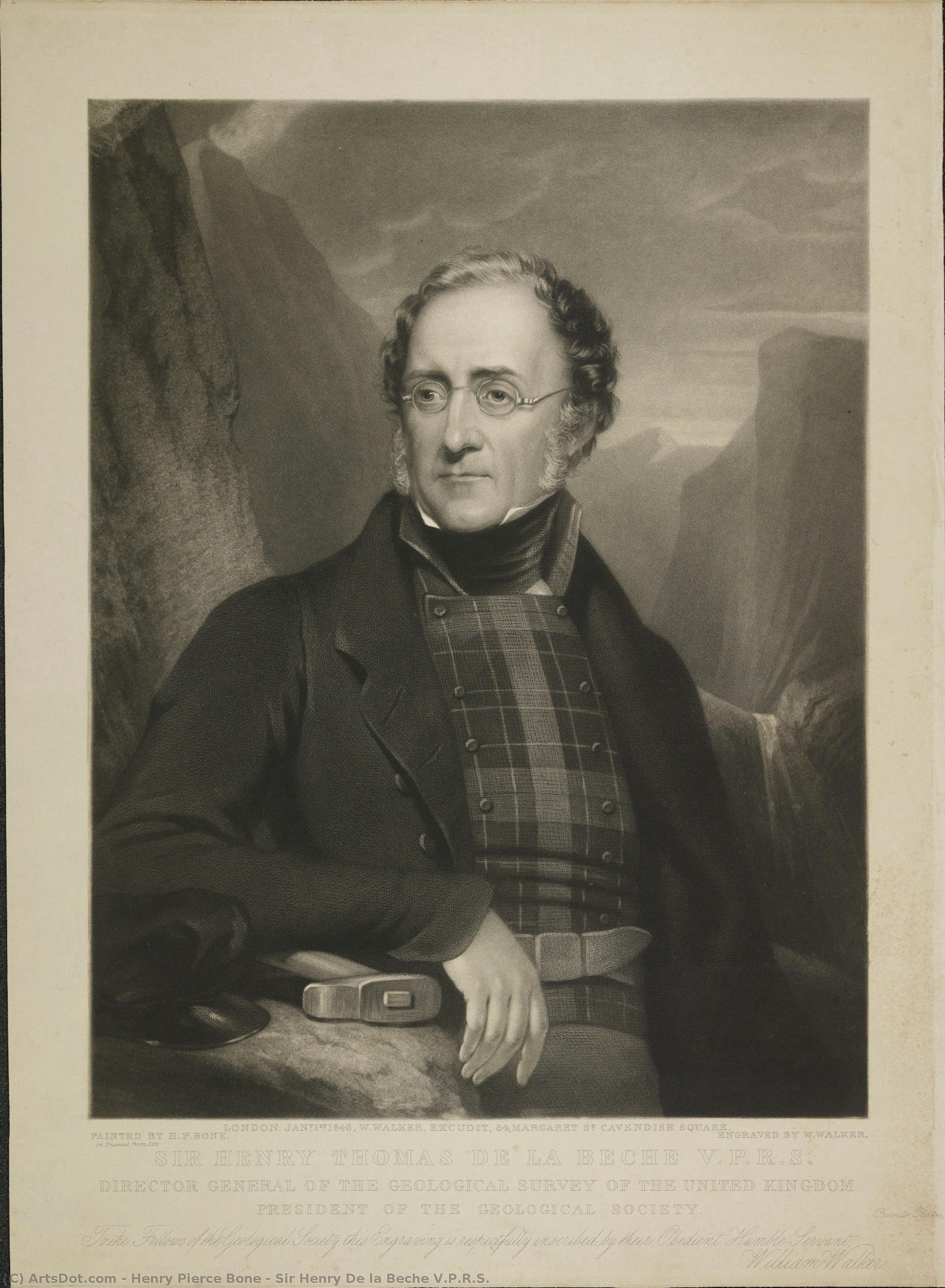
Sir Henry De la Beche V.P.R.S.
 Acrylic On Canvas
- WallArt
- Romantic Portraiture
 1848
1848 30.0 x 22.0 cm
 Science Museum
 Read More
Hand Made Oil Reproduction
Hand-painted oil on canvas in your size and frame, made to order by our artists. ( Buy Print Buy Image)




P118B $10

P118H $10

P118W $10

P438Z $10

P508JH $12

P508YH $12

P805H $10

P805Z $10

P919BZ $10

P919G $10

P919XJ $10

P959ZH $10

P968JZ $12

W106C $8

W218G $10

W218JH $8

W218Y $10

W307PJ $10

W316G $10

W316PJ $8

W316Y $10

W398PJ $8

W4111J $10

W500HY $15

W500JH $15

W692G $12

W849H $8

W940BG $15

W953PJ $8




Pick from our preset sizes that match the artwork's original proportions.

You may enter your own dimensions to fit a specific frame or space. If your selected size does not match the original image's proportions, we will either crop the artwork or extend the painting with additional hand-painted elements. A digital mockup will be sent for your approval before production begins.
Please note that the on-screen preview does not reflect the actual cropping or extension. Only the mockup will accurately show the final composition.
While custom sizes are available, we recommend selecting a dimension from the predefined list to preserve the original proportions.
After order, ArtsDot.com team will email client for instructions and provide a mockup preview
Worldwide Delivery () in 3/4 weeks instead of standard 5 weeks. (18 August). No compromise on quality.

Free Worldwide Express Shipping

High-Quality Linen Canvas

Full Shipping Insurance

Customs Tax Refund Guarantee

True Color Matching Guarantee

60-Day Return Policy (Defects Only)

100% Money-Back Guarantee

Bulk Discount Offer
 Glass option is only available in size under 110 CM

Sir Henry De la Beche V.P.R.S.
Reproduction Medium
Reproduction Size
-


Total Price
$ 263
Artwork Description
A Portrait of Victorian Scientific Curiosity: Sir Henry De la Beche V.P.R.S.
This meticulously crafted hand-painted reproduction captures the essence of Sir Henry De la Beche, a prominent figure within the Geological Society of London in 1848. Engraved by Walker after the original miniature painted by the esteemed Henry Pierce Bone, this artwork offers a window into the intellectual fervor and burgeoning scientific exploration characteristic of Victorian England. The image isn't merely a likeness; it’s a testament to the era’s fascination with natural history and its growing application through geological study.
The Legacy of Henry Pierce Bone: Enameling and Miniature Painting
Henry Pierce Bone, born in London in 1779, was a pivotal figure in British artistic production. His career, spanning nearly seven decades, showcased remarkable versatility, initially rooted in the traditional art of enameling – a technique inherited from his father, Henry Bone – before transitioning to classical and biblical subjects. Bone’s skill as a rapid sketcher and his bold designs established him as a significant artist of his time. The miniature he created for the Royal Academy exhibition of 1847, which served as the basis for this reproduction, highlights his mastery of portraiture and his ability to capture both physical likeness and inner character. Bone’s work was commissioned by royalty – including Queen Victoria – demonstrating his standing within the artistic circles of the British court.
A Symbol of Scientific Advancement
The inclusion of a mountainous landscape in the background is no accident. It speaks directly to De la Beche's role as a Fellow of the Geological Society and, by extension, to the society’s core mission: the study of Earth’s formation and composition. The rugged terrain symbolizes the challenges and rewards of geological investigation – a burgeoning field at the time driven by advancements in surveying, instrumentation, and theoretical understanding. The formal attire worn by Sir Henry De la Beche further emphasizes his status as a respected member of this scientific community, reflecting the Victorian emphasis on professionalism and intellectual rigor.
Technique and Reproduction
This reproduction is executed with meticulous attention to detail, mirroring Bone’s original technique. The artist has skillfully recreated the nuances of Bone's enameling style – evident in the subtle gradations of tone and texture – using traditional hand-painting methods. The black and white photographic source material was carefully analyzed to ensure accurate color rendition and tonal balance. The final size of 30 x 22 cm makes this artwork ideal for a variety of interior design settings, from formal studies to more contemporary living spaces. It’s a piece that invites contemplation on the intersection of art, science, and Victorian society.
Related Artworks


Artist Biography
The Legacy of a Master Enameller: Henry Pierce Bone
In the delicate, luminous world of nineteenth-century British art, few names evoke the meticulous precision and royal splendor associated with enamel painting quite like Henry Pierce Bone. Born in London on November 6, 1779, Bone was destined for a life steeped in artistic tradition. As the son of the celebrated enamel painter Henry Bone and Elizabeth van der Meulen—a descendant of the illustrious battle-painter Adam Frans van der Meulen—his very lineage was woven from the threads of fine art. This heritage provided him with an early, intimate education in the demanding techniques of his craft, a foundation that would eventually lead him to serve the highest echelons of the British monarchy.
Bone’s artistic journey was one of evolution and stylistic shifts. While he initially trained under his father's guidance, his early forays into the medium of oils allowed him to explore a broader range of expression. By the age of twenty, he had already begun exhibiting portraits that showcased a burgeoning talent for capturing character and light. However, it was in 1806 that Bone embarked on a significant period of creative exploration, turning his attention toward classical subjects. For nearly three decades, he immersed himself in the themes of antiquity, utilizing bold and skillful designs to breathe life into classical and scripture-based narratives. This era of his career demonstrated a profound ability to translate grand, epic tales onto much more intimate scales.
Refinement in Miniature: The Art of Enamel
In 1833, Bone made a pivotal decision to return to the specialized art form of his father: enameling. This transition marked a period where his technical skill met a refined sense of decorative elegance. Enamel painting is an arduous process, requiring the application of pigmented glass to metal surfaces and subsequent firing in a kiln—a method that demands absolute precision, as even a single error can ruin the piece. While art historians often note that Bone’s enamels did not quite reach the transcendent heights of his father's legendary works, they nonetheless possess a remarkable vitality. His ability to act as a rapid sketcher allowed him to infuse his small-scale works with a sense of movement and spontaneity that is rare in such a rigid medium.
The brilliance of Bone’s work lies in the intersection of his classical training and the luminous properties of enamel. His compositions, often centered on scripture and mythological motifs, utilized the inherent glow of the medium to create a sense of divine or heroic light. This mastery of color and detail did not go unnoticed by the era's most influential figures. His talent earned him prestigious appointments, serving as the enamel painter to Adelaide of Saxe-Meiningen and later to the iconic duo of Queen Victoria and Prince Albert. To be entrusted with the portraiture and decorative arts of the royal court was the ultimate testament to his skill and social standing within the London art scene.
Historical Significance and Enduring Presence
Though the era of grand enamel painting eventually gave way to new artistic movements, the contributions of Henry Pierce Bone remain a vital chapter in the history of British decorative arts. His work serves as a bridge between the classical traditions of the eighteenth century and the refined, ornamental tastes of the Victorian age. Through his portraits and religious subjects, he captured the spirit of an era that valued both historical continuity and exquisite craftsmanship.
Today, the traces of Bone’s artistry can be found in prestigious institutions, ensuring his place in the annals of art history:
- The National Gallery, United Kingdom: Housing significant works that showcase his contribution to the British canon.
- Private Collections: Where his intimate portraits and enamels continue to be cherished by connoisseurs of fine miniature art.
- Artistic Heritage: His legacy lives on through the study of the Bone family lineage and the preservation of the enamel technique he helped sustain during the nineteenth century.
Henry Pierce Bone passed away on October 21, 1855, leaving behind a body of work that reflects a life dedicated to the pursuit of beauty within the smallest of canvases. His ability to marry the grand scale of classical storytelling with the delicate intimacy of enamel remains a profound achievement in the history of English painting.
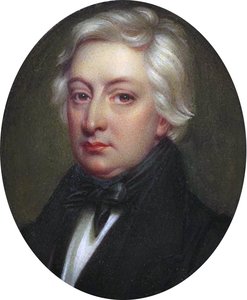
Henry Pierce Bone
1779 - 1855 , United Kingdom
Quick Facts
- Artistic Movement Or Style: Enamel painting
- Artists Or Movements Influenced By This Artist: Victorian Art
- Artists Who Influenced This Artist: Adam Frans van der Meulen
- Date Of Birth: November 6, 1779
- Date Of Death: October 21, 1855
- Full Name: Henry Pierce Bone
- Nationality: English
- Notable Artworks:
- The Huguenot Martyr
- Saint George and the Dragon
- Place Of Birth: London, United Kingdom
Related Articles

Demandes Commerciales
APS ofrece reproducciones de bellas artes y encargos personalizados desde 2004. Confían en nosotros corporaciones, hoteles y coleccionistas selectos para obras de arte de calidad museística, servicio discreto y soluciones artísticas completas. ¡Póngase en contacto con nosotros para obtener un presupuesto personalizado!

Goya's Masterpieces: Explore 25 Iconic Paintings & Art Prints | ArtsDot
Delve into the world of Francisco Goya with ArtsDot. Explore 25 iconic paintings – from 'The Third of May' to his haunting Black Paintings. Discover the stories, techniques & emotions behind these Spanish masterpieces. Find museum-quality art reproductions for your home at ArtsDot.com!

Águeda Ruiz de la Prada: A Study of Eclecticism & Emotional Resonance in Contemporary Spanish Painting
Discover the vibrant world of Ágatha Ruiz de la Prada, a leading figure in contemporary Spanish art. Explore her eclectic style, emotional depth & legacy – a must-read for discerning collectors.

A riguardo di noi
Découvrez notre histoire ! Nous apportons l'art de classe mondiale dans votre vie grâce à une sélection experte, des créations personnalisées et des aperçus gratuits. Approuvé par les particuliers et les entreprises depuis 2000.
Maurice Quentin de La Tour: Light, Shadow & the Rococo Portrait
Explore the captivating world of Maurice Quentin de La Tour, a master of Rococo portraiture. Discover his innovative pastel techniques, intimate depictions of French aristocracy, and lasting artistic legacy. Learn more at ArtsDot.