 Preview
 Send
Send Share
Share
 Details

 Download
 Similars
 X-Ray
X-Ray Diaporama
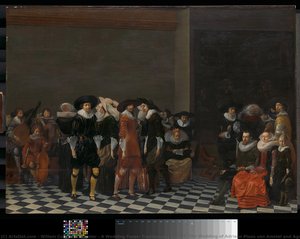
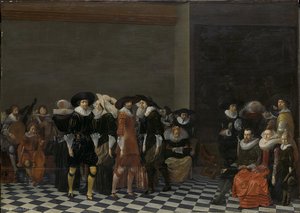
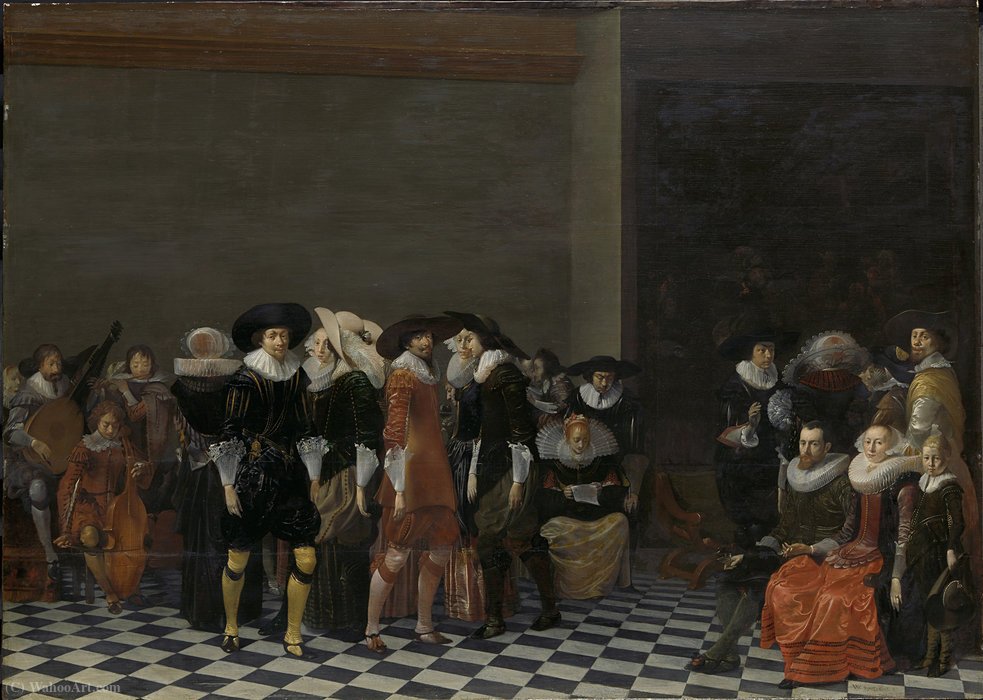
Wedding Party, traditionally known as the wedding of Adriaen Ploos van Amstel and Agnes of Bijler
 Read More
Hand Made Oil Reproduction
Hand-painted oil on canvas in your size and frame, made to order by our artists. ( Buy Print Buy Image)




































Pick from our preset sizes that match the artwork's original proportions.

You may enter your own dimensions to fit a specific frame or space. If your selected size does not match the original image's proportions, we will either crop the artwork or extend the painting with additional hand-painted elements. A digital mockup will be sent for your approval before production begins.
Please note that the on-screen preview does not reflect the actual cropping or extension. Only the mockup will accurately show the final composition.
While custom sizes are available, we recommend selecting a dimension from the predefined list to preserve the original proportions.
After order, ArtsDot.com team will email client for instructions and provide a mockup preview
Worldwide Delivery () in 3/4 weeks instead of standard 5 weeks. (16 August). No compromise on quality.

Free Worldwide Express Shipping

High-Quality Linen Canvas

Full Shipping Insurance

Customs Tax Refund Guarantee

True Color Matching Guarantee

60-Day Return Policy (Defects Only)

100% Money-Back Guarantee

Bulk Discount Offer
 Glass option is only available in size under 110 CM

Wedding Party, traditionally known as the wedding of Adriaen Ploos van Amstel and Agnes of Bijler
Reproduction Medium
Reproduction Size
-


Total Price
$ 263
Related Artworks
![Scrovegni - [11] - Marriage Of The Virgin — Giotto Di Bondone, Proto-renaissance](/media/artworks/images/thumbnails/e2/a8/e2a8050d63304601be6f83525f8938a1.jpg)
Artist Biography
The Quiet Observer of Dutch Military Life
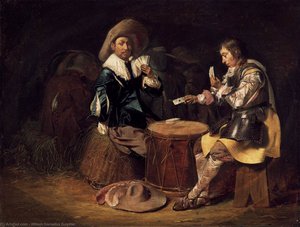
In the vibrant, bustling atmosphere of Amsterdam during the seventeenth century, a period defined by the luminous heights of the Dutch Golden Age, Willem Cornelisz Duyster (1599–1635) emerged as a master of the intimate. While many of his contemporaries sought to capture the sweeping grandeur of historical epics or the stiff formality of aristocratic portraiture, Duyster turned his gaze toward a much more grounded and human subject: the cortegaarddje, or guardroom scenes. He eschewed the thunder of battlefield glory in favor of the quiet, unvarnable realities of military life, finding profound narrative potential in the pauses between conflicts.A Tapestry of Influence and Technical Brilliance
Duyster’s artistic evolution was a sophisticated blend of inherited tradition and personal innovation. His early training as a portraitist provided him with an essential foundation in anatomical precision, but it was his engagement with the works of contemporaries like Jacob Jansz van Velsen and Gerard ter Borch the Younger that truly refined his vision. From Van Velsen, he drew an ability to orchestrate complex social dynamics within domestic settings, while from Ter Borch, he inherited a devotion to psychological realism and an almost obsessive attention to detail. This synthesis allowed him to transform simple genre paintings into deep explorations of character and human interaction.His technical mastery was perhaps most breathtakingly evident in his treatment of texture. Duyster possessed a singular ability to render the tactile world; under his brush, heavy velvets and shimmering silks seemed to catch the light with a convincing, palpable weight. In works such as A Wedding Feast, the fabrics do not merely serve as costume but act as luminous protagonists, their intricate weaves and lustrous surfaces demonstrating an unparalleled command over color and light that remains captivating to the modern eye.
The Human Heart within the Guardroom
What ultimately secures Duyster’s place in the pantheon of Dutch Masters is his refusal to idealize his subjects. His soldiers are not mere symbols of valorous heroism; they are flesh-and-blood individuals, imbued with palpable emotion and complex interpersonal relationships. Through subtle glances, weary postures, and the quiet intimacy of shared moments, Duyster captured the psychological depth of those living within the barracks. He did not merely paint soldiers; he painted the human condition, ensuring that his guardroom scenes remain as poignant and resonant today as they were in the seventeenth century.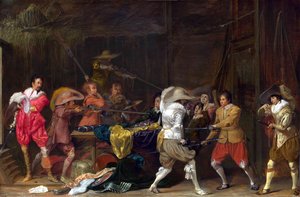
Willem Cornelisz Duyster
1599 - 1635 , Netherlands
Quick Facts
- Artistic Movement Or Style: Dutch Golden Age
- Artists Or Movements Influenced By This Artist: ['Gerard ter Borch the Younger']
- Artists Who Influenced This Artist: ['Jacob Jansz van Velsen']
- Date Of Birth: Amsterdam, Netherlands (1599)
- Date Of Death: 1635
- Full Name: willem cornelisz duyster
- Nationality: Dutch
- Notable Artworks:
- A Wedding Feast...
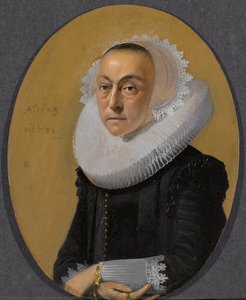
- Portrait of a Woman...
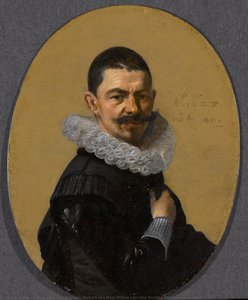
- Portrait of a Man...
- Place Of Birth: Amsterdam