 Preview
 Send
Send Share
Share
 Details

 Download
 Similars
 X-Ray
X-Ray Diaporama
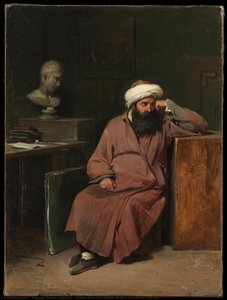
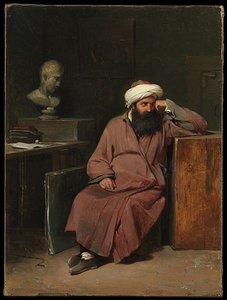
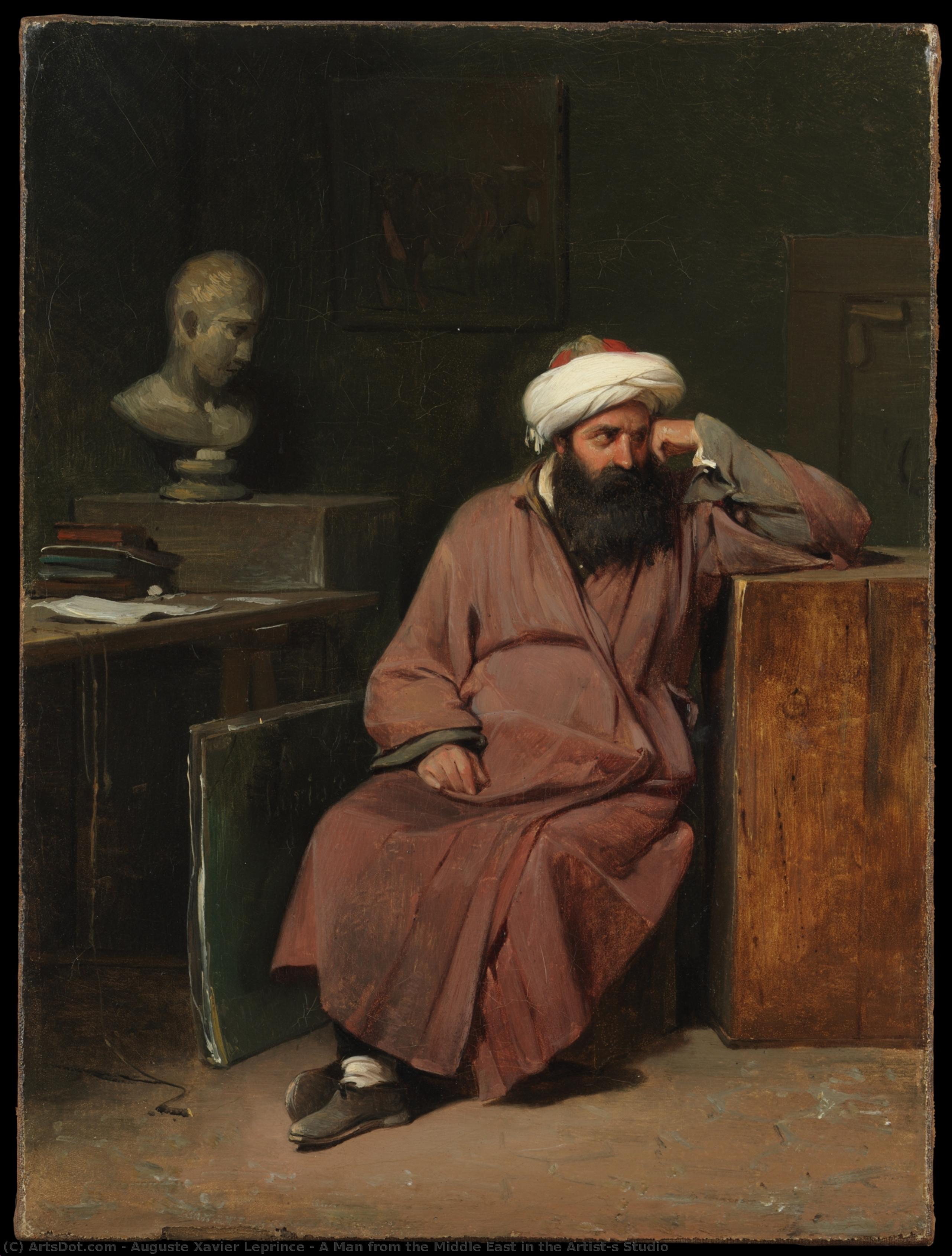
A Man from the Middle East in the Artist's Studio
 Oil
Oil- WallArt
- Romanticism
 1823
1823- 19th Century
 33.0 x 24.0 cm
 Metropolitan Museum of Art
 Read More
Hand Made Oil Reproduction
Hand-painted oil on canvas in your size and frame, made to order by our artists. ( Buy Print Buy Image)




P118B $10

P118H $10

P118W $10

P438Z $10

P508JH $12

P508YH $12

P805H $10

P805Z $10

P919BZ $10

P919G $10

P919XJ $10

P959ZH $10

P968JZ $12

W106C $8

W218G $10

W218JH $8

W218Y $10

W307PJ $10

W316G $10

W316PJ $8

W316Y $10

W398PJ $8

W4111J $10

W500HY $15

W500JH $15

W692G $12

W849H $8

W940BG $15

W953PJ $8




Pick from our preset sizes that match the artwork's original proportions.

You may enter your own dimensions to fit a specific frame or space. If your selected size does not match the original image's proportions, we will either crop the artwork or extend the painting with additional hand-painted elements. A digital mockup will be sent for your approval before production begins.
Please note that the on-screen preview does not reflect the actual cropping or extension. Only the mockup will accurately show the final composition.
While custom sizes are available, we recommend selecting a dimension from the predefined list to preserve the original proportions.
After order, ArtsDot.com team will email client for instructions and provide a mockup preview
Worldwide Delivery () in 3/4 weeks instead of standard 5 weeks. (18 August). No compromise on quality.

Free Worldwide Express Shipping

High-Quality Linen Canvas

Full Shipping Insurance

Customs Tax Refund Guarantee

True Color Matching Guarantee

60-Day Return Policy (Defects Only)

100% Money-Back Guarantee

Bulk Discount Offer
 Glass option is only available in size under 110 CM

A Man from the Middle East in the Artist's Studio
Reproduction Medium
Reproduction Size
-


Total Price
$ 263
Artwork Description
A Portrait of Intrigue and Romantic Idealism: Auguste-Xavier Leprince’s “A Man from the Middle East in the Artist's Studio”
Auguste-Xavier Leprince’s “A Man from the Middle East in the Artist’s Studio,” completed in 1823, stands as a poignant emblem of the Romantic spirit – a fleeting glimpse into a world grappling with upheaval and yearning for beauty amidst turbulent times. This captivating portrait captures not merely an individual figure but also embodies the broader fascination of the era with exotic cultures and philosophical contemplation. The painting’s understated elegance belies its profound significance within the artistic landscape of early 19th-century France.- Subject Matter & Context: Leprince's subject is a man dressed in traditional Middle Eastern garb – a turban, robe, and facial adornments – seated before a table laden with books. This deliberate choice reflects the prevailing artistic trends of the period following Napoleon’s expedition to Egypt (1798-1801). Artists like Girodet and Gericault actively sought inspiration from Orientalism, portraying figures from distant lands as symbols of nobility, wisdom, and spiritual contemplation. The painting subtly references the Greek War of Independence against Ottoman rule – a conflict that fueled nationalist sentiment and captivated the imagination of European artists.
- Style & Technique: Leprince’s style aligns perfectly with Romantic ideals—characterized by sensitivity, emotion, and an emphasis on capturing psychological nuance. Employing meticulous observation and masterful brushwork, he achieves remarkable realism while simultaneously conveying a palpable aura of thoughtfulness. The artist skillfully utilizes chiaroscuro – dramatic contrasts between light and shadow – to sculpt the man's form and imbue the scene with depth and atmosphere. Note the careful rendering of textures: the folds of the robe, the sheen on the turban, and the subtle reflections on the table surface.
- Symbolism & Composition: The inclusion of books serves as a powerful symbol – representing knowledge, contemplation, and intellectual pursuit. They juxtapose against the man’s bowed head and clasped hands, suggesting introspection and perhaps even melancholy. The vase positioned near the left side adds an element of decorative grace but also contributes to the overall sense of serenity. Leprince's deliberate framing draws the viewer’s eye inward, inviting contemplation on themes of identity, culture, and the human condition.
- Emotional Impact: “A Man from the Middle East in the Artist’s Studio” transcends mere visual representation; it evokes a feeling of quiet dignity and profound introspection. The artist's ability to convey emotion through subtle gestures and facial expressions speaks volumes about his artistic prowess. It is a portrait that lingers in the mind, prompting reflection on questions of beauty, wisdom, and the complexities of human experience—a testament to Leprince’s enduring legacy as one of Romantic France’s most accomplished painters.
This exquisite reproduction captures the essence of Leprince's masterpiece, allowing you to appreciate its artistic merit and historical significance within your own home or studio. Explore more about Auguste-Xavier Leprince and his remarkable oeuvre on Auguste-Xavier Leprince’s Artist Database and discover similar artworks at Auguste-Xavier Leprince’s Artwork Database.
Related Artworks
Artist Biography
A Brief but Brilliant Flame: The Life and Art of Auguste-Xavier Leprince
Auguste-Xavier Leprince, a name that resonates with the promise of a prodigious talent cut tragically short, emerged as a significant figure in early 19th-century French painting. Born in Paris in 1799, his artistic journey was remarkably swift and impactful, leaving an indelible mark despite his untimely death at just twenty-seven years old. Leprince wasn’t simply born into art; he was steeped in it from the beginning. His father, Anne Pierre Leprince, a painter and lithographer, provided the initial nurturing environment, while his brothers, Léopold and Gustave, also pursued artistic careers, creating a familial atmosphere of creative encouragement. This supportive backdrop undoubtedly played a crucial role in shaping young Auguste’s path. He was largely self-taught, honing his skills through meticulous observation of nature and a deep study of the Old Masters – a testament to his innate dedication and talent.Echoes of the Dutch Masters and the French Countryside
Leprince's artistic development reveals a fascinating blend of influences. He demonstrated an early affinity for 17th-century Dutch landscape and animal painters, notably Adriaen van de Velde, Adriaen van Ostade, and Isaac van Ostade. Their meticulous realism, their ability to capture the textures of rural life with such precision, clearly resonated with the young artist. However, Leprince wasn’t merely imitating; he was absorbing these influences and filtering them through his own uniquely French sensibility. He also drew inspiration from Jean-Louis de Marne, a prominent figure in French landscape painting, further solidifying his connection to the natural world. This fusion of Dutch detail and French romanticism would become a hallmark of his style. His early works focused on agrarian scenes, Parisian street life, and particularly, cattle paintings – subjects that allowed him to showcase his mastery of observation and his growing skill in depicting light and atmosphere.Rising Star: Salon Success and Royal Patronage
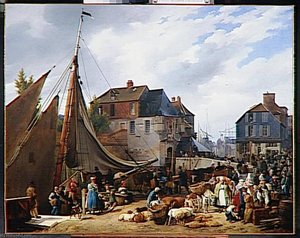
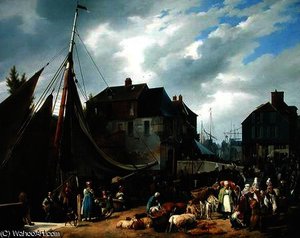
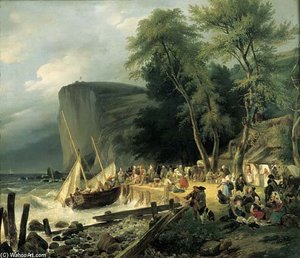
Leprince’s talent quickly garnered recognition. He first exhibited at the prestigious Paris Salon in 1819, a remarkably young age for such a debut, and immediately received acclaim, earning a medal for his landscapes. This early success opened doors to influential circles, attracting the attention of prominent figures like the Duchesse de Berry and King Charles X, both of whom became devoted patrons of his art. His 1823 painting, Embarquement des bestiaux sur le Passager dans le port de Honfleur (Embarkation of Cattle on the Passager at the Port of Honfleur), stands as a landmark achievement in cattle painting and is now proudly displayed in the Louvre Museum. This work exemplifies his ability to capture not just the physical appearance of animals, but also the energy and bustle of rural life. Beyond his own compositions, Leprince became highly sought after for his skill in painting figures for other landscape artists, enhancing their works with realistic human and animal forms – a testament to his versatility and technical prowess.A Legacy Forged in Detail: Themes and Historical Significance
Despite the brevity of his career, Auguste-Xavier Leprince left an enduring legacy on French art. His paintings offer invaluable insights into rural life in early 19th-century France, a world undergoing rapid change. He wasn’t simply documenting scenes; he was imbuing them with a romantic sensibility, capturing the beauty and dignity of everyday labor. His ability to portray agrarian scenes, Parisian street life, and cattle paintings with such detailed realism and emotional depth set him apart. His influence extended beyond his immediate contemporaries; painters like Eugène Corot were demonstrably affected by his work. Today, Leprince’s artworks are held in prestigious museums worldwide, including the Louvre, Musée d'Orsay, and the Metropolitan Museum of Art – a fitting tribute to an artist whose flame burned brightly, albeit briefly, illuminating the artistic landscape of his time. His works continue to captivate viewers with their exquisite detail, evocative atmosphere, and poignant portrayal of a bygone era.Exhibited Works
- The Louvre Museum (Paris): Home to his celebrated “Embarquement des bestiaux…”.
- Musée des Arts Décoratifs (Paris): Showcasing a range of his works.
- Musée départemental de l'Oise (Beauvais): Featuring selections from his oeuvre.
- Metropolitan Museum of Art (New York City): Displaying examples of his artistic skill.
auguste xavier leprince
1799 - 1826 , France
Quick Facts
- Artistic Movement Or Style: Romanticism
- Artists Or Movements Influenced By This Artist: ['Eugène Corot']
- Artists Who Influenced This Artist:
- Adriaen van de Velde
- Jean-Louis de Marne
- Date Of Birth: 1799-08-28
- Date Of Death: 1826-12-26
- Full Name: Auguste-Xavier Leprince
- Nationality: French
- Notable Artworks:
- Embarquement des bestiaux…
- Paysage, Bergère sur un Ane
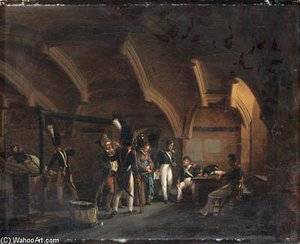
- Soldiers Questioning A Man…
- Place Of Birth: Paris, France
Related Articles

Crimson Threads of Narrative: Exploring Symbolism & Representation in Artworks Featuring the Red Dress
Explore the rich symbolism of the red dress in art history! From ancient power displays to iconic portraits like Cézanne’s 'Madame Cezanne', discover the cultural and artistic significance behind this captivating color. Expert analysis & insights.
Beyond Exoticism: Unveiling the Complex Legacy of Orientalist Painting
Explore the fascinating & complex world of Orientalist painting! Discover its history, key artists like Gérôme & Lewis, and Edward Said's influential critique. Uncover nuance beyond stereotypes with ArtsDot.
The Allure of the Exotic: Orientalism in 19th-Century Art
Explore the captivating world of 19th-century Orientalist art! Discover iconic painters like Gérôme & Benjamin-Constant, key themes, and collecting insights. Expert analysis at ArtsDot.
Romanticism's Greatest Artworks: 10 Masterpieces for Your Home |
Journey through Romanticism's soul with 10 iconic artworks by Delacroix, Goya & Turner. Explore emotional landscapes and historical drama. Find museum-quality art reproductions to elevate your home at – Discover all masterpieces online!
Mark Rothko's Masterpieces: 25 Paintings That Define Abstract Expressionism | ArtsDot
Explore 25 iconic Mark Rothko paintings that define Abstract Expressionism. Discover the stories, colors & emotions behind these masterpieces. Find museum-quality art reproductions and curated decor ideas at ArtsDot.com.